





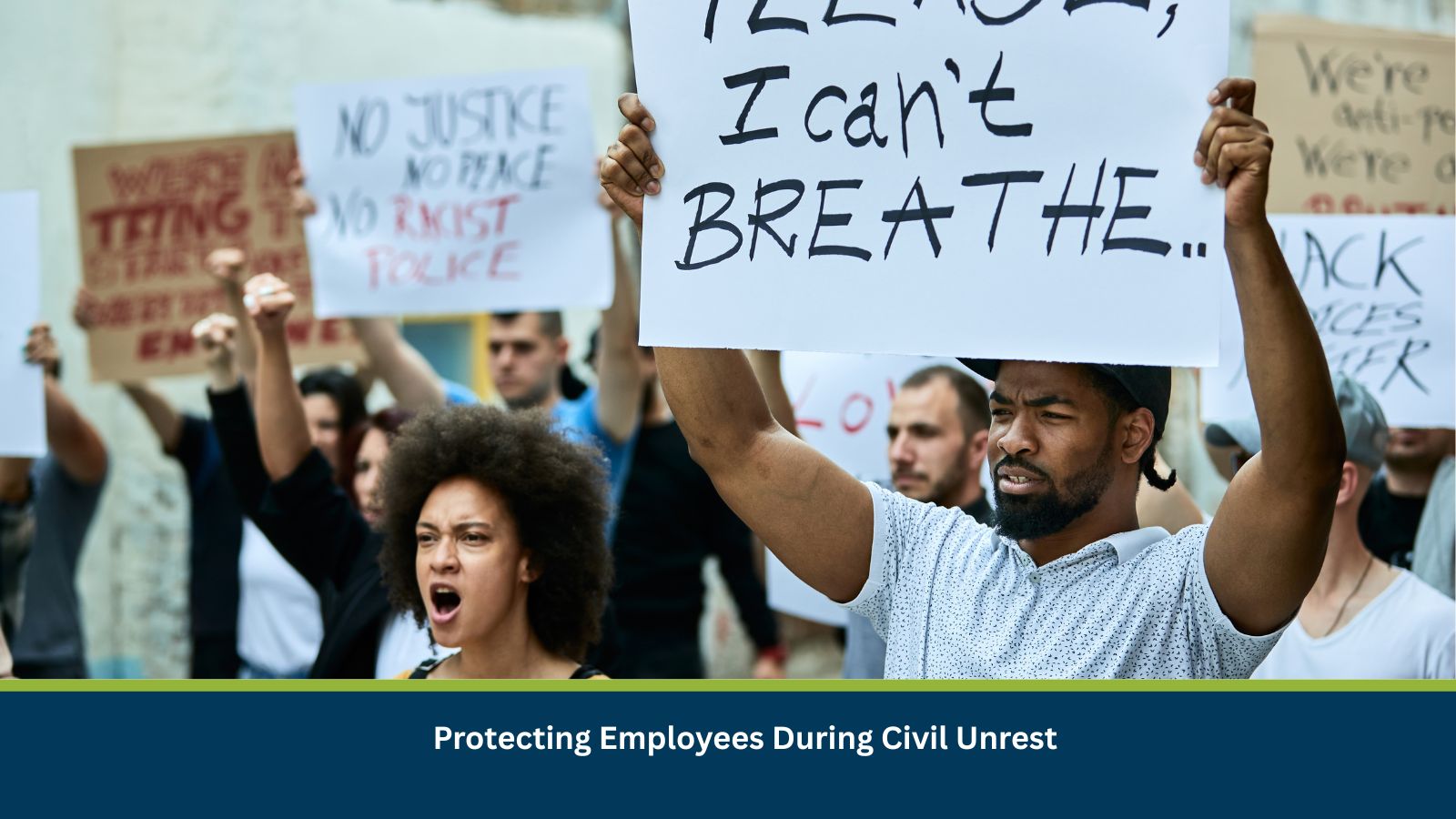
In an increasingly volatile world, civil unrest has become a recurring challenge for businesses operating across global markets. From protests and political instability to sudden outbreaks of violence, these events can escalate rapidly—putting employees, operations, and assets at risk.
For organizations, protecting employees during such situations is not just a legal responsibility—it is a critical component of duty of care, risk management, and business continuity.
Why Civil Unrest Is a Growing Business Risk
Civil unrest can emerge with little warning and escalate quickly, especially in urban centres where many corporate offices are located.
Common triggers include:
- Political tensions or elections
- Economic instability
- Social or cultural conflicts
- Government policy changes
Potential impacts on businesses:
- Employee safety risks
- Office closures and restricted access
- Transport disruptions
- Damage to property and infrastructure
Understanding Your Duty of Care
Organizations have a responsibility to ensure the safety and well-being of employees, especially during high-risk situations.
This includes:
- Monitoring risks in real time
- Communicating clearly with employees
- Providing guidance and support
- Enabling safe evacuation or relocation when needed
Failure to act effectively can result in:
- Legal liability
- Financial losses
- Reputational damage
Key Strategies to Protect Employees During Civil Unrest
1. Real-Time Risk Monitoring
Staying informed is the first line of defence.
Companies should track:
- Protest locations and movement
- Security advisories from authorities
- Traffic and transport disruptions
Benefit:
Early awareness allows organizations to act before situations escalate.
2. Location-Based Employee Tracking
Knowing where employees are is critical during emergencies.
How it helps:
- Identify employees in affected areas
- Provide targeted alerts and instructions
- Coordinate assistance quickly
3. Clear and Timely Communication
During civil unrest, communication must be:
- Fast
- Accurate
- Consistent
Best practices:
- Use multiple channels (SMS, email, apps)
- Share verified information only
- Provide clear safety instructions
4. Flexible Work and Travel Policies
Organizations should be ready to adapt operations.
Examples:
- Enable remote work
- Delay or cancel travel plans
- Adjust working hours
Outcome:
Reduces employee exposure to risk.
5. Crisis Response Planning
A well-defined crisis plan ensures coordinated action.
Key elements:
- Emergency response teams
- Evacuation procedures
- Safe zones and shelters
- Coordination with local authorities
6. Training and Preparedness
Employees should know how to respond during unrest.
Training topics:
- Personal safety measures
- Emergency contacts
- Evacuation protocols
Prepared employees are more confident and safer.
7. Physical Security Measures
Protecting office premises is equally important.
Measures include:
- Controlled access to buildings
- Increased security personnel
- Surveillance and monitoring systems
What Employees Should Do During Civil Unrest
Organizations should guide employees with clear instructions:
- Avoid protest areas and large gatherings
- Stay indoors if advised
- Follow local authority instructions
- Keep communication devices charged
- Report any safety concerns immediately
Business Continuity During Civil Unrest
Civil unrest can disrupt operations, but proactive planning can reduce impact.
Key actions:
- Diversify supply chains
- Identify alternative work locations
- Maintain backup communication systems
- Monitor ongoing developments
Role of Technology in Employee Protection
Modern organizations rely on technology to enhance safety.
Key tools include:
- Real-time alert systems
- AI-driven risk analysis
- Geospatial monitoring
- Centralized security dashboards
These tools enable faster decision-making and response.
Future of Employee Safety in Unstable Environments
Emerging trends:
- Predictive risk intelligence using AI
- Hyper-local alerts based on precise location
- Automated emergency response systems
- Integration with wearable safety devices
These advancements will further strengthen organizational resilience.
FAQs
1. What is civil unrest?
Civil unrest refers to public disturbances such as protests, riots, or demonstrations that can disrupt normal activities.
2. Why is employee safety important during civil unrest?
To protect lives, ensure compliance with duty of care, and maintain business continuity.
Conclusion
Civil unrest is an unpredictable and evolving risk that can significantly impact employee safety and business operations. Organizations that prioritize real-time monitoring, clear communication, and proactive planning are better equipped to navigate these challenges.
By combining technology, preparedness, and strong leadership, businesses can ensure that their employees remain safe even in the most uncertain environments.
Datasurfr helps protect employees during civil unrest by providing real-time, location-based alerts and AI-driven insights, enabling organizations to quickly identify risks, communicate with employees and take timely action to ensure safety.