





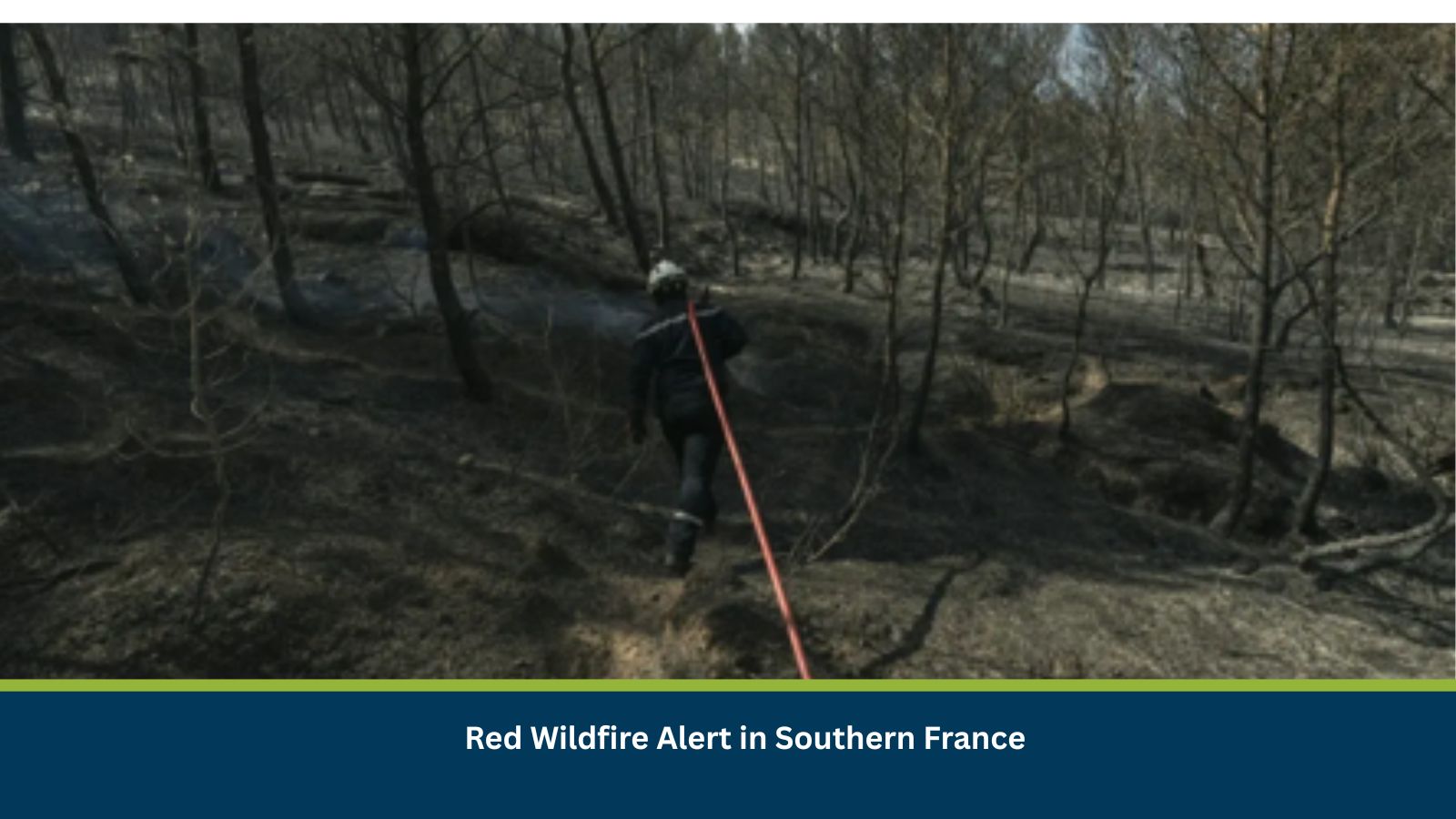
Executive Summary for the Red Wildfire Alert in Southern France
French authorities have placed six departments in southern France under the highest (“red”) wildfire alert for 02–04 July 2026, following a combination of extreme heat, prolonged drought and strong Mistral and Tramontane winds. The heightened fire risk is expected to increase the likelihood of rapidly spreading wildfires, potentially disrupting transportation, tourism, business operations and critical infrastructure across the affected regions.
- Date of Event: 02–04 July 2026
- Location: Bouches-du-Rhône, Vaucluse, Gard, Hérault, Aude, and Pyrénées-Orientales, France
- Risk Category: Natural Disasters
- Severity Score: 4 / 5
- Confidence Level: 82%
What is Risk Analysis in the Context of Natural Disasters Events
Natural disasters event analysis evaluates the impact of extreme weather events on business continuity, employee safety, infrastructure, transportation and supply chains. Wildfires pose significant operational risks by damaging critical infrastructure, restricting mobility, interrupting logistics and threatening communities located near high-risk zones.
The current elevated threat is driven by persistent drought, exceptionally dry vegetation and forecast strong winds that could accelerate wildfire ignition and spread. Authorities may impose temporary access restrictions, suspend certain outdoor activities, and mobilize emergency resources as conditions evolve.
Known Hotspots and Sensitive Areas
High Impact
- Bouches-du-Rhône
- Vaucluse
- Gard
- Hérault
- Aude
- Pyrénées-Orientales
Medium Impact
- Forested and rural areas across southern France
- Mediterranean tourist destinations
- Major road corridors passing through affected departments
Low Impact
- Northern and central France outside the high-risk zones
Impact on Transportation and Services
Wildfires or preventive safety measures may result in temporary road closures, restricted access to forests and recreational areas, and localized disruptions to rail and road transport. Tourism, outdoor operations, agriculture and logistics activities may also be affected, while emergency services are expected to remain on heightened alert throughout the warning period. Businesses operating in or travelling through the affected regions should prepare for potential delays and changing conditions.
Recommended Actions
- Monitor official updates from Météo-France and local prefectures.
- Avoid non-essential travel to forested or high-risk areas.
- Review business continuity and evacuation procedures for operations in affected departments.
- Advise employees and travelers to remain alert to local restrictions and emergency instructions.
- Prepare contingency plans for logistics and supply chain disruptions.
Multidimensional Impact
The wildfire risk coincides with the peak summer travel season, increasing pressure on transport networks, emergency response resources and tourism-related businesses. Strong winds may also contribute to the rapid spread of any fire, potentially expanding the affected area and prolonging operational disruptions.
Emergency Contacts
- Emergency Services: 112
- Fire Brigade: 18
Final Thoughts
The elevated wildfire threat represents a high operational and travel risk across southern France. Organizations should closely monitor official advisories, implement appropriate contingency measures and remain prepared for rapidly changing conditions. Leveraging MitKat’s Datasurfr Platform enables businesses to receive real-time alerts, monitor emerging risks, and make informed decisions to protect their people, asset and operations during severe weather events.