





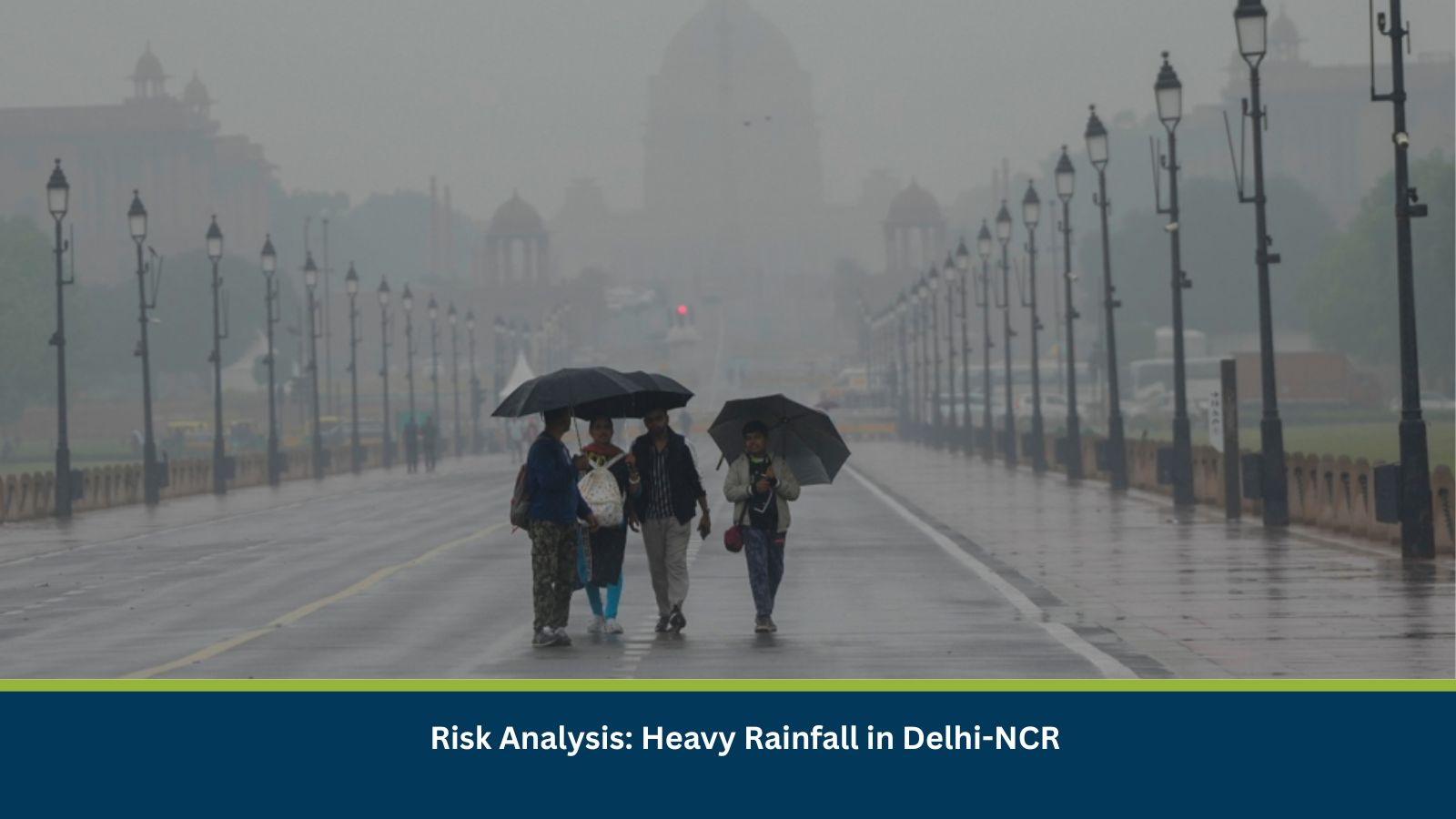
Executive Summary for Thunderstorms and Heavy Rainfall in Delhi–NCR
Heavy rainfall accompanied by thunderstorms affected Delhi–NCR on 09 July, resulting in widespread waterlogging, traffic congestion, flight delays and disruptions to road and rail transport. The India Meteorological Department (IMD) issued weather alerts for the National Capital Region, warning of continued rainfall, lightning and strong winds. Businesses should anticipate localized operational disruptions, commuter delays and temporary interruptions to logistics and essential services as the monsoon system persists.
- Date of Event: 09 July 2026
- Location: Delhi, Noida, Gurugram, Ghaziabad, Faridabad (Delhi–NCR), India
- Risk Category: Environment
- Severity Score: 3 / 5
- Confidence Level: 78%
What is Risk Analysis in the Context of Environment Events
Environment risk analysis evaluates the impact of severe weather on transportation, critical infrastructure, workforce safety and business continuity. Intense monsoon rainfall can rapidly overwhelm urban drainage systems, resulting in flash flooding, traffic disruptions, infrastructure damage and interruptions to commercial activities.
The latest spell of heavy rainfall has caused significant waterlogging across parts of Delhi–NCR, disrupting road traffic, delaying flights and rail services and increasing pressure on emergency response agencies. Authorities continue to monitor weather conditions as further rainfall and thunderstorms remain likely.
Known Hotspots and Sensitive Areas
High Impact
- Central Delhi
- New Delhi
- Noida
- Gurugram
- Ghaziabad
- Major arterial roads and underpasses
Medium Impact
- Indira Gandhi International Airport
- New Delhi Railway Station
- Metro interchanges
- Commercial districts
Low Impact
- Areas with adequate drainage infrastructure
Impact on Transportation and Services
Heavy rainfall has resulted in waterlogging, traffic congestion, and delays to road, rail, and air transport. Localized flooding may restrict access to commercial areas and government offices, while businesses should anticipate disruptions to employee mobility, deliveries and customer access. Continued rainfall could further impact utilities and public services.
Recommended Actions
- Monitor advisories issued by the India Meteorological Department (IMD) and local authorities.
- Avoid travel through waterlogged roads and flood-prone underpasses.
- Review business continuity and employee travel plans.
- Allow additional time for logistics and commuter movement.
- Maintain communication with employees regarding weather-related disruptions.
Emergency Contacts
- Emergency Services: 112
Final Thoughts
The ongoing monsoon conditions present a moderate operational risk across Delhi–NCR. Organizations should continue monitoring official weather advisories and implement contingency measures to minimize disruption to operations and employee safety. Leveraging MitKat’s Datasurfr enables businesses to receive real-time weather alerts, monitor evolving conditions, and make informed operational decisions.