





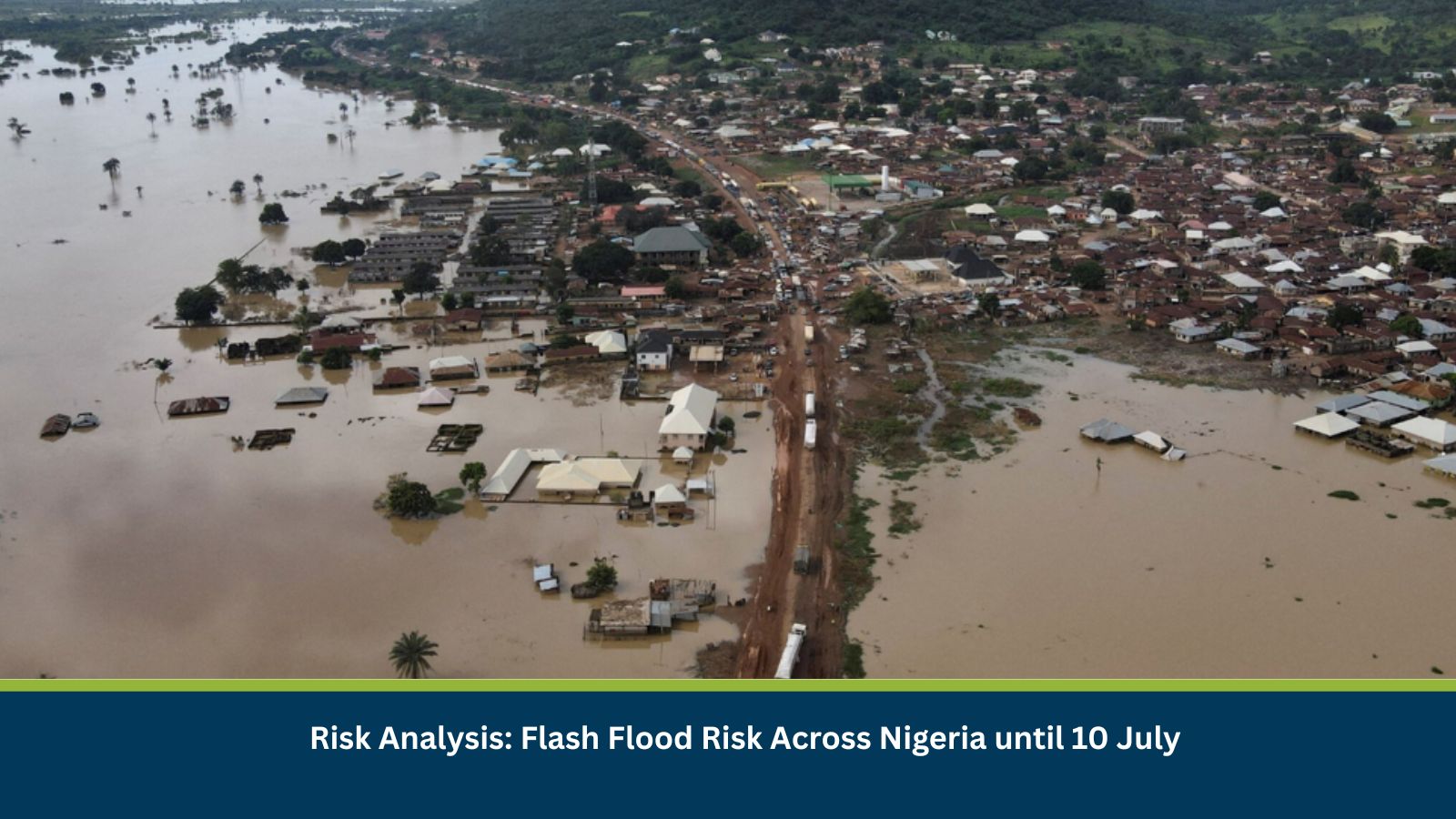
Executive Summary for Flash Flood Risk Across Nigeria
Nigeria’s Nigeria Hydrological Services Agency (NIHSA) has warned of an elevated flash flood risk across several states until 10 July following forecasts of persistent heavy rainfall. Authorities have advised residents and businesses in flood-prone areas to remain vigilant as rising river levels and poor drainage systems increase the likelihood of localized flooding. The forecast poses potential risks to transportation, critical infrastructure, agriculture and business operations across affected regions.
- Date of Event: 08-10 July 2026
- Location: Multiple states across Nigeria
- Risk Category: Natural Disasters
- Severity Score: 3 / 5
- Confidence Level: 72%
What is Risk Analysis in the Context of Natural Disaster Events
Natural disaster event analysis assesses the impact of severe weather like heavy rainfall and floods on transportation networks, public safety, business continuity and essential infrastructure. Flash floods can occur with little warning, causing road closures, infrastructure damage, disruptions to utilities and interruptions to commercial activities.
According to the Nigeria Hydrological Services Agency, several states remain vulnerable to flash flooding due to continued rainfall and saturated ground conditions. Authorities have encouraged communities, businesses and emergency responders to remain prepared as localized flooding may develop rapidly during periods of intense precipitation.
Known Hotspots and Sensitive Areas
High Impact
- Flood-prone communities identified by NIHSA
- Low-lying urban areas
- River basins and drainage channels
Medium Impact
- Major highways
- Agricultural regions
- Urban commercial centers
- Bridges and transport corridors
Low Impact
- Elevated areas with lower flood susceptibility
Impact on Transportation and Services
Flash flooding may result in temporary road closures, traffic disruptions, damage to infrastructure and interruptions to logistics operations. Businesses may experience delays to workforce mobility, supply chains, and customer access, while agricultural activities could also be affected by waterlogging and flooding.
Recommended Actions
- Monitor updates from the Nigeria Hydrological Services Agency (NIHSA) and the National Emergency Management Agency (NEMA).
- Avoid travel through flooded roads and low-lying areas.
- Review flood emergency and business continuity plans.
- Protect critical equipment and infrastructure located in flood-prone areas.
- Maintain communication with employees, suppliers, and logistics providers regarding potential disruptions.
Emergency Contacts
- Emergency Services: 112
Final Thoughts
The forecast flash flood risk represents a high operational and infrastructure risk across parts of Nigeria. Organizations should closely monitor official weather advisories, activate contingency measures where necessary and prioritize employee safety to minimize operational disruptions. Leveraging MitKat’s Datasurfr enables businesses to receive real-time flood alerts, monitor evolving conditions and make informed decisions to protect their people, assets and operations.