





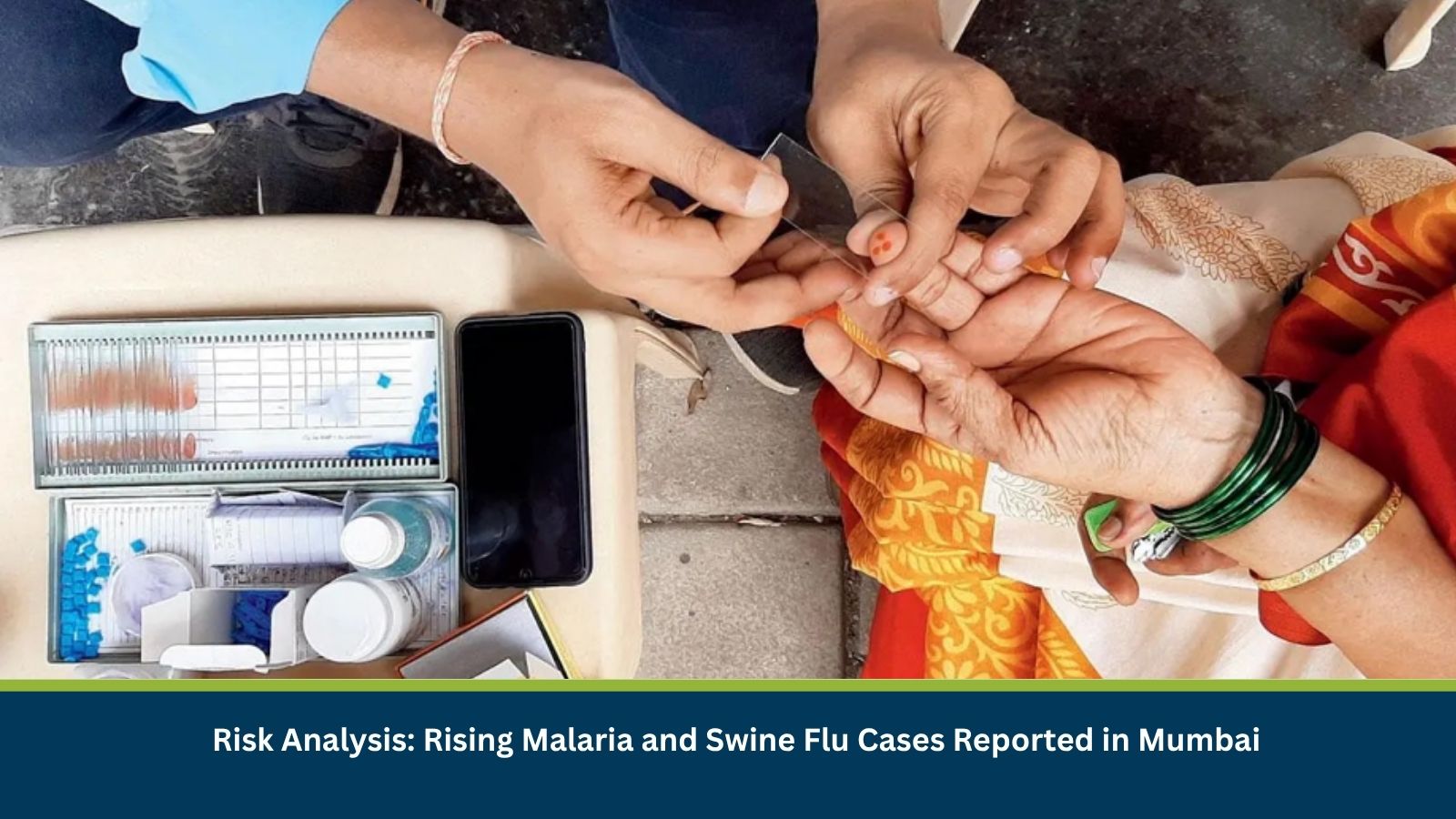
Executive Summary for Rising Malaria and Swine Flu Cases in Mumbai
Mumbai recorded a significant rise in malaria and H1N1 (swine flu) cases during the June–September 2026 monsoon, according to data from the Brihanmumbai Municipal Corporation (BMC) Public Health Department. Malaria cases increased from 5,144 in 2025 to 7,422 in 2026, while H1N1 cases rose sharply from 71 to 504. In contrast, several other illnesses declined over the same period. Dengue cases fell from 3,356 to 2,941, while gastroenteritis cases decreased from 2,639 to 2,194. The BMC has continued mosquito-control, cleanliness and public-awareness measures to limit further transmission.
- Date of Event: 08 October 2026
- Location: Mumbai, Maharashtra, India
- Risk Category: Health
- Severity Score: 3/5
- Confidence Level: 75%
What is Risk Analysis in the Context of Health Events
Health-risk analysis assesses the potential effects of increased disease transmission on employees, communities, healthcare services and business continuity. During and after the monsoon, stagnant water and mosquito breeding can increase exposure to vector-borne diseases, while seasonal respiratory infections can affect workforce availability.
Known Hotspots and Sensitive Areas
High Impact
- Mumbai-wide malaria exposure: Malaria cases reached 7,422 during June–September, up from 5,144 during the same period in 2025.
- H1N1: Swine flu cases increased from 71 to 504, representing a substantial year-on-year rise.
- Areas with stagnant water and mosquito-breeding sites remain particularly relevant for malaria exposure.
Medium Impact
- Outdoor workers and field personnel: Personnel spending extended periods outdoors may face increased exposure to mosquitoes, particularly where water accumulation persists.
- Large workplaces and densely populated areas: Increased circulation of respiratory infections such as H1N1 can contribute to employee absenteeism and short-term workforce disruption.
- The BMC has continued surveillance and preventive health measures across the city.
Low Impact
- The reported increases do not indicate a citywide disruption to essential services or transport infrastructure.
- Dengue, gastroenteritis, leptospirosis, chikungunya and COVID-19 cases were reported to have declined compared with the previous monsoon period.
Impact on Transportation and Services
The principal business exposure is employee health and workforce availability rather than direct infrastructure disruption. Higher malaria and H1N1 incidence could increase sick leave, healthcare requirements and operational disruptions if infections affect larger employee groups.
Recommended Actions
- Encourage employees to seek medical assessment for persistent fever or flu-like symptoms.
- Outdoor workers should use mosquito repellents and appropriate protective clothing.
- Businesses should identify and eliminate stagnant water around offices, construction sites and other facilities.
- Maintain adequate sick-leave and workforce-contingency arrangements during periods of elevated disease transmission.
- Encourage symptomatic employees to avoid close contact with colleagues where respiratory infection is suspected.
- Monitor BMC public-health advisories for changes in malaria and H1N1 trends.
Emergency Contacts
- Emergency Services: 112
- Mumbai Municipal Corporation / BMC Disaster Management: 1916
- Ambulance: 108
Final Thoughts
Mumbai is experiencing a notable increase in malaria and H1N1 cases following the 2026 monsoon, with malaria reaching 7,422 cases and H1N1 reaching 504 cases during June–September. While the situation has not resulted in reported citywide operational disruption, businesses should maintain workforce-health precautions and monitor further BMC surveillance, particularly for employees working outdoors or in areas with persistent mosquito-breeding conditions. Leveraging MitKat’s Datasurfr enables businesses to receive real-time intelligence, monitor evolving threats and make informed decisions to protect people, assets and operations.