





Executive Summary for A9 Bosruck Tunnel Closures
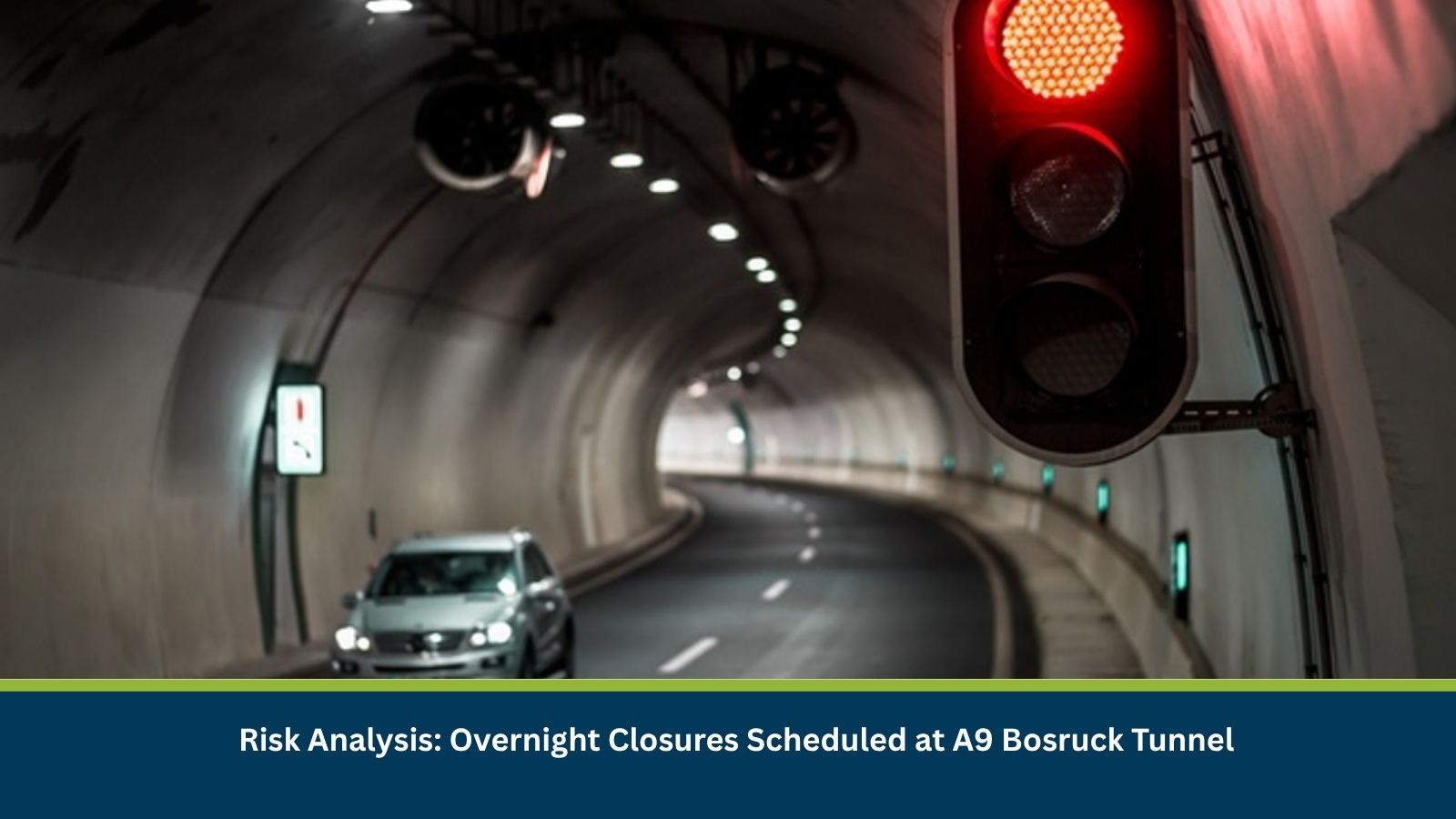
The Bosruck Tunnel on Austria’s A9 Pyhrn Autobahn is undergoing technical and maintenance works requiring overnight closures of both tunnel tubes during October. The closures are scheduled between 2000 and 0500 hours local time, with traffic diverted via the Pyhrn Pass. The October works include the period covering Thursday, 08 October and Friday, 09 October 2026.
The diversion is expected to increase traffic volumes and journey times on the alternative route, particularly around Liezen, the B138 and Spital am Pyhrn. The disruption is primarily expected during overnight hours but may affect freight and long-distance road movements using the A9 corridor.
- Date of Event: 08–09 October 2026
- Location: A9 Pyhrn Autobahn, Bosruck Tunnel, Austria
- Risk Category: Travel Risks
- Severity Score: 3/5
- Confidence Level: 80%
What is Risk Analysis in the Context of Travel Risks
Travel-risk analysis for tunnel closures assesses the potential impact of planned infrastructure works on road connectivity, journey times, freight movement and access to alternative routes. Overnight closures can be particularly relevant to commercial vehicles and long-distance transport operating during off-peak hours.
Known Hotspots and Sensitive Areas
High Impact
- Bosruck Tunnel: Both tunnel tubes are closed overnight during the maintenance period.
- A9 corridor: Through-traffic cannot use the tunnel during the closure window and must follow the designated diversion.
- Pyhrn Pass: Serves as the principal alternative route during the closures and is therefore expected to experience increased traffic.
Medium Impact
- Liezen: Increased traffic volumes and longer travel times are expected around the town due to diverted A9 traffic.
- B138: The road is expected to experience additional traffic during the overnight closure periods.
- Spital am Pyhrn: Traffic congestion and delays may increase along the diversion corridor.
Low Impact
- Routes outside the immediate A9–Pyhrn Pass diversion corridor are expected to experience limited direct disruption.
- The closures are scheduled overnight, reducing their impact on daytime passenger traffic.
Impact on Transportation and Services
The main operational exposure is to road freight, commercial vehicles and long-distance travel along the A9. Vehicles unable to use the Bosruck Tunnel between 2000 and 0500 hours will need to follow the alternative route, potentially increasing journey times and fuel consumption. Higher traffic volumes on the Pyhrn Pass, B138 and around Liezen and Spital am Pyhrn may also create localised congestion. Businesses relying on overnight road freight through the A9 corridor should account for the closure window when scheduling deliveries or transit movements.
Recommended Actions
- Plan A9 journeys to avoid the 2000–0500 hours closure period where operationally possible.
- Allow additional travel time for vehicles using the Pyhrn Pass diversion.
- Freight operators should account for possible delays around Liezen, B138 and Spital am Pyhrn.
- Check current road conditions before departure, particularly for overnight commercial movements.
- Consider adjusting delivery schedules where delays could affect onward connections.
Emergency Contacts
- European Emergency Number: 112
- Austrian Police: 133
- Austrian Roadside Assistance (ÖAMTC): 120
Final Thoughts
The Bosruck Tunnel closures represent a planned and localized travel disruption rather than a major infrastructure emergency. However, overnight freight and long-distance traffic using the A9 should anticipate longer journey times and increased traffic along the Pyhrn Pass and surrounding B138 corridor during the closure windows. Leveraging MitKat’s Datasurfr enables businesses to receive real-time intelligence, monitor evolving threats and make informed decisions to protect people, assets and operations.