





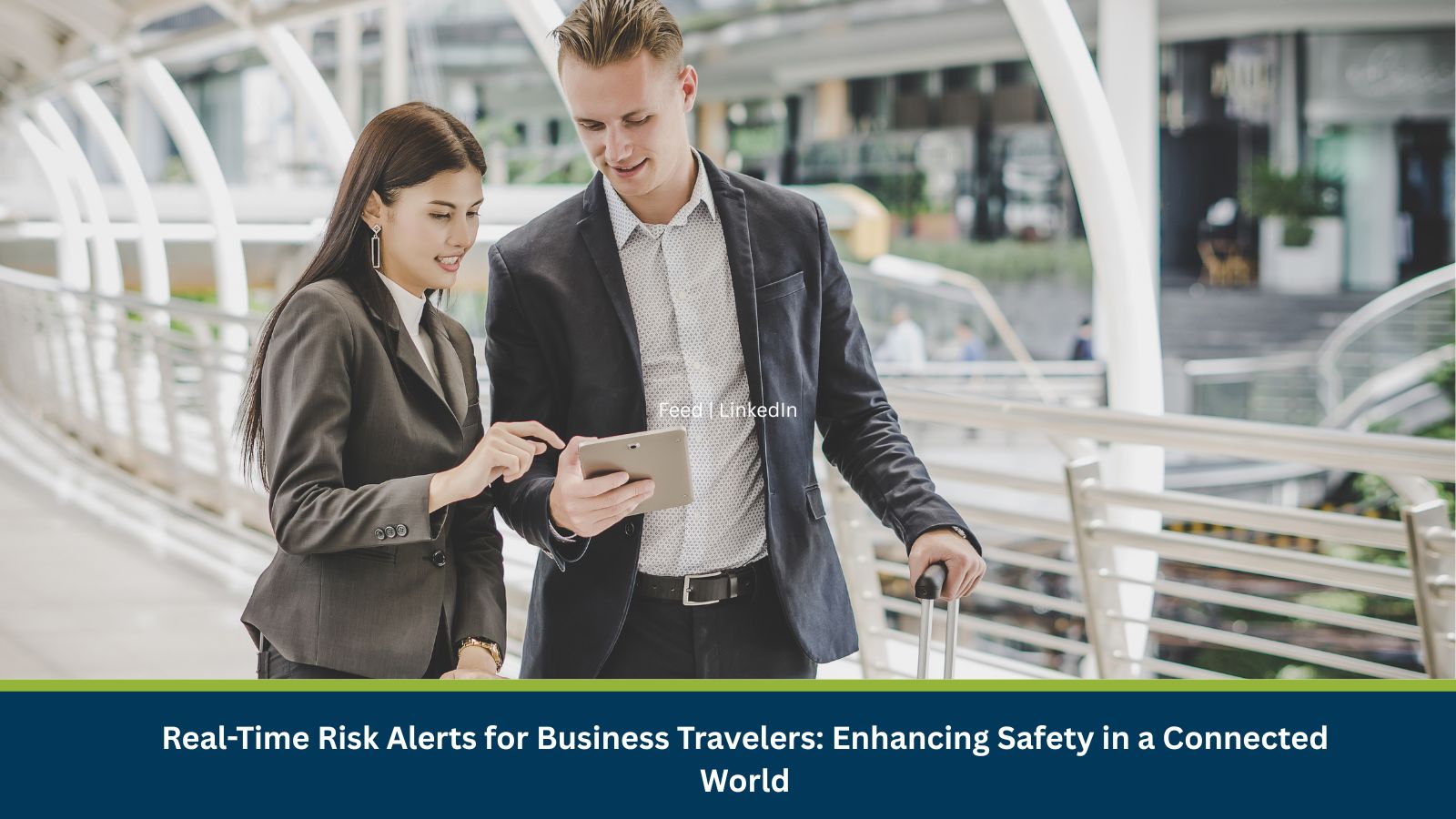
In today’s global business environment, corporate travel is essential for growth, partnerships, and operations. However, increasing geopolitical tensions, civil unrest, extreme weather events, health emergencies, and transportation disruptions have made business travel more unpredictable than ever.
To protect employees and ensure uninterrupted operations, organizations are increasingly relying on real-time risk alerts powered by AI, geospatial intelligence (GEO), and live monitoring systems.
Real-time travel risk intelligence helps companies make faster decisions, improve employee safety, and strengthen duty of care programs for business travellers worldwide.
Why Real-Time Risk Alerts Matter for Business Travelers
Business travellers frequently move through:
- Airports and transit hubs
- High-density urban centres
- Politically sensitive regions
- Areas exposed to natural disasters or security threats
Without timely information, travellers may face:
- Safety and security risks
- Flight disruptions and delays
- Exposure to protests or violence
- Communication and connectivity issues
Real-time alerts help organizations and employees respond proactively before situations escalate.
The Growing Risks in Corporate Travel
1. Geopolitical Tensions
International conflicts and diplomatic disputes can rapidly affect:
- Airspace availability
- Border crossings
- Regional transportation networks
2. Civil Unrest and Protests
Protests can disrupt:
- Access to hotels and offices
- Airport routes and public transport
- Local business operations
3. Weather and Natural Disasters
Floods, storms, earthquakes, and wildfires can cause:
- Flight cancellations
- Road closures
- Infrastructure damage
4. Health and Medical Emergencies
Disease outbreaks or regional health advisories can impact:
- Employee well-being
- Travel schedules
- Entry requirements and restrictions
5. Cyber and Communication Risks
Travelers are increasingly exposed to:
- Public Wi-Fi vulnerabilities
- Data theft
- Communication outages
What Are Real-Time Risk Alerts?
Real-time risk alerts are instant notifications about incidents or disruptions that may affect travellers.
Alerts may include:
- Security incidents near a traveller’s location
- Flight delays or airport disruptions
- Severe weather warnings
- Civil unrest and protests
- Natural disaster advisories
These alerts help organizations:
- Track risks as they emerge
- Communicate quickly with employees
- Enable safer travel decisions
How AI Improves Travel Risk Monitoring
Artificial Intelligence is transforming travel safety through:
- Rapid data analysis
- Pattern recognition
- Predictive threat assessment
AI capabilities include:
- Filtering irrelevant information
- Identifying high-priority incidents
- Predicting potential disruptions
- Automating alert delivery
Benefit: Faster and more accurate decision-making.
The Role of GEO Intelligence in Travel Safety
Geospatial intelligence (GEO) provides location-based awareness.
How GEO helps:
- Maps incidents near travellers
- Tracks movement through high-risk areas
- Identifies nearby disruptions and threats
For example:
- A protest near an airport
- Flooding affecting a travel route
- Violence near a hotel or conference venue
Benefit: Hyper-local visibility improves traveller safety.
Key Features of an Effective Travel Risk Alert System
1. Real-Time Monitoring
Continuous tracking of global incidents and disruptions.
2. Location-Based Alerts
Notifications based on the traveller’s exact location.
3. Multi-Channel Communication
Alerts delivered through:
- Mobile apps
- SMS
- Messaging platforms
4. AI-Powered Prioritization
Critical incidents are highlighted first.
5. Integrated Crisis Response
Security teams can coordinate support quickly during emergencies.
Benefits for Organizations
1. Improved Employee Safety
Employees receive timely warnings and guidance.
2. Stronger Duty of Care
Organizations demonstrate commitment to traveller well-being.
3. Faster Crisis Response
Security teams can act immediately during incidents.
4. Reduced Operational Disruption
Travel plans can be adjusted proactively.
5. Better Business Continuity
Organizations maintain productivity despite disruptions.
Best Practices for Corporate Travel Safety
Conduct Pre-Travel Risk Assessments
Evaluate risks before approving travel.
Maintain Updated Traveler Information
Keep employee itineraries and contacts current.
Provide Safety Training
Educate travellers on local risks and emergency procedures.
Establish Emergency Protocols
Create clear escalation and communication plans.
Use Technology-Driven Monitoring
Leverage AI and GEO intelligence for real-time awareness.
Future Trends in Business Travel Risk Management
Predictive Risk Intelligence
AI will forecast disruptions before they occur.
Hyper-Local Alerts
More precise, geo-targeted notifications will improve safety.
Automation
Automated workflows will speed up emergency response.
Integrated Travel Security Platforms
Travel, HR, and security systems will work together seamlessly.
FAQs
1. What are real-time risk alerts for travellers?
They are instant notifications about threats or disruptions affecting business travelers.
2. Why are travel risk alerts important?
They help travellers avoid danger and enable organizations to respond quickly.
Conclusion
As global risks continue to evolve, real-time risk alerts have become essential for protecting business travellers. By combining AI-powered intelligence, GEO-based insights, and instant communication, organizations can improve traveller safety, strengthen operational resilience, and respond effectively to disruptions.
In a fast-moving world, proactive travel risk management is no longer optional—it is a critical part of modern business continuity and employee protection.
Datasurfr is useful for business travellers by delivering real-time, location-based risk alerts and AI-driven insights, helping organizations monitor threats, communicate instantly, and ensure traveller safety during disruptions or emergencies.