




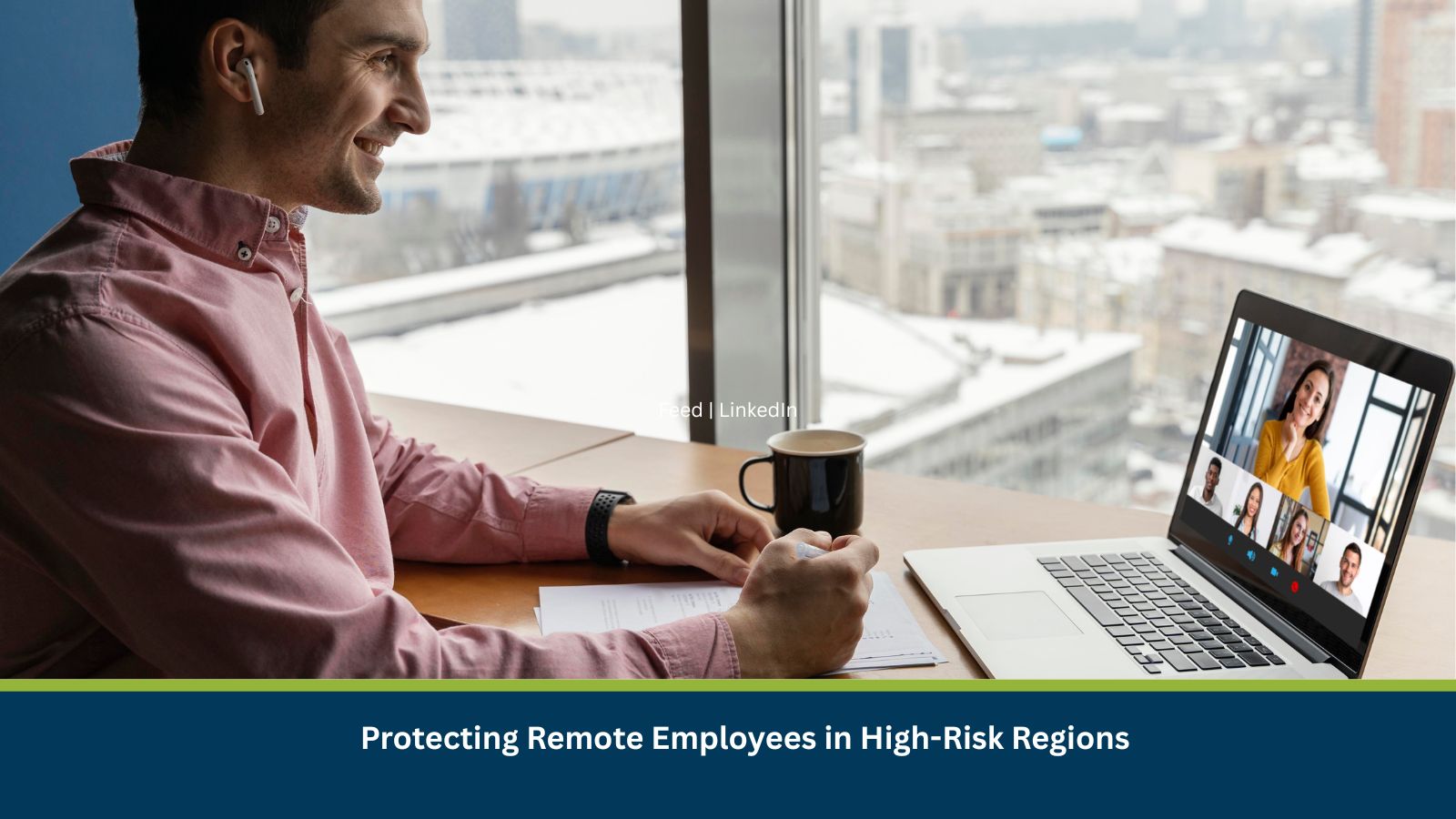
Remote work has transformed global business operations, enabling organizations to access talent and maintain productivity across borders. However, as companies expand remote operations into politically unstable, conflict-prone, or disaster-affected regions, protecting employees outside traditional office environments has become a critical challenge.
From geopolitical tensions and civil unrest to cyber threats and natural disasters, organizations must adopt AI-driven, GEO-based, and real-time security strategies to ensure the safety and resilience of remote employees working in high-risk regions.
Why Remote Employee Protection Matters
Remote employees often operate without the physical security infrastructure available in corporate offices. In high-risk regions, this exposure increases significantly.
Key challenges include:
- Limited access to emergency support
- Exposure to regional instability
- Communication disruptions
- Cybersecurity vulnerabilities
- Delayed response during emergencies
Organizations now have a growing duty of care responsibility to protect employees regardless of location.
Key Risks Facing Remote Employees
1. Geopolitical Conflict and Civil Unrest
Employees may face:
- Protests and demonstrations
- Armed conflict and military activity
- Curfews and mobility restrictions
These events can disrupt communication, travel, and daily operations.
2. Natural Disasters
Floods, earthquakes, storms, and wildfires can:
- Interrupt power and internet access
- Threaten physical safety
- Limit access to emergency services
3. Cybersecurity Threats
Remote workers are often more vulnerable to:
- Phishing attacks
- Unsecured public networks
- Data breaches and ransomware
4. Health and Medical Emergencies
High-risk regions may have:
- Limited healthcare infrastructure
- Disease outbreaks
- Emergency response challenges
5. Infrastructure and Connectivity Issues
Remote employees depend heavily on:
- Stable internet connectivity
- Communication systems
- Local transportation and utilities
Disruptions can directly impact business continuity.
The Importance of Real-Time Risk Monitoring
Traditional employee safety strategies are no longer sufficient for distributed workforces.
Organizations now require:
- Continuous risk monitoring
- Real-time alerts
- AI-powered intelligence
- Hyper-local GEO visibility
Real-time monitoring helps organizations:
- Detect threats early
- Communicate instantly with employees
- Respond proactively during crises
How AI Enhances Remote Employee Protection
Artificial Intelligence plays a critical role in modern workforce security.
AI capabilities include:
- Monitoring global events in real time
- Detecting emerging threats and anomalies
- Prioritizing high-risk incidents
- Automating alerts and escalation workflows
Benefit: Faster, smarter, and more proactive risk management.
The Role of GEO Intelligence in Employee Safety
Geospatial intelligence (GEO) provides location-based awareness for organizations with distributed teams.
How GEO intelligence helps:
- Identifies incidents near employee locations
- Maps regional threats and disruptions
- Tracks risk exposure across multiple geographies
For example:
- Civil unrest near an employee’s residence
- Severe weather affecting internet infrastructure
- Security incidents impacting transportation routes
Benefit: Enables targeted and localized response.
Key Strategies for Protecting Remote Employees
1. Real-Time Risk Alerts
Provide employees with immediate notifications about:
- Security incidents
- Weather emergencies
- Infrastructure disruptions
- Political instability
Benefit: Employees can take quick preventive action.
2. Centralized Security Monitoring
Organizations should use centralized systems to monitor:
- Employee locations
- Regional developments
- Emergency incidents
Benefit: Improves visibility and coordination.
3. Emergency Communication Protocols
Establish multi-channel communication methods such as:
- Mobile alerts
- Messaging platforms
- Email and SMS notifications
Benefit: Ensures employees receive updates quickly during emergencies.
4. Cybersecurity Protection
Remote employees should use:
- VPNs and secure networks
- Multi-factor authentication (MFA)
- Endpoint protection tools
Benefit: Reduces cyber risk exposure.
5. Crisis Response and Evacuation Planning
Organizations should prepare:
- Emergency response procedures
- Local support contacts
- Evacuation and relocation plans
Benefit: Faster response during critical incidents.
Building a Strong Duty of Care Program
A strong duty of care strategy should include:
- Pre-deployment risk assessments
- Employee safety training
- Real-time monitoring systems
- Mental health and wellness support
Organizations that prioritize employee safety improve:
- Workforce resilience
- Employee trust and retention
- Business continuity
Best Practices for Global Organizations
Conduct Regional Risk Assessments
Understand local threats before approving remote work arrangements.
Use AI-Driven Monitoring Platforms
Leverage intelligent systems for faster threat detection.
Maintain Updated Employee Information
Ensure location and emergency contact details remain current.
Train Employees Regularly
Educate teams on:
- Personal safety
- Cybersecurity awareness
- Emergency response procedures
Develop Business Continuity Plans
Prepare for operational disruptions across multiple regions.
Future Trends in Remote Workforce Security
Predictive Risk Intelligence
AI will forecast risks before incidents occur.
Hyper-Local GEO Monitoring
More precise location-based intelligence will improve safety.
Automation
Automated emergency workflows will reduce response times.
Integrated Security Ecosystems
HR, travel, and security systems will work together seamlessly.
FAQs
1. Why is protecting remote employees important?
Because remote workers in high-risk regions face increased security and operational challenges.
2. What are the biggest risks for remote employees?
Geopolitical instability, cyber threats, natural disasters, and infrastructure disruptions.
3. How does AI improve employee protection?
AI identifies threats quickly and enables real-time response.
Conclusion
As remote work continues to expand globally, protecting employees in high-risk regions has become a strategic priority for organizations. By combining AI-powered intelligence, GEO-based monitoring, and real-time communication, companies can strengthen employee safety, improve resilience, and ensure business continuity.
In an increasingly unpredictable world, proactive remote workforce protection is essential for both operational success and employee well-being.
Datasurfr can help protect remote employees in high-risk regions through real-time, geo-tagged risk alerts and AI-powered intelligence, enabling organizations to monitor threats, communicate instantly, track disruptions near employees and respond proactively during emergencies or crises.