





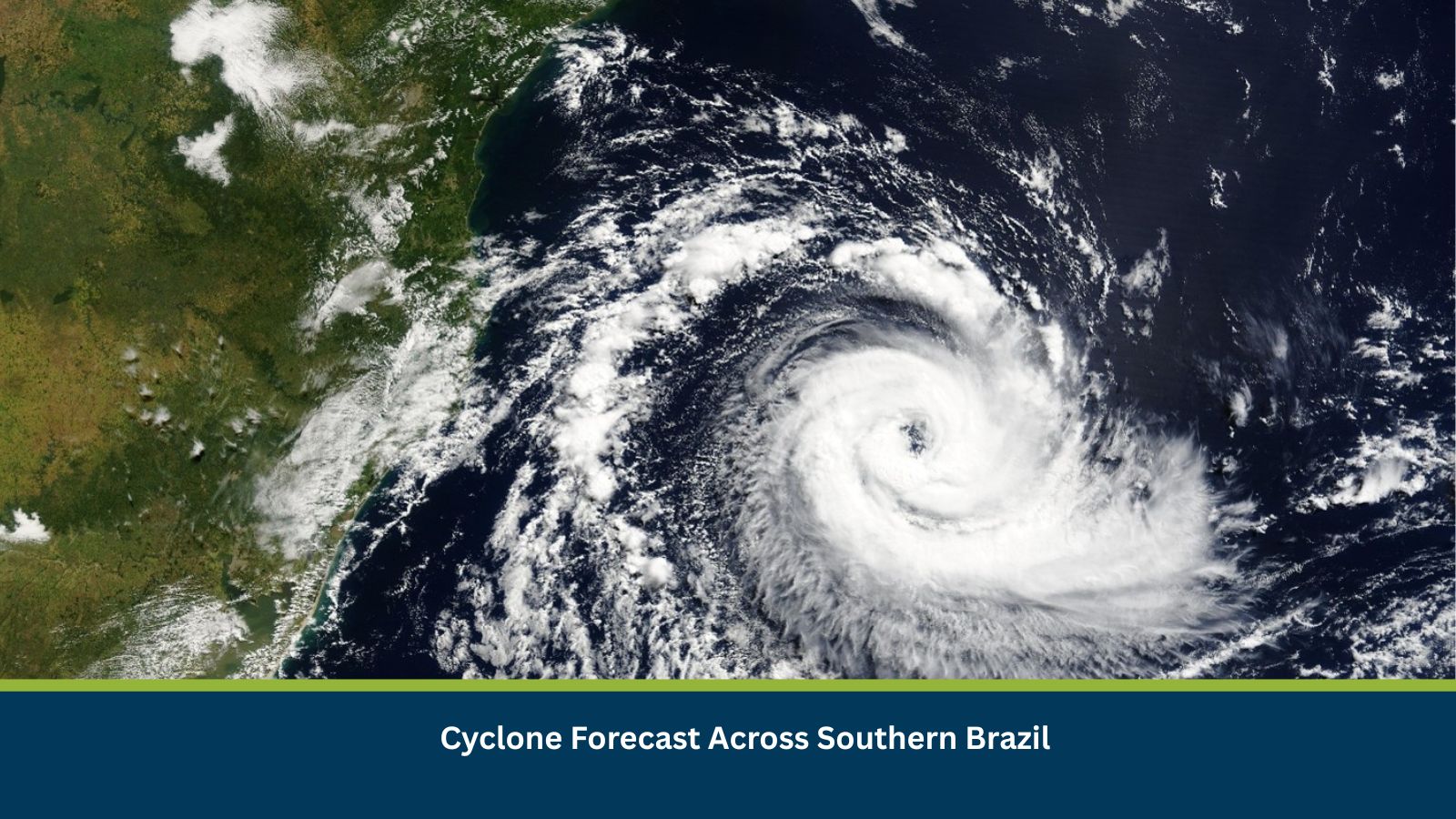
Executive Summary for the Cyclone Forecast Across Southern Brazil
Meteorological authorities have issued warnings for the approach of an extratropical cyclone across southern Brazil from 06 July, with Rio Grande do Sul, Santa Catarina and Paraná expected to experience heavy rainfall, strong winds, thunderstorms and rough coastal conditions. The system is likely to disrupt transportation, logistics operations, power supply and business activities across the region. Businesses are advised to monitor official weather updates and implement contingency measures to minimize operational impacts.
- Date of Event: 06 July 2026
- Location: Rio Grande do Sul, Santa Catarina and Paraná, Brazil
- Risk Category: Environment
- Severity Score: 4 / 5
- Confidence Level: 75%
What is Risk Analysis in the Context of Climate & Weather Risk Events
Environment risk analysis assesses the impact of severe weather events on business continuity, transportation networks, workforce safety and critical infrastructure. Extratropical cyclones can generate destructive winds, heavy precipitation, flash flooding, coastal surges and localized power outages, resulting in significant operational disruptions across affected regions.
The approaching cyclone is expected to interact with a cold front, creating favorable conditions for severe thunderstorms and intense rainfall. Authorities have warned of strong wind gusts, flooding in low-lying areas, hazardous maritime conditions and disruptions to road, air and port operations. Organizations with operations in southern Brazil should prepare for potential interruptions to logistics, employee mobility and essential services.
Known Hotspots and Sensitive Areas
High Impact
- Rio Grande do Sul
- Santa Catarina
- Paraná
- Porto Alegre Metropolitan Region
- Coastal areas along southern Brazil
Medium Impact
- Federal highways connecting southern states
- Ports along the southern coastline
- Regional airports and logistics hubs
Low Impact
- Central and northern Brazil outside the cyclone’s projected impact zone
Impact on Transportation and Services
Heavy rainfall and strong winds may result in localized flooding, fallen trees, power outages, and hazardous driving conditions across southern Brazil. Road transportation could experience delays due to flooding and debris, while airports and maritime operations may face schedule disruptions caused by adverse weather conditions. Utility providers may also encounter localized service interruptions, affecting businesses and residential communities.
Recommended Actions
- Monitor advisories issued by Brazil’s National Institute of Meteorology (INMET) and local Civil Defence authorities.
- Review business continuity and emergency response procedures.
- Avoid non-essential travel during periods of severe weather.
- Secure outdoor assets and critical infrastructure vulnerable to high winds.
- Communicate contingency plans with employees, suppliers, and logistics partners.
Multidimensional Impact
The cyclone is expected to affect multiple sectors simultaneously, including transportation, energy, agriculture, logistics and tourism. Extended power outages, flooding, and transport disruptions could delay supply chains and reduce operational capacity for businesses across southern Brazil. Organizations should maintain situational awareness as weather conditions may evolve rapidly throughout the event.
Emergency Contacts
Emergency Services: 190 (Police)
Fire & Rescue: 193
Final Thoughts
The forecast cyclone represents a high operational and weather-related risk for southern Brazil. Organizations should prioritize employee safety, closely monitor official forecasts and activate contingency measures to reduce the impact of transport disruptions, infrastructure damage and service interruptions. Leveraging MitKat’s Datasurfr enables businesses to receive real-time weather alerts, monitor evolving conditions and make informed decisions to safeguard their people, assets and operations during severe weather events.