




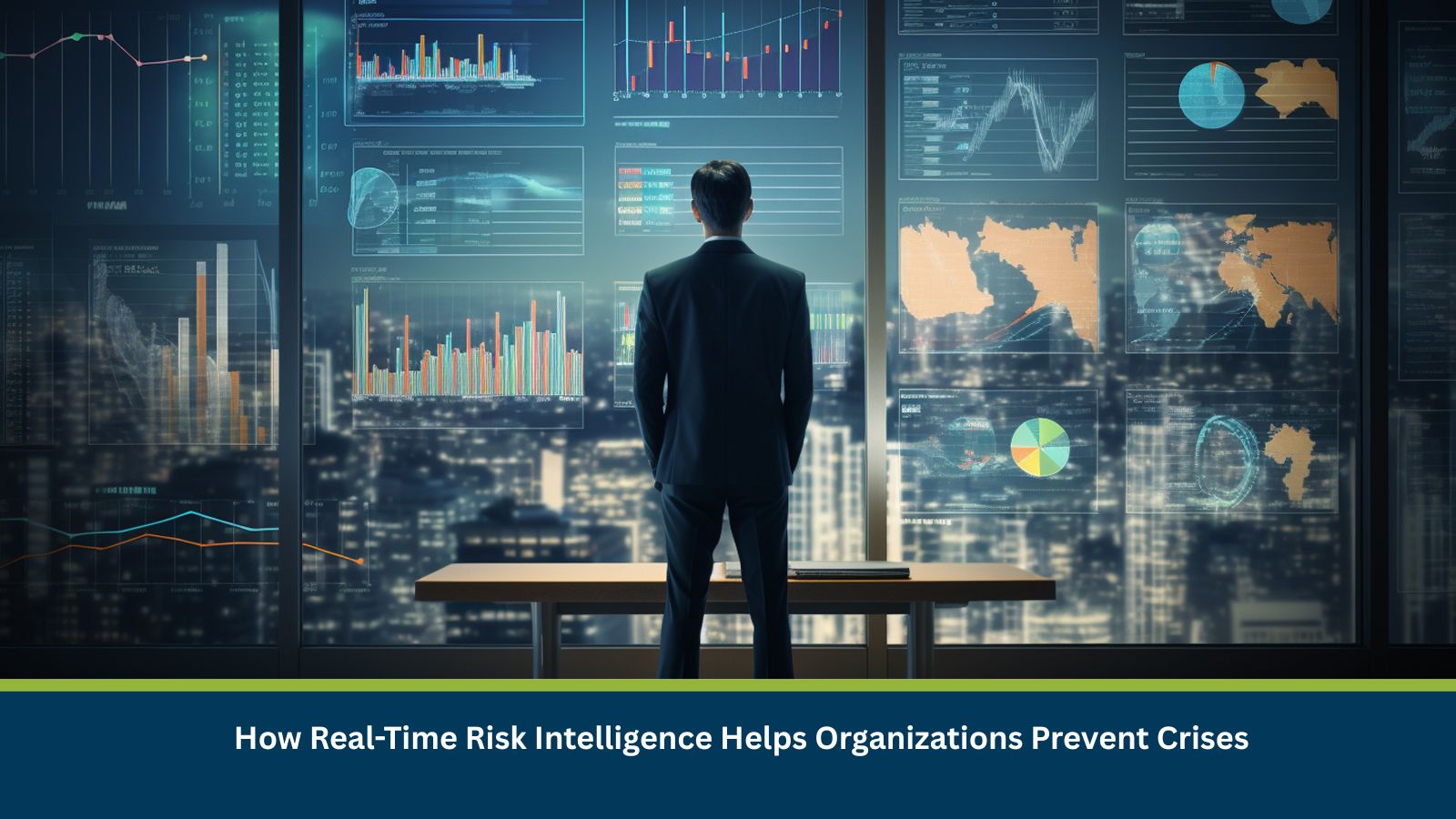
In today’s fast-moving business environment, crises can emerge without warning. From geopolitical unrest and cyberattacks to natural disasters, supply chain disruptions, and employee safety threats, organizations face risks that can quickly escalate into major operational challenges.
To stay ahead, businesses need more than traditional risk management. They need real-time risk intelligence that helps identify threats early, assess potential impact, and take proactive action before incidents become crises.
This blog explores how real-time risk intelligence helps organizations prevent crises, strengthen operational resilience, and make faster, smarter decisions.
What Is Real-Time Risk Intelligence?
Real-time risk intelligence is the continuous collection, analysis, and interpretation of risk-related information as events unfold.
It combines data from multiple sources such as news alerts, weather updates, geopolitical developments, cybersecurity signals, social media, travel advisories, and location-based intelligence.
The goal is simple: give organizations timely, actionable insights so they can respond before risks disrupt operations.
Why Real-Time Risk Intelligence Matters
Traditional risk management often focuses on historical data and periodic assessments. While useful, these methods may not be enough in a world where threats change rapidly.
Real-time risk intelligence enables organizations to:
- Detect emerging threats early
- Monitor global incidents as they happen
- Protect employees, assets, and operations
- Improve crisis preparedness
- Make faster decisions
- Reduce business disruption
- Strengthen operational resilience
For global enterprises, real-time visibility is essential to staying prepared and proactive.
How Real-Time Risk Intelligence Helps Prevent Crises
1. Early Threat Detection
The earlier an organization identifies a risk, the better it can prevent escalation.
Real-time intelligence helps detect:
- Political unrest
- Natural disasters
- Cybersecurity threats
- Transportation disruptions
- Health emergencies
- Workplace safety risks
- Supply chain interruptions
Early detection allows teams to activate preventive measures before the situation worsens.
2. Improved Situational Awareness
Situational awareness helps organizations understand what is happening, where it is happening, and who or what may be affected.
With real-time risk intelligence, businesses can track incidents across regions, monitor employee exposure, and evaluate operational impact.
This helps leaders make informed decisions during uncertain situations.
3. Faster Decision-Making
During a crisis, delays can increase risk and damage.
Real-time intelligence provides decision-makers with timely insights, helping them act quickly and confidently.
Security, operations, HR, and leadership teams can coordinate faster when they have access to the same updated information.
4. Proactive Employee Safety Management
Employee safety is one of the most important priorities during any risk event.
Real-time risk intelligence helps organizations:
- Identify employees in affected areas
- Send timely alerts
- Provide safety instructions
- Support emergency response
- Coordinate evacuations if required
This is especially valuable for multinational organizations and companies with traveling employees.
5. Stronger Business Continuity Planning
Real-time intelligence supports business continuity by helping organizations anticipate disruptions before they impact critical operations.
Businesses can prepare backup plans for:
- Supply chain interruptions
- Facility closures
- Travel disruptions
- Cyber incidents
- Extreme weather events
- Regional instability
This helps reduce downtime and maintain essential services.
6. Better Crisis Communication
Effective communication is critical during emergencies.
Real-time risk intelligence supports faster and more accurate communication with employees, leadership teams, customers, and stakeholders.
Organizations can issue relevant alerts, updates, and instructions based on verified information rather than assumptions.
Role of AI in Real-Time Risk Intelligence
Artificial intelligence is transforming how organizations detect and manage risks.
AI-powered systems can analyse large volumes of data in real time and identify patterns that may indicate emerging threats.
AI can support risk intelligence through:
- Automated threat detection
- Predictive risk analytics
- Real-time alert generation
- Incident prioritization
- Location-based risk assessment
- Faster data analysis
- Decision-support insights
By using AI, organizations can reduce manual monitoring efforts and respond faster to potential crises.
GEO Intelligence and Location-Based Risk Monitoring
GEO intelligence plays a key role in crisis prevention by connecting risk events to specific locations.
Location-based monitoring helps organizations understand whether an incident may affect:
- Employees
- Offices
- Warehouses
- Manufacturing units
- Supply routes
- Data centres
- Business travellers
This enables targeted alerts and faster response actions.
Key Benefits of Real-Time Risk Intelligence
Enhanced Operational Resilience
Organizations become better prepared to manage uncertainty and maintain continuity.
Reduced Response Time
Teams can act quickly when risk information is available in real time.
Improved Risk Visibility
Businesses gain a clearer view of threats across locations and operations.
Better Protection for People and Assets
Employees, facilities, and critical infrastructure can be protected more effectively.
Lower Business Impact
Early intervention reduces financial, operational, and reputational damage.
Best Practices for Implementing Real-Time Risk Intelligence
Build a Centralized Risk Monitoring Framework
Create a unified approach for tracking, analysing, and responding to risks.
Use AI-Powered Analytics
Leverage AI to detect emerging threats faster and improve decision-making.
Integrate Location Intelligence
Map risks against employee, asset, and operational locations.
Establish Clear Escalation Protocols
Define who must act, when they must act, and how decisions should be communicated.
Train Teams Regularly
Security, operations, HR, and leadership teams should be trained on crisis response procedures.
Review and Update Risk Plans
Risk environments change continuously, so response strategies must be updated regularly.
Future of Real-Time Risk Intelligence
The future of risk intelligence will be driven by automation, AI, predictive analytics, and geospatial intelligence.
Organizations will increasingly rely on intelligent systems that can detect threats, assess impact, and recommend actions in real time.
As risks become more complex, real-time intelligence will become a core part of enterprise security, crisis management, and operational resilience.
Frequently Asked Questions
What is real-time risk intelligence?
Real-time risk intelligence is the continuous monitoring and analysis of risk-related data to identify emerging threats and support faster decision-making.
How does real-time risk intelligence help prevent crises?
It helps organizations detect risks early, assess impact, send alerts, and take preventive action before incidents escalate.
Conclusion
Real-time risk intelligence helps organizations move from reactive crisis response to proactive crisis prevention. By continuously monitoring global threats, analyzing risk signals, and delivering actionable insights, businesses can detect risks early and respond before they escalate.
With AI-powered analytics, GEO intelligence, and real-time alerts, organizations can protect employees, safeguard assets, maintain business continuity, and strengthen operational resilience.
In an unpredictable world, real-time risk intelligence is no longer optional. It is essential for organizations that want to stay prepared, agile, and resilient.
Datasurfr helps organizations prevent crises through AI-powered real-time risk intelligence, continuous threat monitoring, geospatial awareness, and actionable alerts, enabling security and operations teams to identify emerging risks early, make informed decisions, protect employees and assets, and respond proactively before incidents escalate into major disruptions.