





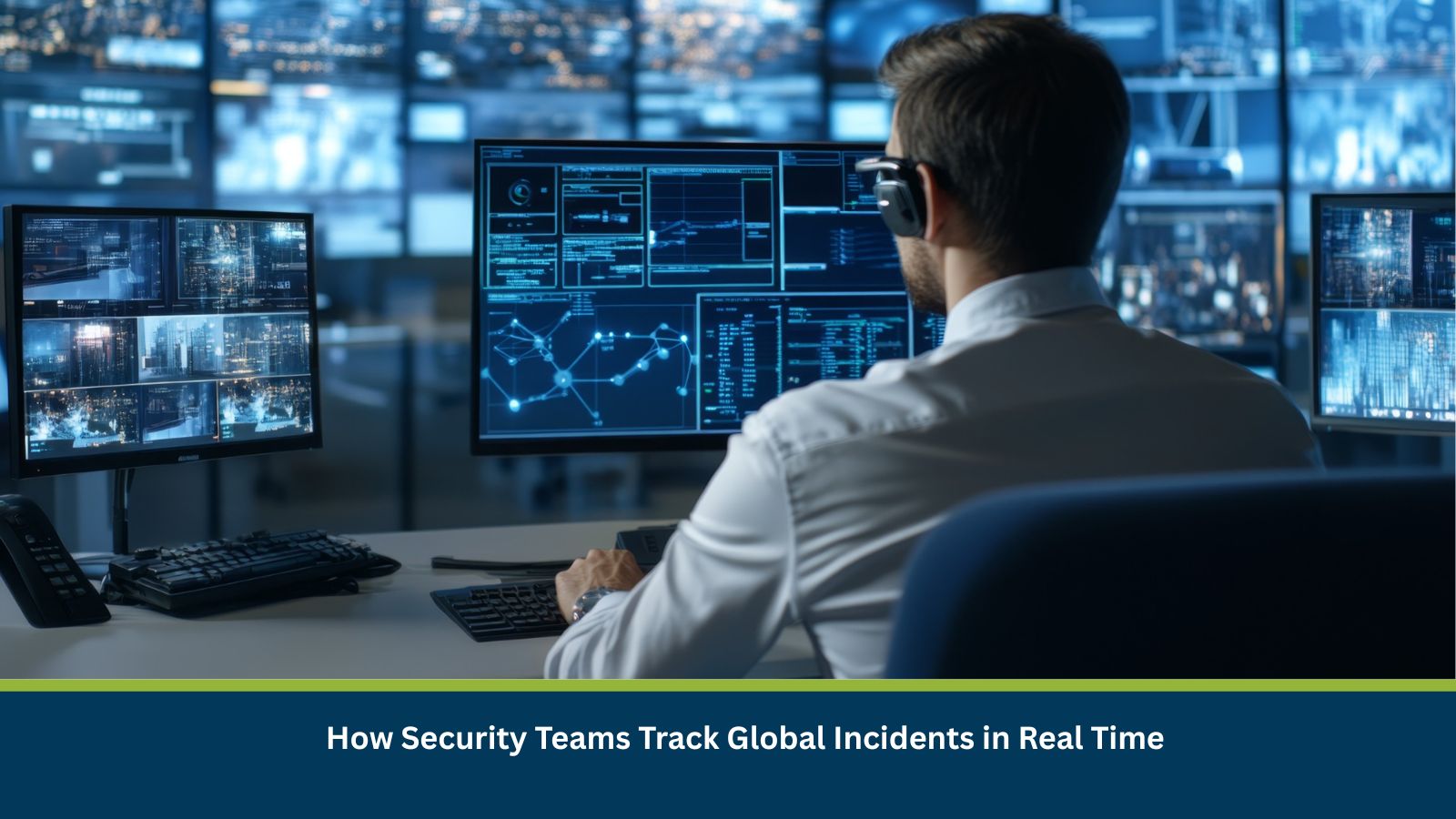
In today’s interconnected world, security threats can emerge anywhere—and spread rapidly across borders. From geopolitical conflicts and protests to cyberattacks and natural disasters, organizations must stay ahead of risks that can disrupt operations and endanger people.
To achieve this, modern security teams rely on real-time global incident tracking, powered by advanced technologies, data intelligence, and AI-driven insights. This capability is no longer optional—it is essential for ensuring safety, resilience, and business continuity.
Why Real-Time Incident Tracking Matters
Global incidents evolve quickly. A protest can escalate within hours, a cyberattack can spread in minutes, and a natural disaster can disrupt entire regions overnight.
Key reasons security teams prioritize real-time tracking:
- Protect employees and assets across locations
- Maintain operational continuity
- Respond quickly to emerging threats
- Reduce financial and reputational risks
Without real-time visibility, organizations risk delayed responses and increased exposure to threats.
What is Real-Time Incident Tracking?
Real-time incident tracking is the process of monitoring, analysing and responding to global events as they happen.
It involves:
- Collecting data from multiple sources
- Filtering and verifying information
- Mapping incidents geographically
- Delivering actionable alerts to decision-makers
This enables security teams to move from reactive to proactive risk management.
Key Data Sources Used by Security Teams
To track incidents globally, security teams rely on a wide range of data inputs:
1. News and Media Reports
Traditional media remains a reliable source for verified updates on major events.
2. Social Media Signals
Platforms like X (Twitter), Facebook, and local networks provide early indicators of emerging incidents.
3. Government and Official Advisories
Alerts from law enforcement, embassies, and public agencies provide authoritative guidance.
4. Satellite and Sensor Data
Used for monitoring environmental risks, infrastructure damage, and movement patterns.
5. Internal Organizational Data
Travel systems, employee check-ins, and operational data help assess internal exposure.
How Security Teams Process Global Incident Data
1. Data Aggregation
Security teams collect data from multiple sources into a centralized system to avoid fragmentation.
2. AI and Machine Learning Analysis
AI helps:
- Filter irrelevant information
- Detect patterns and anomalies
- Identify high-risk incidents
3. Geo-Tagging and Mapping
Incidents are mapped to specific locations, allowing teams to:
- Identify affected areas
- Monitor proximity to assets and personnel
- Visualize risk zones
4. Risk Scoring and Prioritization
Not all incidents are equal. Security teams assign risk levels based on:
- Severity of the event
- Location impact
- Potential escalation
5. Alerting and Notifications
Once verified, alerts are sent to relevant stakeholders for immediate action.
Technologies Powering Real-Time Monitoring
Artificial Intelligence (AI)
AI enables faster processing of large data volumes and improves accuracy in identifying critical events.
Natural Language Processing (NLP)
NLP helps analyse text data from multiple languages and understand context.
Geospatial Intelligence
Mapping tools provide location-based insights for better decision-making.
Cloud-Based Platforms
Allow real-time access to data across global teams.
How Security Teams Respond to Incidents
Tracking is only the first step—response is critical.
Typical response actions include:
- Alerting employees in affected areas
- Rerouting travel and logistics
- Activating crisis response teams
- Coordinating with local authorities
- Implementing safety protocols
Use Cases Across Industries
Corporate Security
Protect employees and facilities across global locations.
Travel Risk Management
Monitor risks affecting business travellers and provide real-time alerts.
Supply Chain and Logistics
Avoid disruptions by tracking incidents along transport routes.
Government and Public Safety
Enhance emergency response and crowd management.
Challenges in Real-Time Incident Tracking
Despite its advantages, there are challenges:
1. Information Overload
Large volumes of data can make it difficult to identify what matters.
2. Misinformation
Unverified or false reports can lead to incorrect decisions.
3. Data Fragmentation
Multiple sources can create inconsistencies.
4. Rapidly Changing Situations
Events can evolve quickly, requiring constant updates.
Best Practices for Effective Monitoring
To improve real-time tracking, organizations should:
- Combine AI with human analysis
- Use multiple data sources for verification
- Establish clear escalation protocols
- Train teams regularly
- Maintain centralized dashboards
Future Trends in Incident Tracking
Predictive Intelligence
AI will increasingly forecast risks before they occur.
Automation
Automated alerts and responses will reduce reaction times.
Integration with IoT
Connected devices will provide real-time environmental and operational data.
Hyper-Local Insights
More precise, location-based intelligence will enhance decision-making.
FAQs
1. What is real-time incident tracking?
It is the process of monitoring and responding to global events as they happen using data and technology.
2. How do security teams detect incidents early?
By analysing data from news, social media, and official sources using AI and analytics.
Conclusion
Real-time tracking of global incidents has become a cornerstone of modern security strategy. By leveraging AI, geospatial intelligence, and multi-source data, security teams can detect risks early, respond quickly, and protect people and operations effectively.
In a world where uncertainty is constant, the ability to track and act on global incidents in real time is not just an advantage—it is a necessity for resilience and success.
Datasurfr helps security teams track global incidents in real time by delivering AI-powered, geo-tagged alerts from multiple sources, enabling faster risk detection, informed decision-making and proactive response to protect people and operations.