




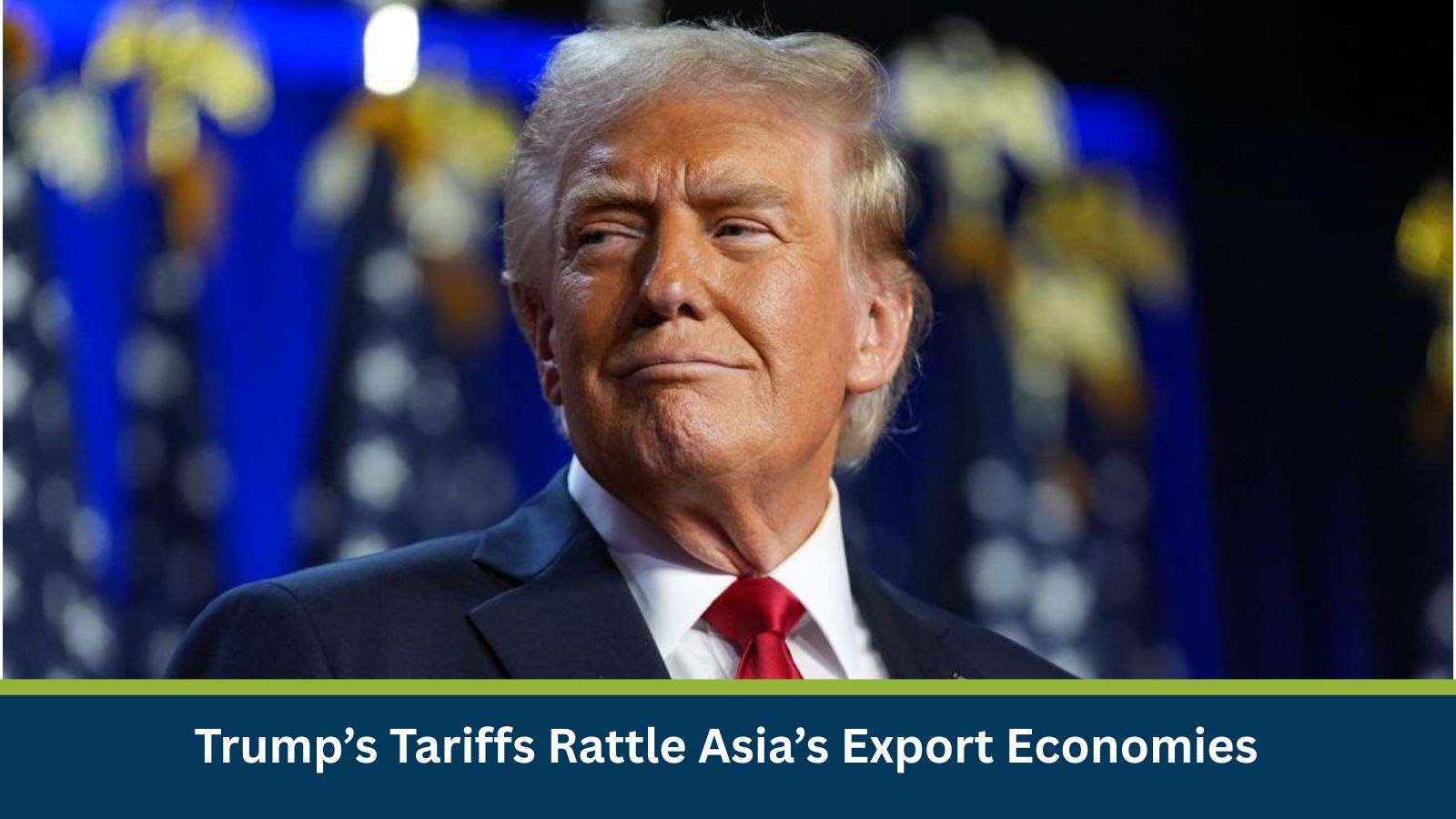
Heightened market volatility and uncertainty have shaped the first six months of Trump presidency. U.S. tariffs have roiled global markets. In Asia-Pacific region, continued trade unpredictability presents risks for their primarily export-oriented economies. Despite these challenges, Asia-Pacific (APAC) remains a vital engine of global innovation, growth and consumption.x
Asian economies, including America’s closest allies, have been hit hard. Washington has announced 25% tariffs on imports from Japan and South Korea. Companies in both Japan and South Korea are working overtime to negotiate a better deal as well as re-evaluating supply chains and pricing as they brace for possible tariff pain. APAC’s largest economies, particularly those with significant exposure to the US markets, have increased focus on hedging strategies to manage currency market risk and interest rate volatility. A slowdown or recession in the US economy in the coming quarters could also adversely impact Asian economies.
Countries in South and South-east Asia are designing their own strategies to deal with the U.S. Vietnam and Indonesia have successfully negotiated interim trade deals with the US. The deal with Vietnam sets 20% tariffs for its exports to the US; transhipped goods would face a 40% levy. The threat of higher tariffs for transhipment will pressure South-east Asian manufacturers to diversify their sources of inputs and components away from China. Indonesia faces 19% tariffs; it has made concessions on military and energy purchases.
India is engaged in a delicate balancing act to shield its domestic industries from the U.S. push for “reciprocal tariffs,” while addressing its significant trade surplus.
Over a dozen other Asian countries have received letters. Bangladesh and Cambodia are among the worst-hit by new tariffs, facing rates of 35% and 36% respectively on their critical garment exports. With the U.S. as their largest export market, both countries face immediate supply chain shifts.
Beyond direct tariffs, Trump administration has added a new dimension with the threat of severe secondary sanctions on any country buying Russian oil, a threat repeated by the NATO Secretary General. This has implications for China and India – two top buyers of Russian crude.
The current U.S. administration’s trade stance marks a resurgent era of tariffs and deal-by-deal negotiations, in stark contrast to the WTO-mandated free trade environment of a decade ago. This approach is more sweeping, targeting allies and partners, not just China and is far more transactional. Trump’s narrow, bilateral and transactional view of international trade has forced Asian economies to adapt in real-time. Countries of the region are looking to develop trade ties with alternative partners to offset the setback from U.S. policies. Beijing has recently signalled interest in resuming trilateral FTA talks with Japan and South Korea, pointing toward a more pragmatic economic engagement despite political frictions.
Rising geopolitical risks and tariff-related uncertainty has implications for export-oriented economies of South and South-east Asia. The countries of the region are looking to intensify intra-regional trade as well as in regions as far as Africa, Middle East, Europe and Latin America. To strengthen supply chain resilience, businesses are looking at:
- Proactive geopolitical risk intelligence, scenario-planning and agility in execution responding to policy shifts
- Supply Chain diversification to mitigate country-specific risks and to benefit from relocation of supply chains. The trend of onshoring, nearshoring and friend-shoring will continue.
- Geopolitical alignment/compatibility will become a key factor in deciding location of businesses and supply chains.
In sum, East and Southeast Asia’s export-led markets face a challenging road ahead if U.S. protectionism persists. Tariff battles could reshape investment flows and trade patterns. Political and business leaders must monitor the evolving geopolitical and economic environment closely and be agile to tailor their strategies accordingly.
Disclaimer: The article has reference to open sources including Al Jazeera, BBC and Reuters.