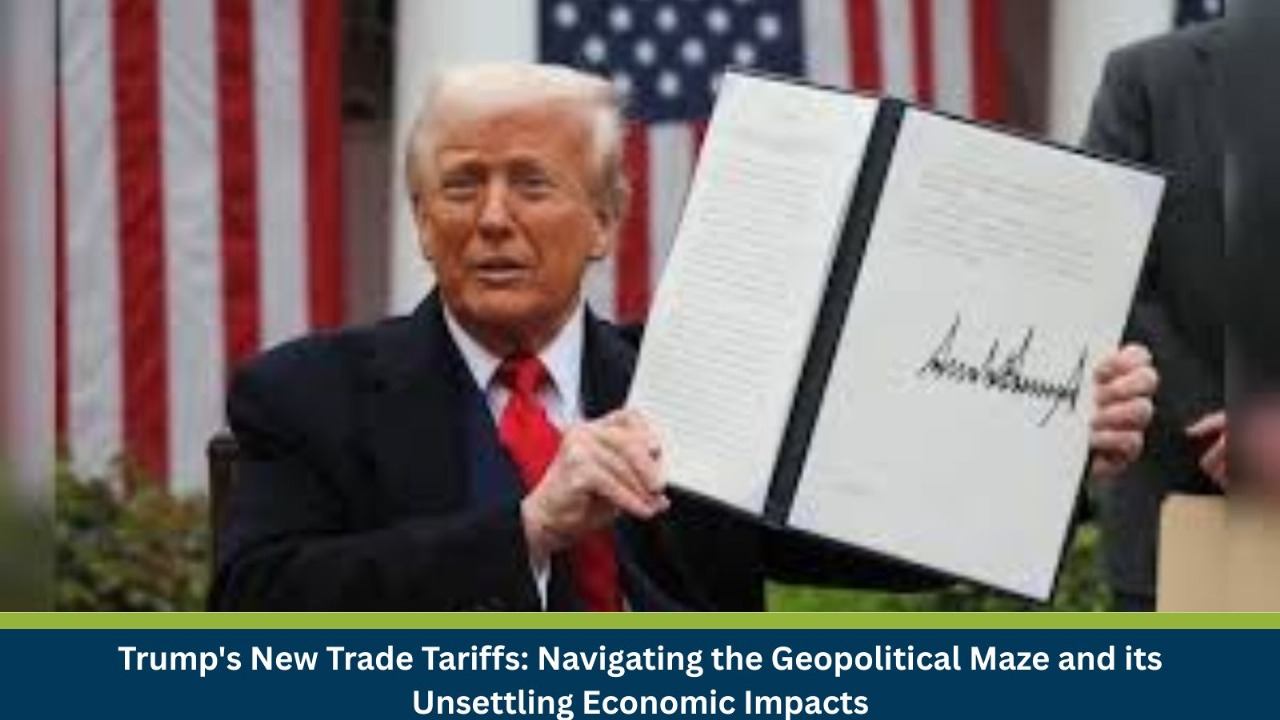
Trump’s New Trade Tariffs: Navigating the Geopolitical Maze and its Unsettling Economic Impacts
Unpacking Trump’s new trade tariffs: A look at bilateral deals with the EU, UK, and others, and the key risks and challenges for global businesses.
The global trade system is in flux, and the old certainties no longer apply. The wave of bilateral trade deals negotiated by the Trump administration, characterized by broad, non-specific tariffs, has created a new and unsettling reality for businesses. While these agreements are framed as victories for “America First,” a closer look reveals a landscape rife with uncertainty, rising costs, and strategic ambiguity. For business heads, Chief Security Officers, and Chief Risk Officers, understanding this new framework is not just an exercise in economics; it’s a critical component of strategic survival.
The Era of Non-Targeted Tariffs
The most striking feature of the new tariff regime is its blanket application. Tariffs of 10% to 20% have been levied on broad swaths of imports from key partners like the UK, EU, Japan, and South Korea. Unlike traditional trade policy, which targets specific sectors with precision to address dumping or unfair subsidies, these new tariffs are often non-sector-specific. For example, the 15% tariff on Japan applies broadly, rather than being focused solely on a specific industry like semiconductors or automobiles. This approach forces U.S. businesses to absorb higher input costs across the board, potentially negating any strategic gains the administration may be aiming for.
While the White House argues that foreign exporters will bear the cost, our data and the consensus of economic analysts indicate otherwise. A recent study by the Budget Lab at Yale University estimates that U.S. households could lose up to $2,400 annually due to these tariffs. The costs are being absorbed by American companies and, ultimately, passed on to consumers, leading to inflationary pressure in sectors like electronics, furniture, and consumer goods. This has created a new and unexpected layer of inflation that businesses must contend with, impacting everything from pricing strategies to consumer demand.
Winners, Losers, and the Uncertain Middle
The new tariff regime has created a complex hierarchy of winners and losers.
Those with deals: Countries like the EU, UK, Japan, and South Korea have secured deals that, while imposing tariffs, are lower than initially threatened. The UK’s Atlantic Framework, for instance, locks tariffs at 10%, a political win for a post-Brexit Britain seeking to anchor its economic ties to the U.S. In return, these nations have made substantial commitments, such as the EU pledging to purchase hundreds of billions of dollars in U.S. energy and investment.
The at-risk: Countries without a final agreement, such as India and Mexico, face a far more precarious future. India is currently under a 25% tariff threat, with negotiations stalled over intellectual property protections and agricultural subsidies. Mexico, a crucial partner under USMCA, has received a temporary extension, but faces the threat of a 30-35% tariff on key exports like autos and agricultural goods. This uncertainty makes long-term planning virtually impossible for companies with supply chains tied to these countries.
The new normal: Countries like Vietnam, which have a deal but with a 40% surcharge on transshipped goods, face a new reality of compliance and inspection burdens. This highlights a key feature of the new framework: trade is no longer just about tariffs, but also about a new and more complex web of non-tariff barriers and compliance requirements.
Strategic Implications and Risk Mitigation
For business leaders, the current trade environment is a wake-up call to re-evaluate traditional risk management strategies. The days of relying on stable, long-term trade frameworks are over. The new reality demands a proactive and data-driven approach to managing political and economic risk.
Supply Chain Diversification: The tariffs on Mexico and India, as well as the transshipment surcharges on Vietnam, underscore the dangers of over-concentration. Business leaders must consider diversifying their supply chains to include a wider range of partners, reducing their vulnerability to sudden political shifts.
Scenario Planning: The lack of publicly available documentation for many of these deals makes it difficult to predict future policy enforcement. Chief Risk Officers must develop robust scenario planning models that account for a range of outcomes, from tariff escalations to sudden trade sanctions.
Harnessing Trade Intelligence: In this unpredictable environment, real-time data is a business’s most valuable asset. Datasurfr provides the tools to monitor global trade flows, track regulatory changes, and assess the political stability of key trading partners. This intelligence allows companies to make agile, data-informed decisions, mitigating risk before it escalates.
The new era of Trump’s trade deals is a high-stakes game of economic and geopolitical chess. The rules are still being written, and the penalties for miscalculation are severe. The companies that will thrive are not those that hope for a return to the past, but those that embrace this new reality with strategic foresight, robust risk management, and a commitment to leveraging data as a competitive advantage.