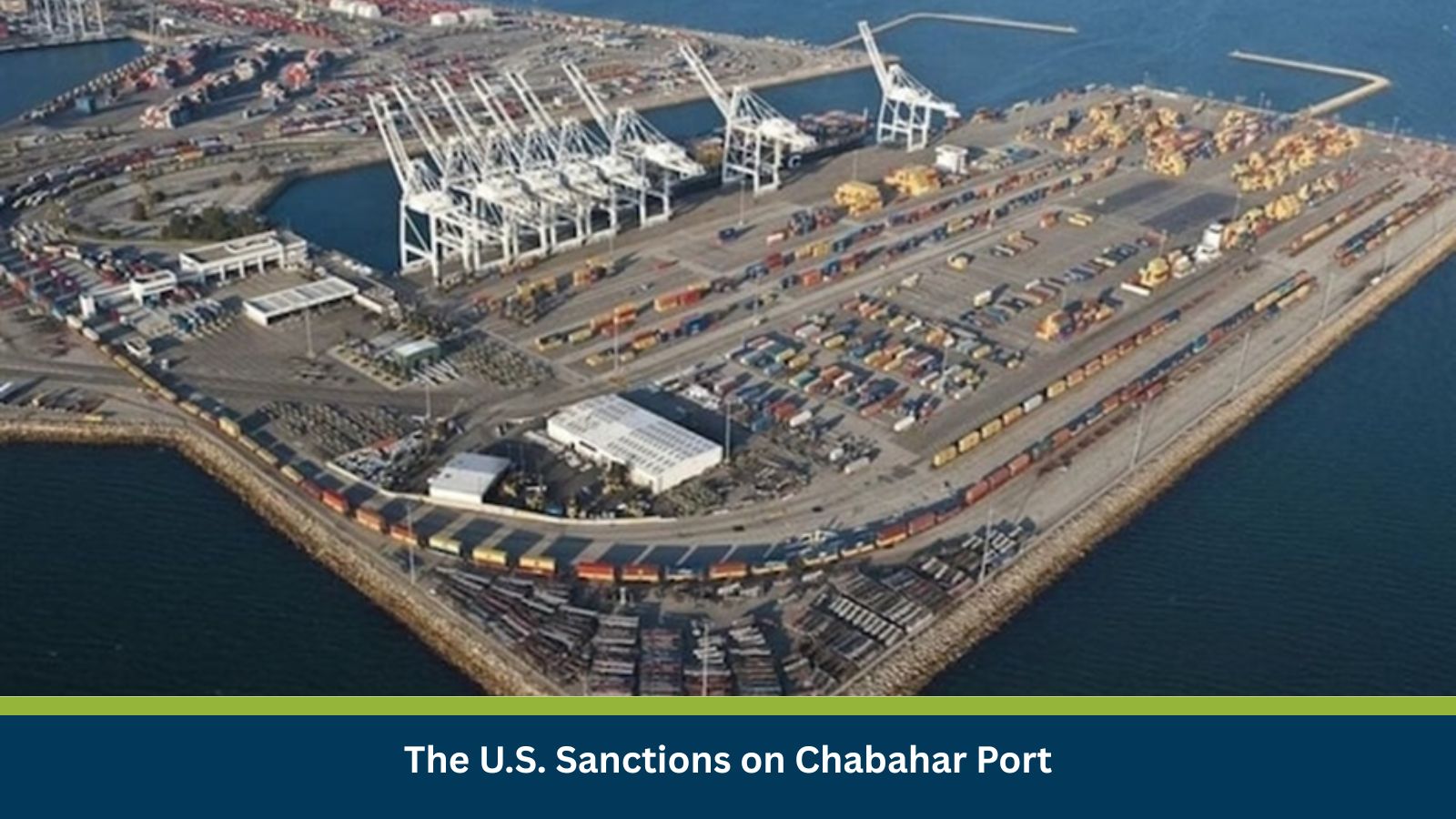
In a recent and significant development, the United States has withdrawn the 2018 sanctions waiver for Iran’s Chabahar Port, a critical infrastructure project primarily developed by India. This decision effectively ends the exception granted during the previous administration and places Indian operations at the port under the risk of U.S. penalties under the Iran Freedom and Counter-Proliferation Act (IFCA). The move is part of the U.S.’s “maximum pressure” policy against Iran, with officials citing a change in circumstances, particularly the Taliban’s 2021 takeover of Afghanistan, as a key factor. The revocation follows a period of heightened U.S.-Iran hostility and a general trend of the U.S. government seeking to “rescind or modify” any relief previously provided to Iran.
Chabahar’s Strategic Significance for India
For India, the Chabahar Port is more than just a commercial venture; it is a vital geopolitical asset. Situated at the mouth of the Gulf of Oman, it offers India a crucial gateway to Afghanistan and the resource-rich markets of Central Asia. The port’s development, which began with India’s involvement in 2002, was a strategic move to bypass rival Pakistan and the China-developed Gwadar Port, which lies just to the east. India’s investment is focused on a specific part of the project, with a long-term bilateral contract for a 10-year operation signed in 2024. The port has already proven its value by handling over 8 million tonnes of cargo and serving as a critical humanitarian aid corridor for Afghanistan. Future plans include expanding its capacity and linking it to a rail network by mid-2026, which would integrate it into the International North-South Transport Corridor (INSTC), further extending India’s reach to Russia and beyond.
Assessing the Implications
The U.S. sanctions present a complex set of risks for India and its regional ambitions. The most immediate concern is the exposure of Indian operations at the port to U.S. penalties. This could directly affect India’s financial investment and hamper the port’s operations, as a wide range of international actors, including shippers, insurers, and equipment suppliers, may now avoid working with the project to steer clear of sanctions. This would not only stall the port’s development but also jeopardize India’s broader connectivity plans for the INSTC connectivity. The move also tests the diplomatic relationship between India and the U.S., a partnership that has grown significantly in recent years. While India has previously conceded to U.S. demands, such as ending oil imports from Iran and Venezuela in 2016, this issue is different as it directly impacts a key strategic asset. New Delhi has stated that it is currently “examining the implications,” signaling a careful and measured response to this diplomatic challenge.