





Thailand and Cambodia’s ceasefire is a fragile solution to a long-standing conflict. Datasurfr analyzes the business risks and political volatility that remain.
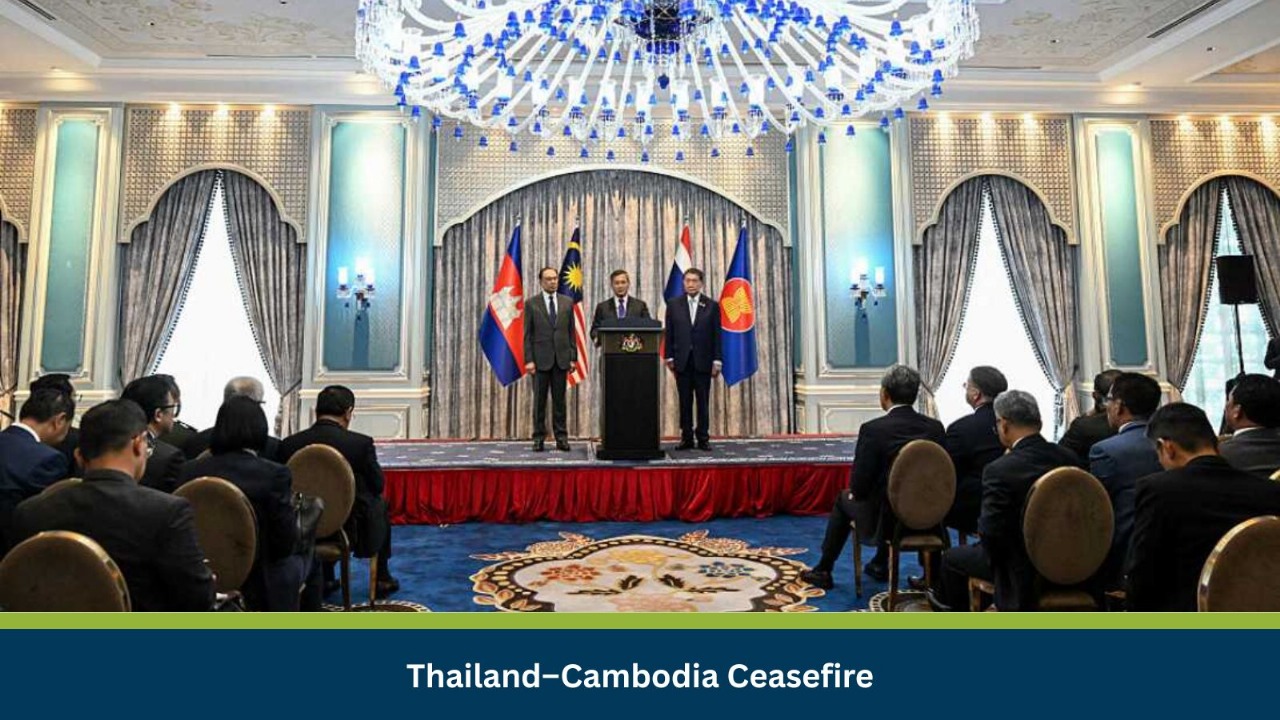
The announcement of an “immediate and unconditional” ceasefire between Thailand and Cambodia on July 28, 2025, brought a welcome respite from a week of deadly border conflict. Brokered by Malaysian Prime Minister Anwar Ibrahim with diplomatic support from the United States and China, the truce was a crucial step back from the brink. However, for business leaders, supply chain managers, and risk professionals, this is not a time for celebration. The ceasefire, while holding for now, is a temporary patch on a deep-seated problem. The underlying factors of the conflict from historical grievances to political instability, remain unaddressed, creating a highly volatile environment for businesses operating in Southeast Asia.
The swift resolution was a product of high-stakes external pressure, notably from President Donald Trump, who threatened punitive trade tariffs of up to 36% on both countries. This economic coercion, while effective in forcing a truce, did not resolve the core issues. As a result, the region remains a hotspot of political volatility and commercial risk.
The Peril of an Unresolved Conflict
The conflict’s root causes are deeply embedded in long-standing territorial disputes dating back to the colonial era. The recent fighting was sparked by competing claims over a disputed Khmer-Hindu temple and accusations of military incursions. While the guns have fallen silent, the mutual distrust remains palpable. Both sides continue to accuse each other of violating the truce, with Cambodian soldiers still held in Thai custody. Critically, troops from both nations remain stationed along the border, a tinderbox waiting for a spark.
This state of unresolved tension poses a direct and tangible threat to business operations. The border, a vital artery for trade and labor, remains almost entirely closed. While the ceasefire holds, the logistical disruptions continue to impact cross-border trade, migrant labor flows, and regional supply chains. According to a recent analysis, these closures could lead to a significant reduction in Thailand’s border trade growth, impacting businesses reliant on the Thai-Cambodian corridor. The economic damage from these disruptions is already significant, and the threat of a renewed conflict looms large, keeping investors cautious.
Political Instability: The Elephant in the Room
The border conflict is not an isolated event; it is intertwined with Thailand’s own internal political crisis. The suspension of Prime Minister Paetongtarn Shinawatra and the subsequent weakening of the ruling coalition have created a power vacuum and a climate of political uncertainty. The domestic political turmoil adds a layer of unpredictable risk, as a fragile government may be more susceptible to nationalist pressures or unable to effectively manage a future escalation of the border dispute. This confluence of a fragile ceasefire and a weakened political establishment is a worst-case scenario for business predictability and long-term planning.
Strategic Imperatives for Businesses
For business leaders, Chief Security Officers, and Chief Risk Officers, a proactive approach to risk management is now non-negotiable. The days of treating Southeast Asia as a monolithic, stable market are over.
- Monitor Geopolitical Developments: The scheduled military-to-military talks on August 4 are a crucial point to watch. The outcome of these discussions will be a key indicator of whether the ceasefire can evolve into a more durable peace. Companies must leverage business intelligence tools to track these developments in real-time, understanding the potential for renewed conflict.
- Rethink Supply Chain Resilience: With the border closed and potential for future disruptions, businesses must re-evaluate their supply chain dependencies. This could mean diversifying sourcing strategies, exploring alternative logistical routes, or establishing buffer stocks to mitigate the impact of a sudden border closure.
- Assess Political Risk: Beyond the border dispute, the ongoing political crisis in Thailand poses a significant risk. Political volatility can lead to policy changes, regulatory uncertainty, and social unrest. Companies should conduct thorough political risk assessments and build scenarios for different political outcomes, including the potential for a fresh constitutional crisis.
The ceasefire between Thailand and Cambodia, while a welcome diplomatic achievement, is a state of suspended animation. It has paused the violence but has not healed the wounds or resolved the fundamental issues. For businesses operating in this dynamic and complex region, the focus must remain on vigilance, proactive risk management, and the understanding that this peace is fragile. The long-term durability of the truce is in question, and those who fail to see beyond the temporary calm will be the most exposed when the next storm hits.