





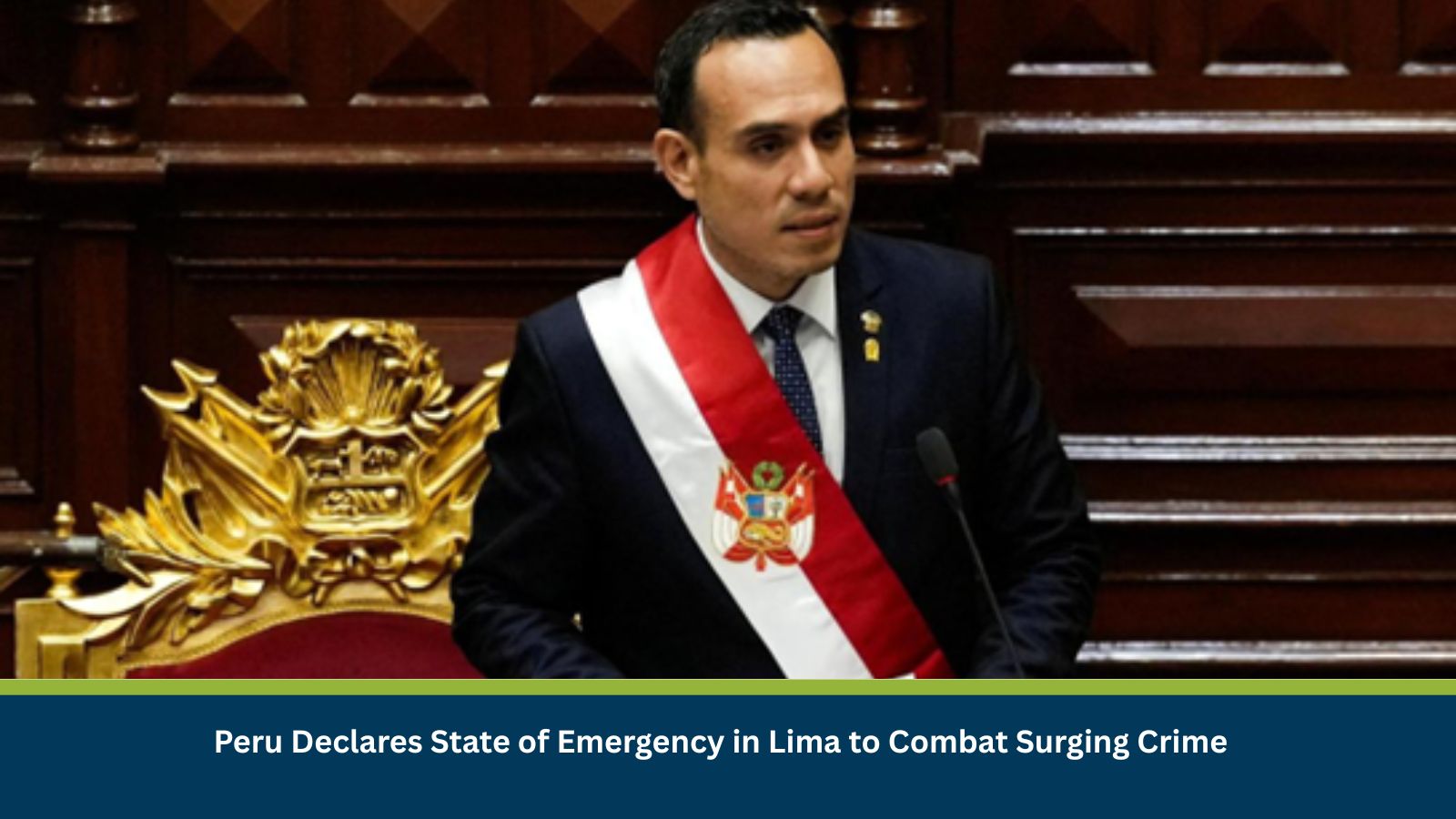
Peru’s government, led by President José Jeri, has declared a 30-day state of emergency in the capital city of Lima and the adjacent port of Callao to combat a dramatic surge in violence and organized crime. The decree, issued on 21 October, temporarily suspends several constitutional rights, grants extraordinary powers to security forces, and reflects the state’s urgent response to a growing public safety crisis.
The Crisis and The Government’s Response
The measure was implemented to tackle what authorities describe as an “alarming increase” in crime, including kidnappings, extortion, and armed robbery, often linked to organized crime networks. The violence has particularly impacted small businesses, which face constant threats and extortion demands. Between January and September, police reported 1,690 homicides, compared to 1,502 during the same period of 2024.
The state of emergency allows the Peruvian National Police (PNP) to utilize the military to assist with patrols and security operations, a move intended to overwhelm criminal presence. Crucially, the decree suspends rights related to the freedom of transit, and freedom of assembly.
Public and Political Reaction
The declaration comes amid a period of heightened social and political volatility in Peru. Former President Dina Boluarte was removed from office by Peru’s Congress on 10 October, after an impeachment process in which lawmakers said that she had been unable to tackle the crime wave. She was immediately succeeded by the current President, José Jeri.
The emergency measure is a direct political and security response to widespread public outcry over spiraling insecurity. However, the suspension of constitutional liberties has drawn criticism, particularly as the country has recently seen sustained periods of mass protests, especially from Generation Z youth groups.
Opponents, including former officials, have questioned the measure’s effectiveness, arguing that past states of emergency have failed to curb crime and have instead led to human rights abuses. Furthermore, critics suggest the government may be using the security crisis as a pretext to restrict the right to protest or distract from systemic political instability and corruption.
Despite these concerns, the government has defended the measure as necessary to restore order, signaling a tough-on-crime stance to address widespread citizen fear. The success of the emergency decree will be measured by its ability to significantly reduce violent crime within the 30-day period without infringing upon civil liberties.
Disclaimer: The article has reference to open sources including Reuters, The Guardian, The Hindu and AP News.