





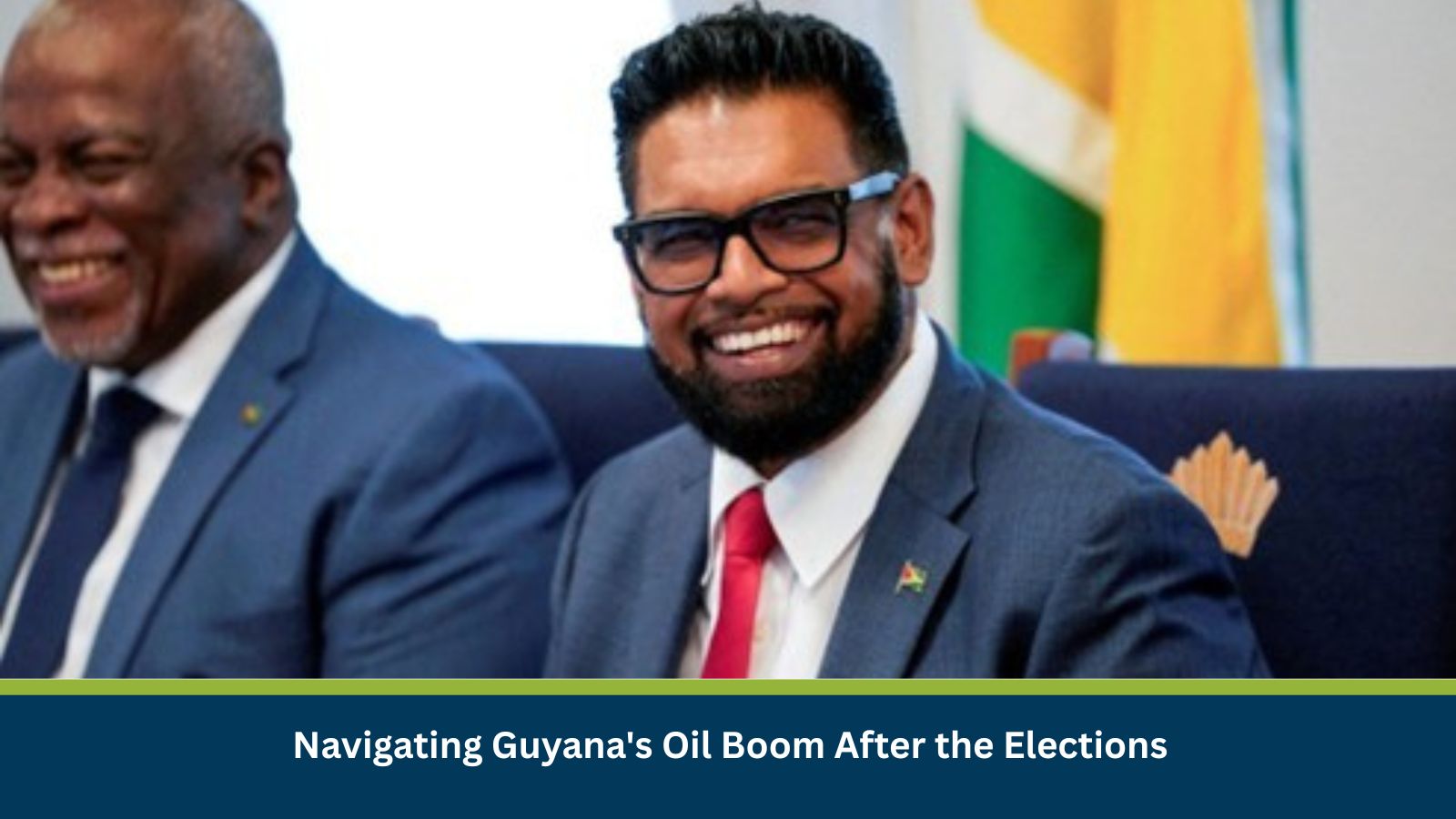
Guyana’s economy, propelled by a massive oil boom that began in 2015, presents a complex case study for national development. The country, surrounded by mineral resources, has experienced a rising GDP since oil production began in 2019, despite high poverty rates. The country’s oil production is currently around 650,000 barrels per day and could surpass Iran’s by 2027, with the highest projected growth in the world through 2035. The recent elections, held on 01 September, concluded with the re-election of President Irfaan Ali and his People’s Progressive Party/Civic (PPP/C). While this outcome offers a degree of political continuity, it does not fully resolve the underlying tensions regarding the distribution of the nation’s new oil wealth. The country’s economic trajectory, while promising, remains contingent on the resolution of internal political divisions and external geopolitical pressures.
The SCO members include China, Russia, India, Iran, Pakistan, Belarus, Kazakhstan, Kyrgyzstan, Tajikistan, and Uzbekistan; together they have rich reserves of global energy and include 40% of the world’s population. There are 16 dialogue partners and observers, including Cambodia, Egypt, Saudi Arabia, UAE, Bahrain, Kuwait, Qatar, and Turkiye, among others.
The Election’s Role in Shaping Economic Trajectory
The re-election of President Irfaan Ali and his PPP/C provides political continuity but does not eliminate deep-seated tensions within the country, over the distribution of oil wealth. Although the government has implemented policies such as cash handouts to citizens, a significant portion of the population believes that the benefits of the oil boom have disproportionately favored well-connected groups. The opposition, A Partnership for National Unity (APNU), has capitalized on this discontent, raising concerns about corruption and the government’s failure to address a rising cost of living that has not been matched by higher salaries.
This political friction is further complicated by historical voting patterns that have traditionally followed ethnic lines. Although recent local elections had shown a shift away from this racial polarization, the potential for social tensions to escalate remains a key risk, particularly if the election results are contested. The memory of the prolonged and destabilizing political dispute that followed the last election in 2020 highlights the potential for internal friction to disrupt national stability. That dispute arose from widespread allegations of vote fraud and attempts to manipulate the results, which led to a national recount that reversed the fraudulent count and confirmed the opposition’s victory (PPP/C)
The Geopolitical Crossroads: Venezuela, the U.S., and China
Guyana’s economic success is also unfolding at a geopolitical crossroads. The country is engaged in a long-standing territorial dispute with its neighbor, Venezuela, which claims the oil-rich Essequibo region. The Venezuelan National Assembly’s recent approval of a law creating a new state in this region has heightened tensions, introducing a tangible security threat.
Lacking the military resources to defend its territory, Guyana has sought to strengthen alliances with countries at odds with Venezuela, most notably the United States. This strategic pivot has been underscored by the presence of U.S. warships in the Caribbean, a move that provides a security deterrent but also elevates the risk of a military escalation. This dynamic is further complicated by China’s growing influence in the region, where it has invested significantly in infrastructure. The presence of these global powers creates a complex environment that requires a nuanced understanding of international relations to avoid unintended risks.
For business professionals, the confluence of internal political risks and external geopolitical pressures makes Guyana a market where traditional risk assessments are insufficient. The possibility of a contested election and subsequent social unrest poses a direct threat to logistics and on-the-ground operations. Businesses need to monitor political developments to anticipate and mitigate potential disruptions to supply chains and local business activities. A shift in government could lead to significant regulatory changes. The opposition’s pledge to renegotiate contracts, particularly with oil companies, signals a potential for new taxes or more stringent regulations that could impact profitability and long-term investment. The Venezuela dispute is the most significant security concern. Any escalation could affect maritime shipping routes and onshore operations. Businesses must factor this into their risk models, while also being mindful of their reputational standing in a country where the distribution of wealth and foreign influence are central to public debate.
Disclaimer: The article has references to open sources, including CNN, Al Jazeera, Reuters and the Guardian.