





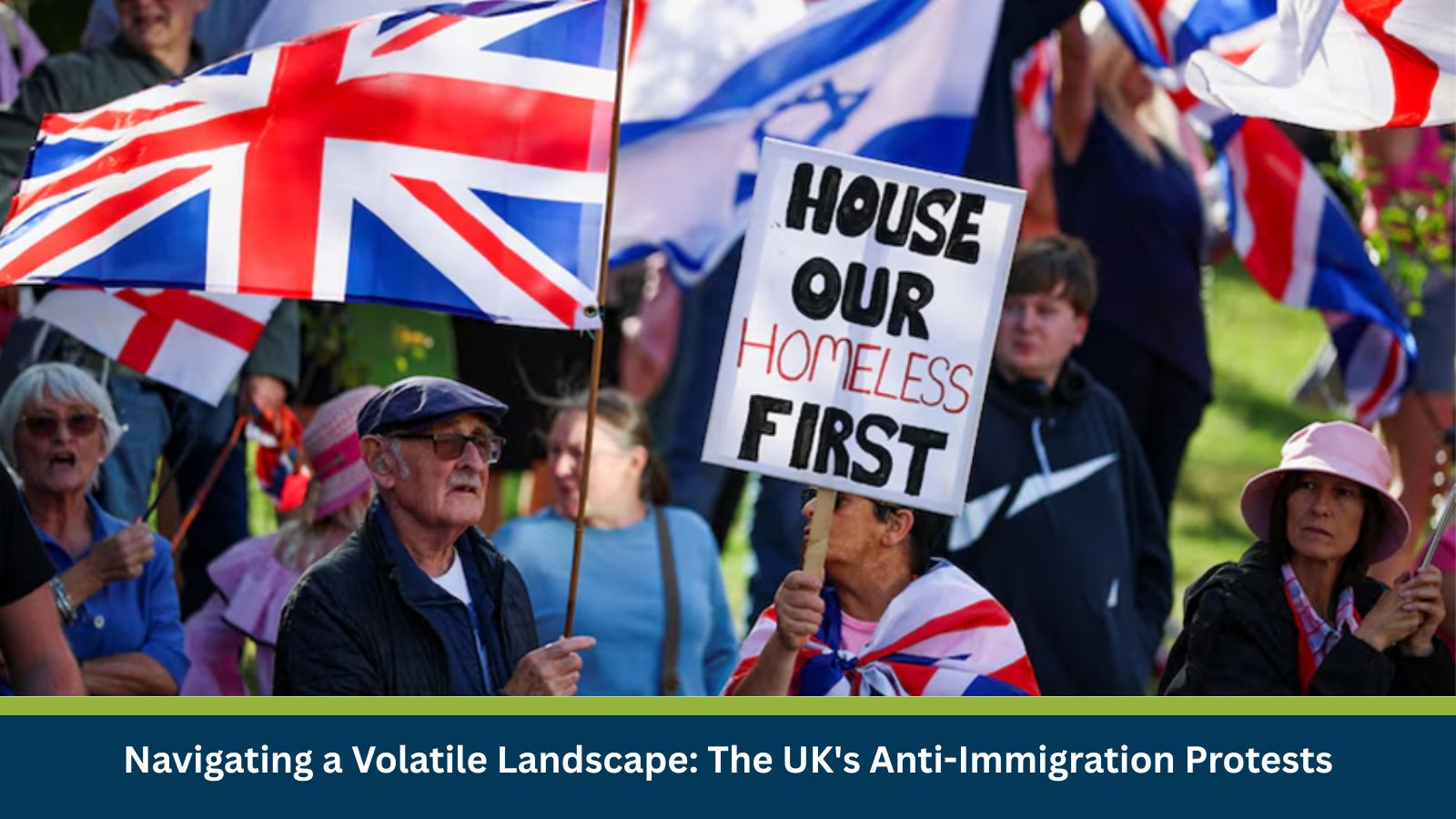
The “Unite the Kingdom” Rally
On 13 September, a significant anti-immigration march took place in London, drawing a large crowd of between 110,000 and 150,000 participants. The event, dubbed the “Unite the Kingdom” march, was led by activist Tommy Robinson, who is also the founder of the nationalist, anti-Islam English Defence League (EDL). The demonstration, which saw participants waving the flags of the United Kingdom and England, was met with counter-protests from the “Stand Up to Racism” group. The rival groups clashed, resulting in injuries to at least 26 police officers and 25 arrests.
Beneath the Surface: The Underlying Drivers of Discontent
The march follows a tense summer marked by frequent protests outside hotels housing asylum seekers, which gained prominence after the arrest of a man convicted of sexually assaulting a minor. A key driver of these demonstrations is the rising concern over immigration, which has overtaken economic issues as the top political issue in Britain. This shift is influenced by a record surge in asylum claims and the fact that over 28,000 migrants have crossed the English Channel this year. The St. George flag, a symbol used frequently at these protests, has at times been appropriated by anti-immigration and hard-right activists. While supporters describe the movement as a spontaneous campaign of national pride, anti-racism campaigners view it as a message of hostility toward foreigners.
Assessing the Multi-faceted Impact
The rally was presented by Robinson as a “show of patriotic unity” and the “spark of a cultural revolution in Great Britain”. Protesters voiced anger over the costs associated with migration, a justice system they perceive as biased, and threats to free speech and security. They insisted their actions were rooted in a love for their country. From the government’s perspective, Prime Minister Keir Starmer condemned the “Unite the Kingdom” demonstration, describing it as “plastic patriotism” that sent a “shiver” through the UK.
For some ethnic minority Britons, the march brought back memories of past far-right rallies, with reports of racist graffiti and an assault on a Sikh woman. Robinson condemned the assault and differentiated between what he called “scumbags” and “decent minorities”.
Looking Ahead: Mitigating Risks in an Evolving Environment
The protests underscore deep-seated social and political tensions in the UK. The government has already taken steps to address public concerns, with the Home Office launching a nationwide clampdown on illegal work by asylum seekers on 05 July, and ministers reiterating on 01 September that “all asylum hotels need to close”.
The event highlights a complex risk environment for businesses and investors. The decentralized, grassroots nature of the protest, which emerged online without clear leadership, is reminiscent of the “Yellow Vests” protests in France. The growing visibility and legitimation of far-right politics in the UK, as evidenced by the high-profile support for the march, indicate a persistent political and social risk that requires careful monitoring.
This trend is not isolated to the UK. A similar wave of public discontent and political instability is visible across Europe. In France, the new government is under pressure from nationwide strikes and the “Block Everything” protests over budget cuts and austerity measures. In Slovakia, thousands have been protesting against the populist government’s pro-Russian policies and austerity measures. Meanwhile, in Serbia, a protest movement that began over a construction disaster has broadened into anti-government demonstrations against corruption and state failure. These interconnected movements, driven by diverse grievances from economic hardship to concerns over sovereignty and immigration, signal a broader trend of public dissatisfaction and a volatile political landscape across the continent.