




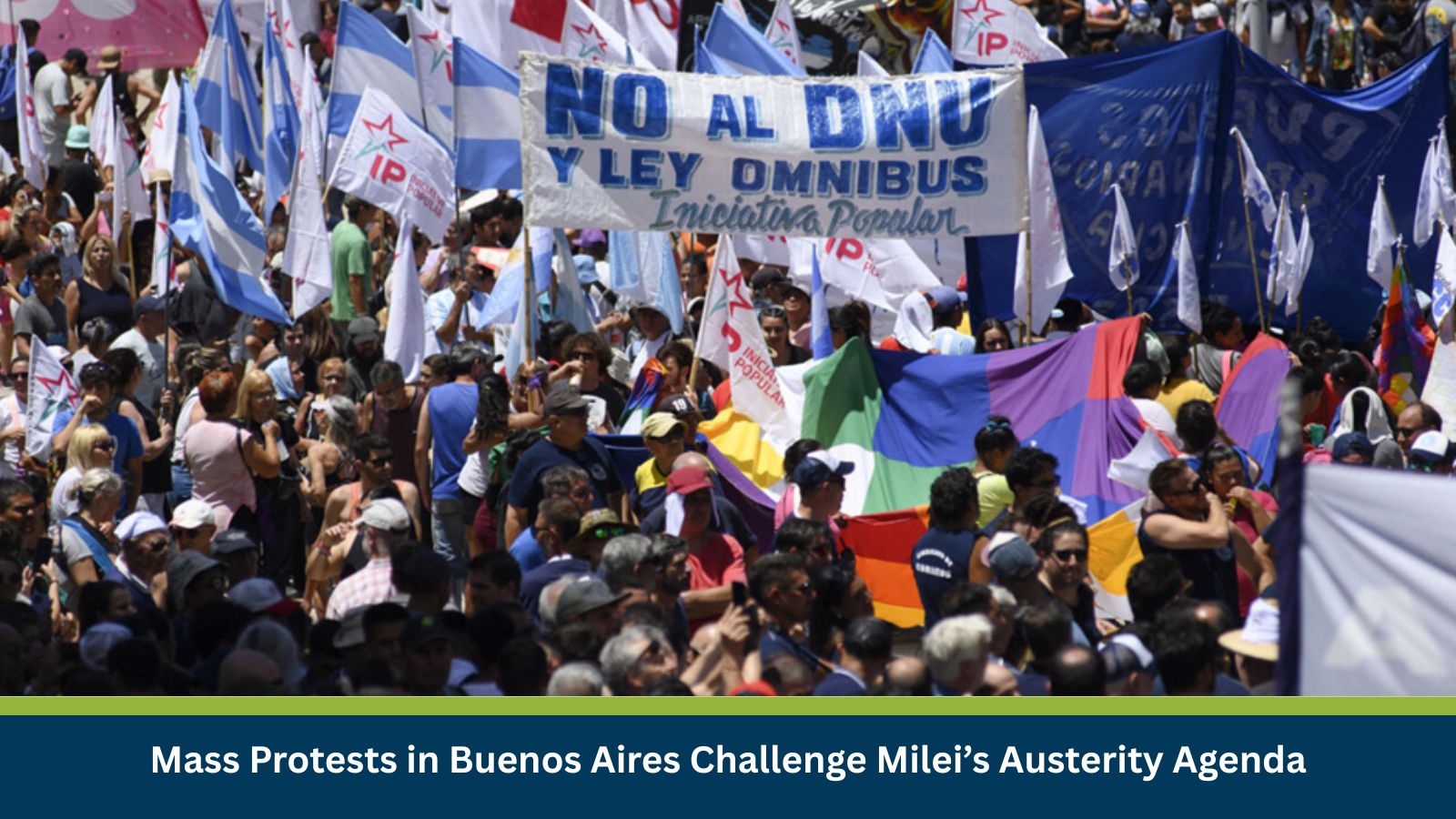
Thousands of demonstrators came out on the streets of Buenos Aires, Argentina on Wednesday, 17 September, protesting President Javier Milei’s austerity measures. The rallies, among the largest since he took office in December 2023, were sparked by cuts to education and healthcare. They came alongside a political setback, as the lower house of Congress overturned Milei’s vetoes on bills to boost university and hospital funding. The demonstrations, led by students, teachers, healthcare workers, and unions, underline growing discontent and the challenge of sustaining his reforms.
Milei’s Economic Agenda
Since December 2023, Milei has pursued an aggressive program to reduce deficits and stabilize the economy. He has introduced deregulation, government layoffs, and cuts to social services while pointing to progress in curbing inflation. Official data show monthly inflation slowed from double to single digits. But unemployment has risen to 7.9 percent, the highest since 2021, and poverty has climbed. Hospitals and universities report shortages, with warnings of further cutbacks. Argentina is now one of the most expensive countries in Latin America, while salaries remain among the lowest. Critics argue the burden of austerity has fallen hardest on the poor.
Electoral Setbacks and Corruption Scandal
In September, Milei’s Liberty Advances (La Libertad Avanza) party suffered defeat in provincial elections in Buenos Aires, signalling a loss of political capital. Experts allege that his momentum from 2023 has weakened. While inflation has slowed, daily hardships outweigh the gains. This has also reduced his chances of expanding his minority in Congress, allowing the opposition to dilute his reform agenda.
The administration is also battling a corruption scandal. Karina Milei, the president’s sister and secretary general of the presidency, faces allegations over government contracts. In August, during a rally in Buenos Aires, Milei was pelted with stones as tensions mounted. Although the government dismissed the accusations, the controversy has overshadowed his campaign ahead of October’s legislative elections.
Currency Strains and Investor Confidence
In April, Milei relaxed currency controls to secure a $20 billion IMF loan. This now makes up much of the central bank’s $39 billion reserves. But the peso has plunged 12 percent in the past month, accelerating a decline that began in July. Investor confidence has been shaken, raising doubts about Milei’s ability to sustain his free-market agenda. Peso volatility, common before elections, has intensified ahead of the October 26 midterms.
Analysts said the government would need to calm markets by showing political strength or securing new sources of dollars to stop the run on the peso. Economist Gabriel Caamaño of Outlier consultancy warned that failing to do so could force an early change to the exchange rate regime, a move that would hurt credibility and damage election prospects.
Looking Ahead
The government has opened negotiations with opposition governors, who hold sway in Congress, to secure backing for its austerity program. Yet the override of Milei’s vetoes on education and healthcare funding shows strong resistance to his plans. With protests on the rise, the peso under pressure, and midterms approaching, the 26 October elections will be an important measure of public sentiment and could help shape the pathways for Argentina’s political and economic direction.