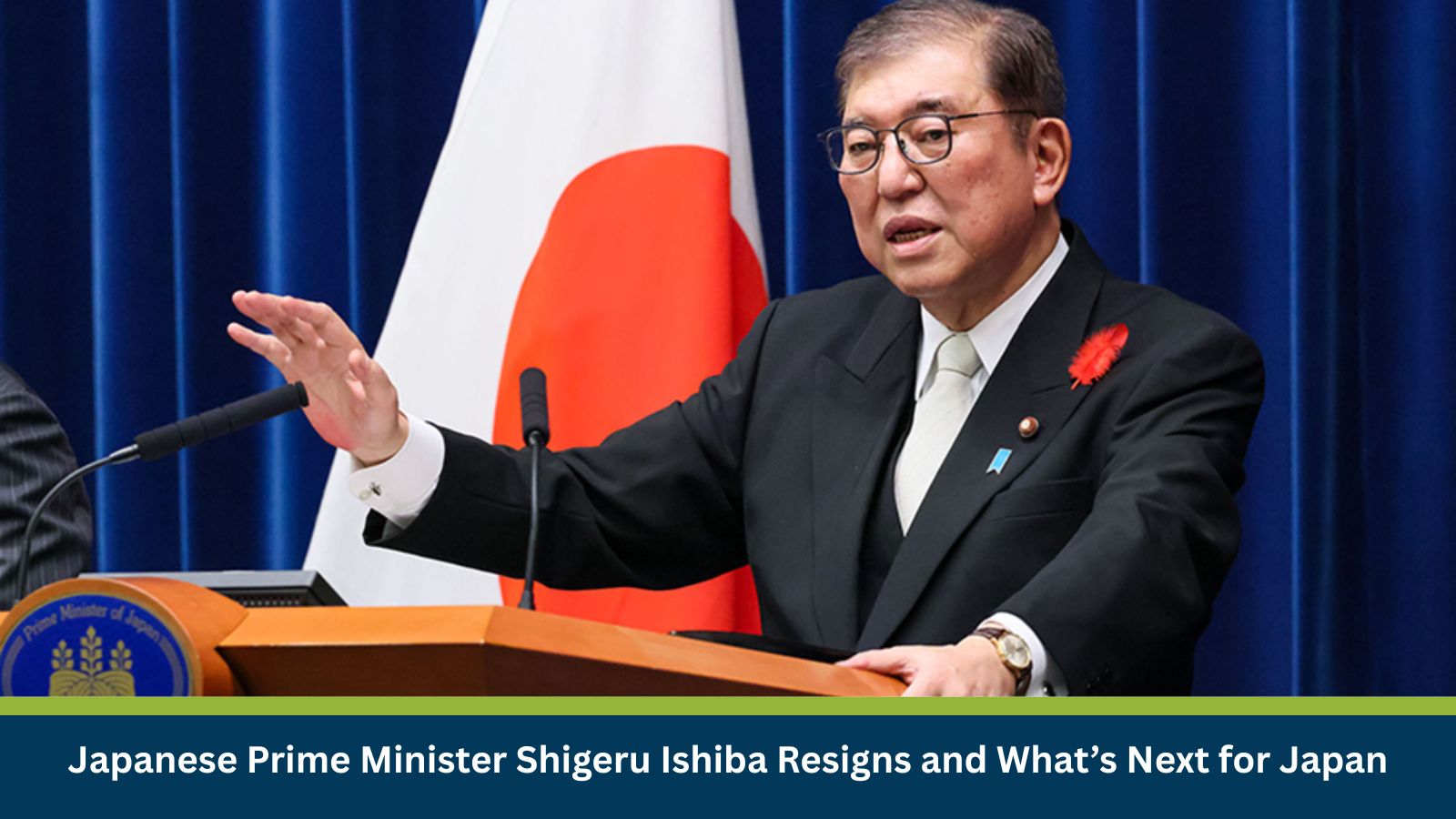
His resignation follows a major crisis within the ruling Liberal Democratic Party (LDP), which lost its majority in both houses of the Diet for the first time in 70 years after consecutive electoral defeats. Long seen as an outsider, Ishiba struggled to navigate the LDP’s internal divisions while facing a strong opposition. Public frustration, already heightened by scandals under former Prime Minister Fumio Kishida, deepened after Ishiba’s “gift voucher scandal” in March. Ishiba distributed gift certificates to 15 first-year lawmakers in the party, which was seen by the opposition as excessive.
Calls for his resignation intensified after the coalition lost its majority in the July Upper House election. His exit came just before a scheduled party vote widely seen as a no-confidence motion. Ishiba said he delayed resigning until Tokyo and Washington concluded tariff negotiations, adding he felt a sense of closure after the two sides signed a memorandum on Japanese investment and US President Donald Trump issued an executive order lowering duties on imported Japanese autos.
Leading Contenders
Among the leading contenders are Shinjiro Koizumi, the agriculture minister, from a prominent political family and backed by former Prime Minister Yoshihide Suga; and Sanae Takaichi, a conservative and protégé of Shinzo Abe, who narrowly lost to Ishiba last year. Other potential contenders include Toshimitsu Motegi, Chief Cabinet Secretary Yoshimasa Hayashi, and Takayuki Kobayashi, all of whom ran in last year’s leadership race.
Challenges Ahead
Some analysts suggest the next LDP president may call a snap election, but the party’s decline in support makes that uncertain. Japan risks a return to the “revolving-door prime ministers” era of the 1990s and 2000s. Stephen Nagy of the Japan Institute for International Affairs warned, “This was not a good period for Japanese policymaking … there was a new leader with new policies, and there’s no follow-up.” Other experts highlight broader risks. Mr. Ishiba’s resignation has set off a “profound leadership crisis” in Japan, said Mireya Solís, director of the Center for Asia Policy Studies at the Brookings Institution. The danger, she argued, is that Japan reverts to “the politics of indecisiveness,” with prime ministers cycling rapidly through office. Another possibility, she warned, is that the country “more forcefully embraces far-right populism,” which has been on the rise as right-wing groups made striking gains in a recent parliamentary election.
The next leader has to unite a divided party, regain voter trust, and balance coalition-building with opposition influence on economic and social policy. Abroad, Washington will remain a critical factor, with tariffs and defense spending demanding careful negotiation. Ishiba’s resignation ends a short-lived premiership but marks a pivotal moment for the LDP. The party has to balance the urgent need for renewal with the challenge of finding a leader capable of uniting ranks, restoring trust, and steering Japan through mounting economic and geopolitical uncertainty. Japan, one of the world’s most stable democracies, now faces a political reckoning as it contends with strained US ties, an assertive China, and persistent economic woes.