





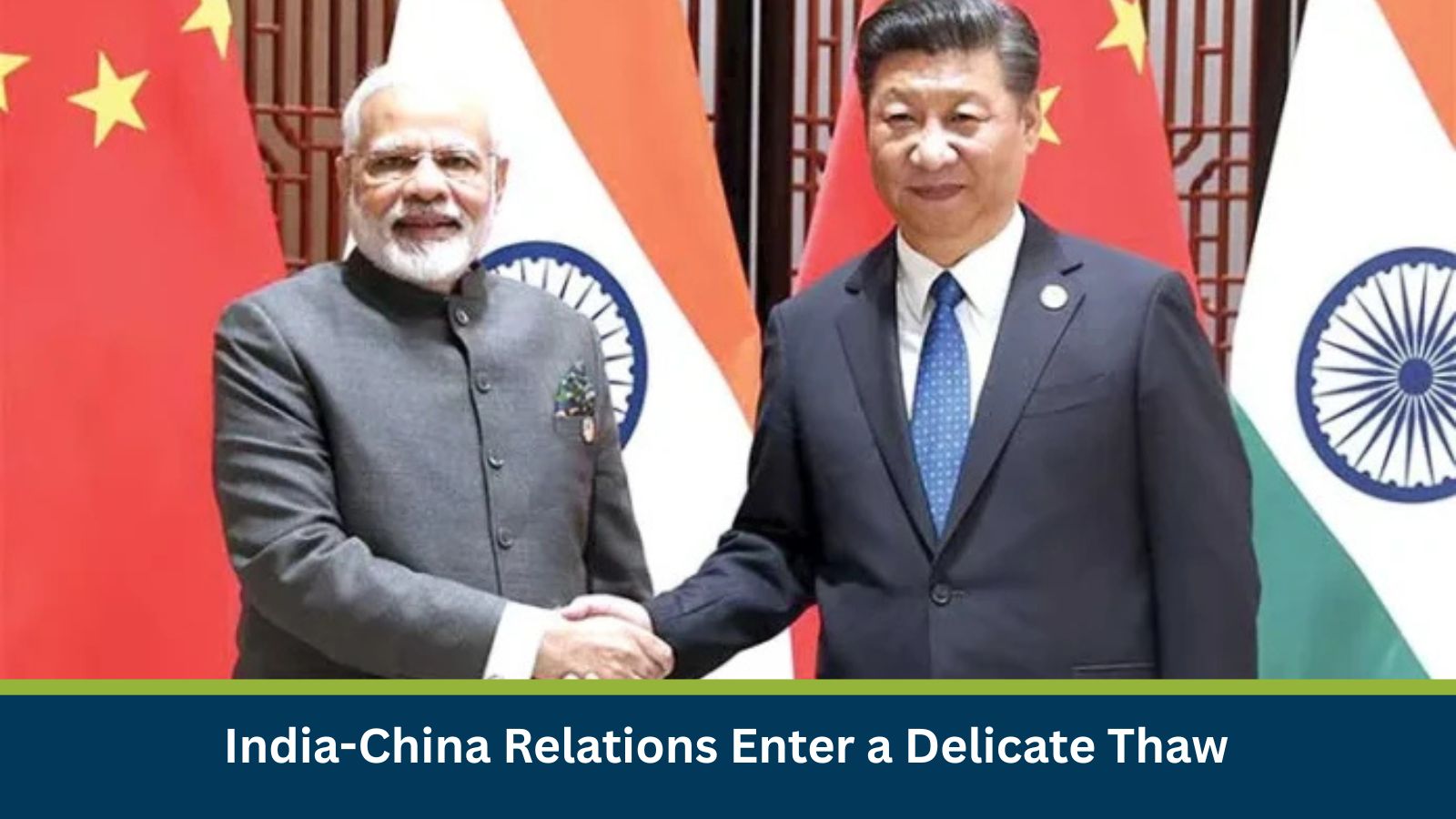
In a development closely watched by regional analysts and business leaders alike, India announced on July 24 that it would resume issuing tourist visas to Chinese nationals, marking a symbolic yet significant step in easing five years of strained ties. The move was welcomed by Beijing as “positive,” and underscores a broader shift toward normalisation between the two neighbours following the deadly 2020 Galwan Valley clash along the Line of Actual Control.
The visa announcement is only the latest in a series of high-level engagements that points to a gradual thaw. Since Prime Minister Narendra Modi’s informal meeting with President Xi Jinping on the sidelines of the BRICS Summit in October 2024, diplomatic traffic has picked up. Indian National Security Advisor Ajit Doval, Foreign Secretary Vikram Misri, and Defence Minister Rajnath Singh have all visited Beijing in recent months.
Most notably, External Affairs Minister S. Jaishankar’s July 13–15 visit for the SCO Foreign Ministers’ meeting included talks with Xi Jinping, Foreign Minister Wang Yi, and senior CCP officials. These interactions reflect an intent to repair the bilateral relationship with Beijing—despite recent tensions, particularly over China’s support for Pakistan during its brief conflict with India in May 2025.
Additional confidence-building measures have included plans to expedite the restoration of direct flights and reopen the pilgrimage route to Kailash Mansarovar, moves that focus on rebuilding people-to-people trust to foster cooperation.
Recently, India’s NITI Aayog recommended allowing Chinese investors to acquire up to a 24% stake in Indian firms without requiring additional security clearance. While the proposal remains under consideration, it marks a notable shift from current restrictions and could eventually revive blocked investments, such as the proposed BYD electric vehicle plant. Though implementation is likely to take months, the signal to global investors is clear: India is considering a more pragmatic stance on Chinese capital.
The U.S. appears to be a strong driver of this rapprochement. President Trump’s sweeping tariff threats—particularly on BRICS nations and Russian oil buyers—are pushing both India and China toward cautious cooperation to preserve strategic autonomy. Moscow’s interest in reviving the Russia-India-China (RIC) format further reflects this changing regional dynamic.
Still, several contentious issues remain. The question of the Dalai Lama’s succession continues to be a flashpoint, with China seeking to exert control over a process it sees as politically sensitive and potentially destabilising. On trade, China’s restrictions on exports of rare earth magnets and advanced manufacturing equipment remain a barrier. On the border, while diplomatic dialogue has resumed, the de-escalation process remains incomplete, and a massive Chinese hydroelectric project on the Yarlung Tsangpo near Arunachal Pradesh has raised alarms over border and water security.
In terms of business, this thaw is likely to ease cross-border travel, reduce logistics costs, and gradually improve investor sentiment. Should New Delhi ease investment restrictions, Chinese capital could return selectively to high-tech, automotive, and infrastructure sectors. Greater transparency in rare earth supply chains may also benefit Indian manufacturing and clean-tech industries.
That said, progress will likely be incremental. Businesses should treat this shift as an early reset—promising, but still vulnerable to political and strategic headwinds.