





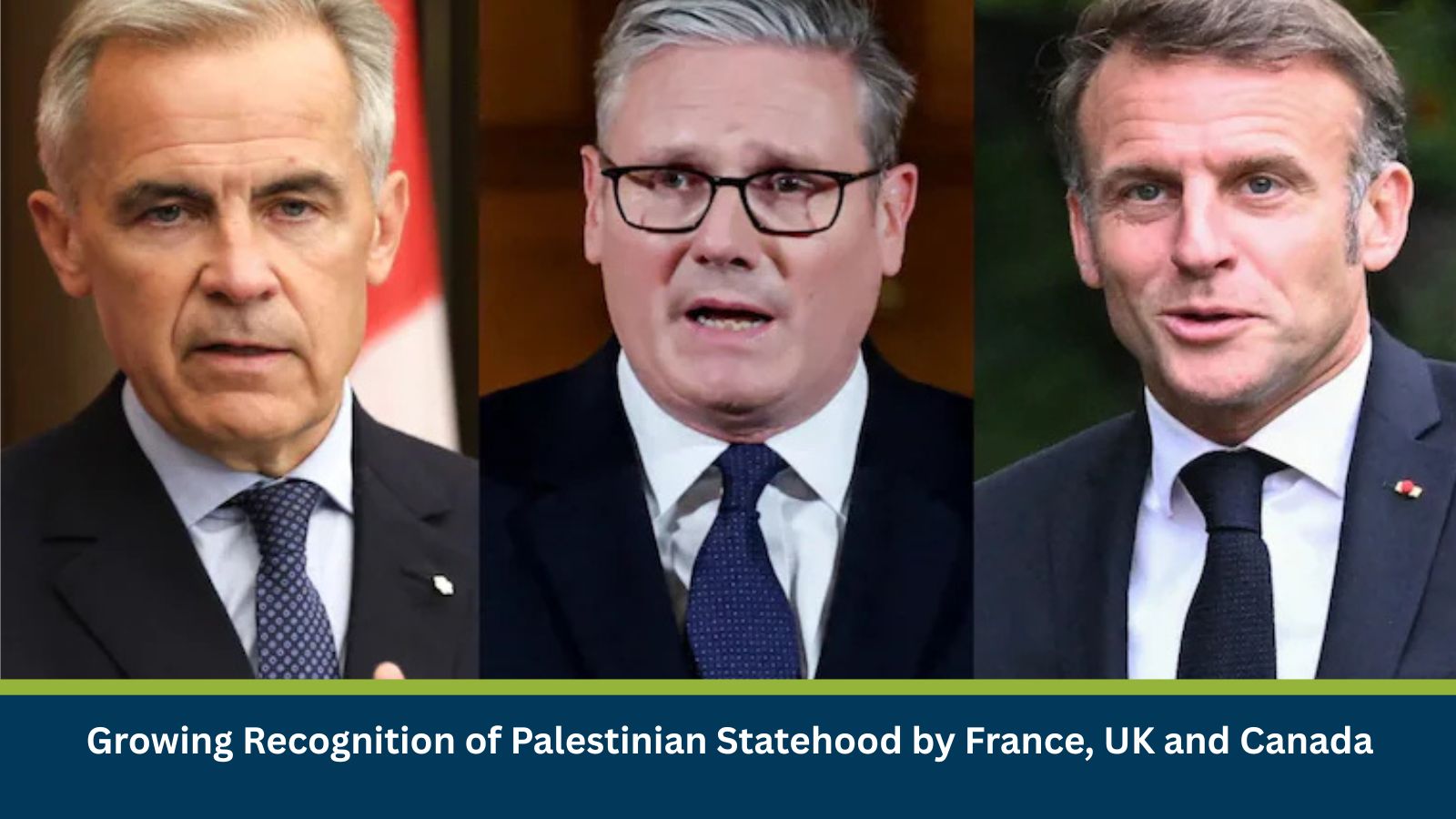
The diplomatic landscape surrounding the Israeli-Palestinian conflict is undergoing its most significant transformation in a generation. For decades, the position of major Western powers led by the United States, has been predicated on the idea that recognition of a Palestinian state should be the capstone of a negotiated peace agreement, not a prerequisite. This orthodoxy is now collapsing. A series of seismic announcements from France, the United Kingdom, and Canada signal a new era where recognition is no longer a reward, but a diplomatic lever to force a new reality.
This is a strategic realignment that carries tangible economic and geopolitical consequences for all parties involved. Business leaders, especially those with interests in the Middle East, must recognize this shift and adjust their strategies accordingly.
The Conditions and the Catalyst
The catalyst for this coordinated push is clear: the escalating humanitarian crisis in Gaza and the perceived collapse of the two-state solution. After months of stalled peace talks and a humanitarian situation that UN officials have described as a “deadly wave of starvation,” a new approach was inevitable.
However, the announcements are not without their conditions, a fact that reveals the nuanced nature of this diplomatic offensive.
- France: President Emmanuel Macron, the first to move, has placed his country’s recognition on the condition that the Palestinian Authority (PA) publicly condemns the October 7, 2023, attacks, demilitarizes, implements democratic governance, and reforms against radicalization. This is a direct attempt to strengthen a moderate Palestinian leadership while isolating groups like Hamas.
- United Kingdom: Prime Minister Keir Starmer has taken an even more direct approach, positioning recognition as a time-bound ultimatum. Britain will formally recognize a Palestinian state at the UN General Assembly in September unless Israel takes “immediate steps” to end the crisis in Gaza and commit to a long-term peace process. This is a clear use of diplomatic leverage, putting pressure directly on the Israeli government.
- Canada: Prime Minister Mark Carney’s announcement echoes the UK’s conditional stance, tying Canada’s recognition to the Palestinian Authority’s commitment to holding elections in 2026. This move also reflects a growing internal pressure to align with international norms and human rights principles, even at the cost of traditional alliances.
This multi-pronged approach, with varying but aligned conditions, is a coordinated and strategic effort to move beyond the diplomatic inertia that has plagued the peace process for years. It represents a significant departure from traditional Western policy.
The Economic and Geopolitical Fallout
This diplomatic dam break is not without its fallout. The most immediate and significant reaction has come from Washington, D.S. President Donald Trump has already imposed a 35% tariff on Canadian goods in direct retaliation for Canada’s announcement, a move that starkly illustrates the economic risks of this new diplomatic alignment. This highlights the vulnerability of established trade relations to geopolitical events and underscores the need for businesses to factor political risk into their strategic planning.
Furthermore, these moves will have a ripple effect on bilateral relations with Israel. The UK has already suspended free trade talks and imposed sanctions on West Bank settlers. This signals a broader reassessment of economic ties and a potential shift toward stricter trade screening and increased scrutiny of economic activities linked to Israeli settlements. Businesses engaging in trade with Israel, or operating in the West Bank, must now contend with a complex and rapidly changing regulatory environment. The imposition of sanctions targeting settlers marks a new level of punitive action that could expand to other areas.
The momentum is undeniable. After the UK’s announcement, foreign ministers from Australia and New Zealand issued a joint statement signaling “positive consideration” of recognition, with Malta already confirming its intent to proceed. This growing coalition of Western nations, moving in defiance of Washington’s wishes, is isolating the U.S. and Israel, potentially forcing a reassessment of their own policies.
Strategic Takeaways for Business Leaders
For business leaders, supply chain managers, and data professionals, the message is clear: the rules of engagement in the Middle East are changing. The risks are no longer confined to regional conflicts; they are now tied to the diplomatic actions of major world powers.
- Monitor Political Risk: Businesses with global supply chains or investments in the region must actively monitor these political developments. Datasurfr provides real-time data and analysis on political risk and regulatory changes, helping clients anticipate and mitigate the economic consequences of diplomatic shifts.
- Diversify and De-risk: The tariff on Canadian goods is a stark reminder of the risks of over-reliance on single markets or political alliances. Companies should reassess their supply chain strategies and diversify their partners to build resilience against unpredictable political and trade shocks.
- Prepare for a New Regulatory Landscape: The suspension of free trade talks and the imposition of sanctions indicate a potential for a new era of stricter trade and investment screening. Businesses should prepare for increased due diligence and compliance requirements related to their operations and partners in the region.
The growing recognition of Palestinian statehood by key Western allies is more than a headline, it’s a watershed moment. It signifies a collective decision to use diplomatic pressure as a tool for change, with profound implications for global trade, international law, and the geopolitical balance of power. The old way of doing business is over. The future belongs to those who can see this change coming and adapt to a world where politics and commerce are more intertwined than ever before.