
The finalization of China’s economic blueprint and the escalation of trade tensions leading up to the scheduled meeting between President Xi Jinping and President Donald Trump have established the defining economic and geopolitical flashpoint of late 2025. This confrontation, marked by strategic long-term planning from Beijing and forceful tariff diplomacy from Washington, occurs just as the world grapples with a troubled global environment.
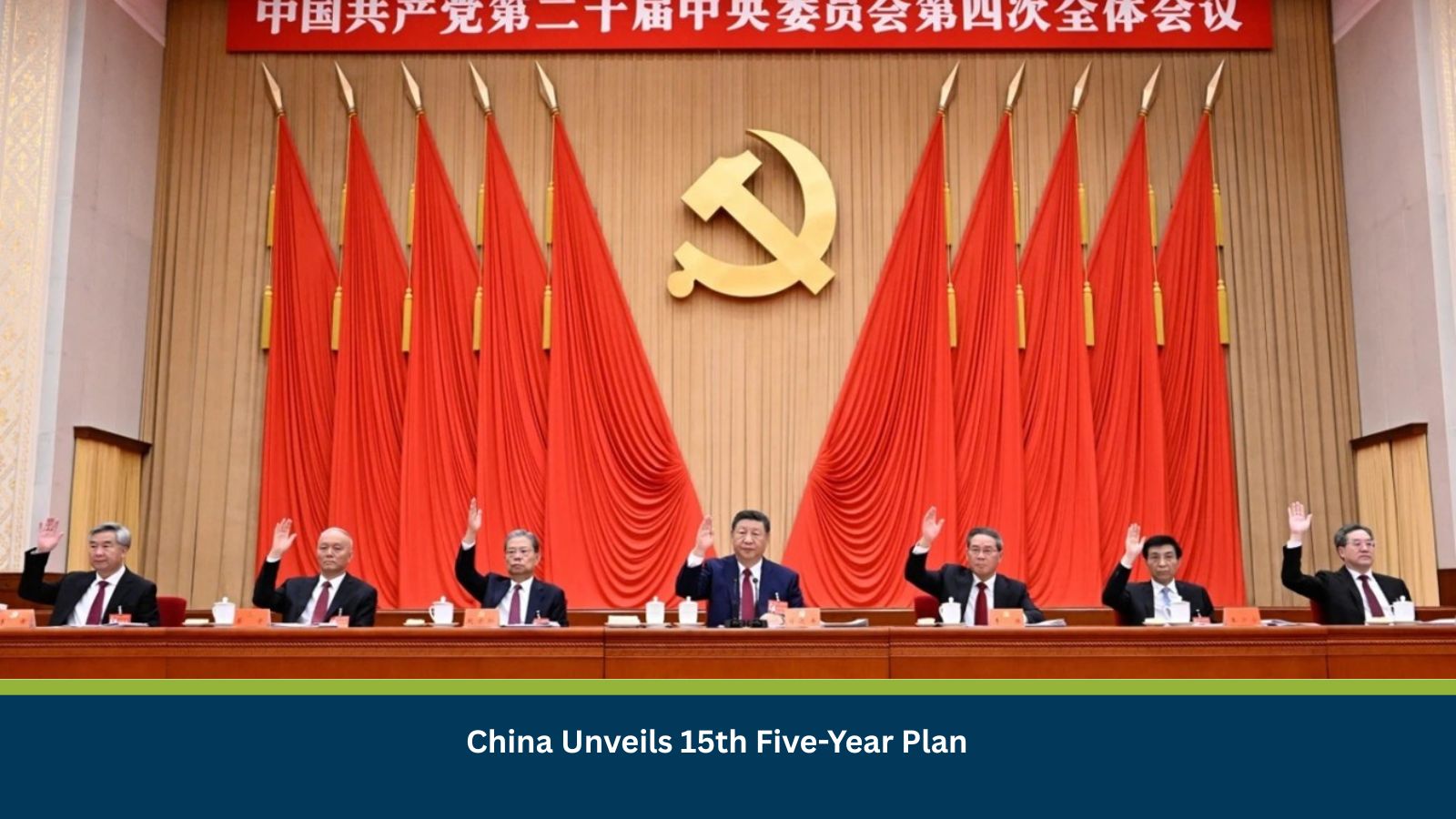
The Fourth Plenum of the Communist Party, held from October 20–23, 2025, served as the formal launch for the strategic vision of China’s 15th Five-Year Plan (2026–2030). This comprehensive document recalibrates national priorities around three core, interconnected pillars designed to fortify the nation against external risk and secure future prosperity.
A Pivot to Strategic Self-Reliance – The central theme is securing technological independence. Beijing is set to dramatically accelerate investment in high-tech fields, including semiconductors, artificial intelligence, and advanced manufacturing. The plan will heavily prioritize the development of “new quality productive forces,” leveraging technological innovation as the key driver for high-quality growth. This strategic doubling-down, particularly on critical areas like rare earth elements, is viewed by global investors as a decisive move that will inevitably redirect and reshape international supply chains for the coming decade.
Rebalancing Toward Domestic Consumption – Simultaneously, the FYP signals a long-term strategic shift to rebalance the economy away from its traditional reliance on exports and investment. Key objectives include a greater focus on boosting household spending, expanding domestic demand, raising household incomes, and creating high-quality jobs. Crucially, this internal focus is paired with a commitment to expanding “high-standard opening-up,” promoting trade facilitation and deeper international economic cooperation to stabilize the nation’s global trade position.
Focus on Quality Development and Resilience – The focus will shift to more flexible qualitative and welfare-based metrics, such as R&D intensity, the urban jobless rate, and per-capita income growth. While analysts anticipate the practical growth anchor will remain in the 4.5–5.0 percent range, the emphasis is now on security. The plan mandates fortifying national security by investing in energy resilience, specifically by pushing for the full marketization of power generation and promoting decentralized renewable energy systems to mitigate risks from centralized fossil fuel supply chains.
The strategic clarity of the FYP is set against the backdrop of escalating trade conflict, crystallizing around the first in-person meeting between President Trump and President Xi Jinping since 2019, scheduled for 30 October at the APEC Summit in South Korea.
The Tariff Flare-Up – Tensions spiked dramatically following China’s imposition of new export controls on rare earth metals and related technologies. In immediate retaliation, President Trump announced an additional 100% tariff on Chinese imports, set to take effect on 01 November, which threatens to push total duties as high as 155% in certain sectors. The gravity of the situation prompted top economic officials, including US Treasury Secretary Scott Bessent and Chinese Vice Premier He Lifeng, to hold crucial pre-summit talks in Malaysia in an attempt to avert a full-scale trade war.
President Trump has framed the meeting as a potential path to de-escalation, but only if Beijing agrees to specific concessions in exchange for lowering tariffs. The key demands he intends to press with President Xi include:
As of 27 October, the US and China have agreed upon framework for potential trade deal, ahead of the Trump-Xi Meeting on 30 October. Scott Bessent affirmed that the threat of 100% tariffs on Chinese goods “is effectively off the table.” Reports suggests that there is an initial level consensus between the two nations over issues such as export controls, fentanyl, and shipping charges.
In a move that signals the meeting’s profound geopolitical stakes, the leaders are also expected to discuss the status of Taiwan, with Beijing reportedly requesting a White House statement that it “opposes” Taiwan independence. Analysts are viewing the Xi-Trump summit as a “high-risk, high-reward” effort to “hit the ‘reset’ button.” While President Trump expressed public optimism about securing a “fantastic deal,” the consensus among observers is that the outcome is more likely to be incremental. The most probable result is a limited agreement to resume certain exports and delay the looming tariff hikes, leaving the core, structural disputes between the world’s two largest economies fundamentally unresolved.
Disclaimer: The article has reference to open sources including Reuters, Al Jazeera, and the Guardian.