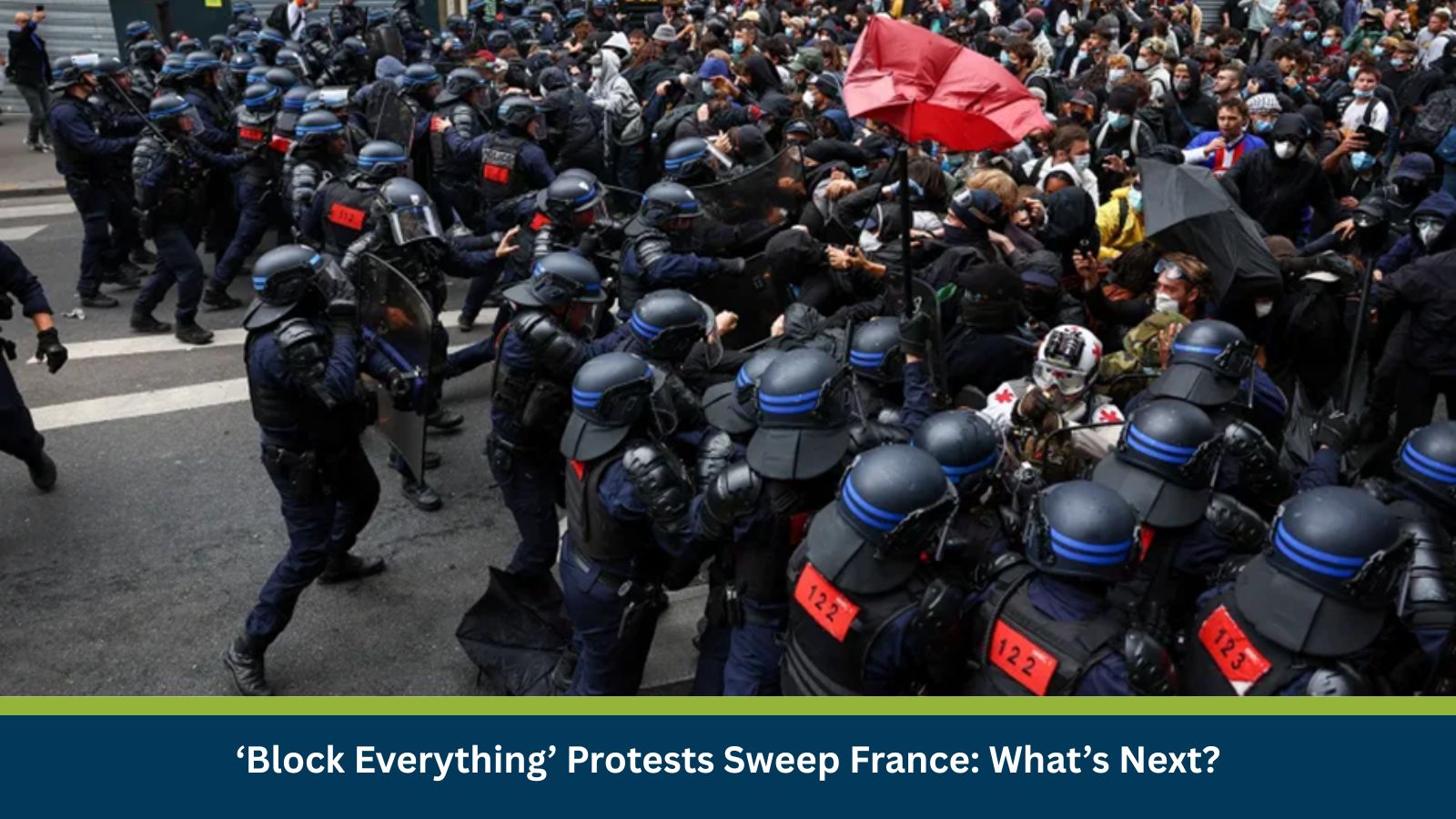
Although the movement did not fully achieve its goal to “Block Everything,” it caused localized disruption and highlighted widespread dissatisfaction with government policies. Demonstrators included high school students and workers from multiple sectors. According to observers, anger is building around social injustice, with a sense that the same people are repeatedly asked to make sacrifices while the wealth of the richest continues to grow. François Bayrou, recently ousted as prime minister in a parliamentary no-confidence vote, drafted a budget proposing EUR 44 billion in public-spending cuts, including the elimination of two public holidays. His resignation has done little to dissuade protesters. Observers say the main rallying cry remains the demand that President Macron not serve out his term. Key grievances include rising social inequality, declining public services, and the disconnect of the political class. Observers also noted concerns about defense spending, troop deployments, and the perception that military expenditure comes at the expense of social rights.
Since his election in 2017, President Macron has abolished wealth and housing taxes, lowered corporate levies, and introduced a flat tax on capital gains, measures likely intended to spur growth and generate revenue to offset the cuts. However, successive crises, including the Yellow Vests protests in 2019, the Covid-19 pandemic, and energy subsidies after Russia’s invasion of Ukraine in 2022, strained the economy. France’s public debt rose to EUR 3.3 trillion this year, with the deficit reaching 5.8 percent of GDP last year. The official EU target is no more than 3 percent. On 13 September, Fitch, a credit rating agency, downgraded France’s sovereign credit rating to its lowest level on record, lowering it from AA- to A+. Fitch also warned that France’s debt would continue to rise until 2027 unless urgent measures are taken.
The Block Everything movement emerged online without clear leadership. Initially started by right-wing groups in May, it has since been taken over by left and far-left supporters. Its decentralized nature and broad support base resemble the Yellow Vests protests, which began with opposition to fuel taxes but expanded into wider anti-government demonstrations. Most high-speed trains ran on schedule, and disruption to the Paris metro was limited, but schools, roads, and some railway stations were blocked. Prime Minister Lecornu acknowledged the challenges ahead. He promised a profound break with the past and committed to finding new ways to work with opposition parties to build a stable government.
The protests highlight ongoing political and economic discontent in France, raising fears that this could signal the start of a new period of prolonged social unrest. A larger nationwide strike is planned for 18 September, when all trade unions are expected to participate. The events show that economic grievances and dissatisfaction with government policies remain strong, and the new administration faces a complex task in restoring stability while implementing its agenda.