





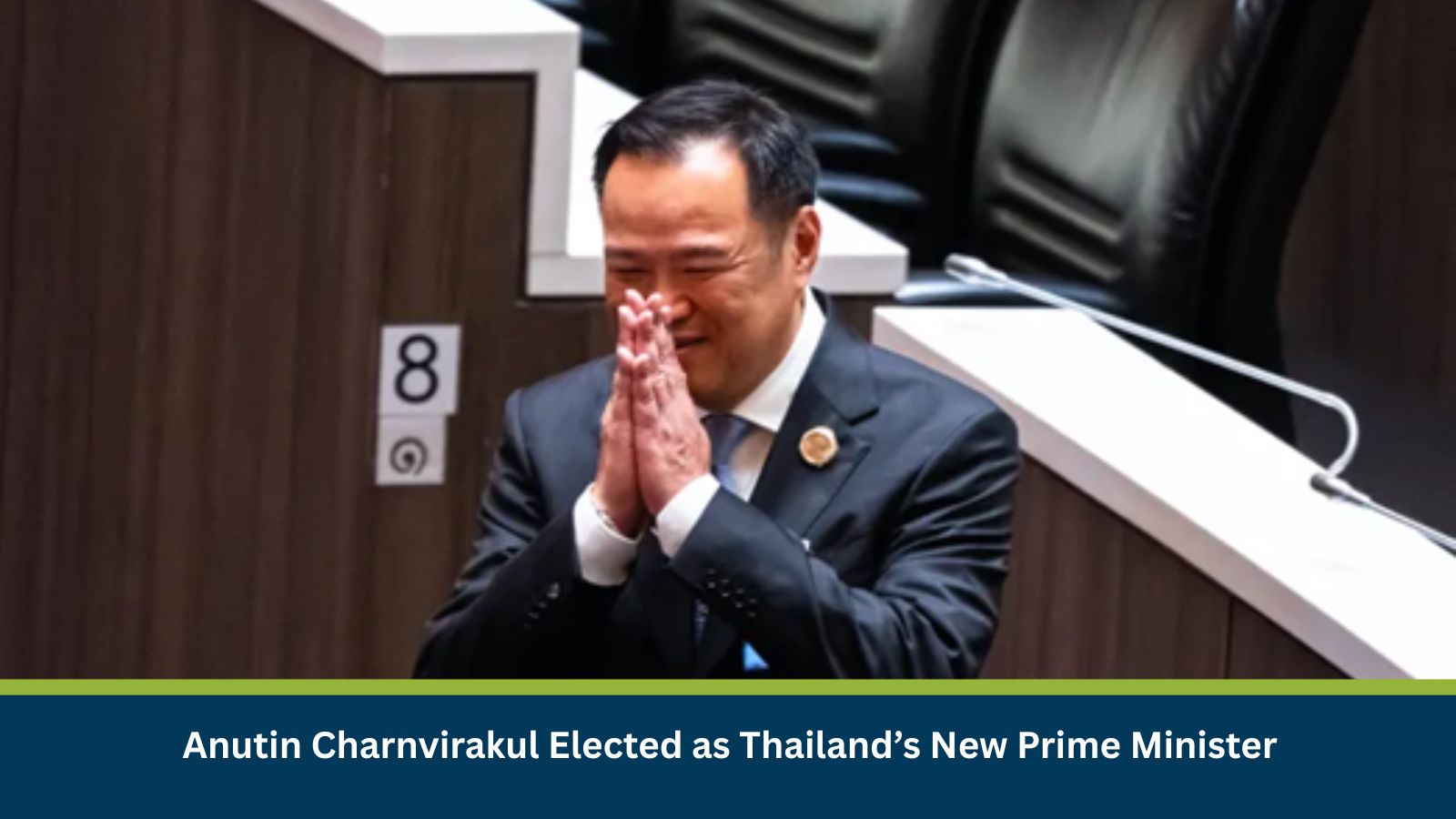
Anutin Charnvirakul, leader of the Bhumjaithai (Proud
to be Thai) Party, was elected Thailand’s new prime minister on 5 September,
becoming the country’s third leader in just two years. His rise follows the
court-ordered removal of former prime minister Paetongtarn Shinawatra of the
Pheu Thai Party. Paetongtarn was disqualified on ethics grounds over a
controversial phone call with Cambodia’s Senate President Hun Sen at a time of
heightened tensions between the two neighbors. Her ouster marked the fifth time
a Thai prime minister has been dismissed by the Constitutional Court,
underscoring the fragility of the country’s political system.
A Break from Shinawatra Dominance
Friday’s (05 September) parliamentary vote that elevated Anutin also brought an end to the Shinawatra family’s two-decade hold on Thai politics. Thaksin Shinawatra, the family patriarch and former prime minister, left the country shortly before the vote, citing medical treatment. The Shinawatra clan, long associated with populist policies that appealed to Thailand’s rural and lower-income base, had consistently been at odds with the conservative-royalist establishment.
The Bhumjaithai Party, previously a coalition partner with Pheu Thai, struck a deal with the opposition People’s Party. With only 69 out of 500 seats in parliament, Bhumjaithai required outside support to form a government. In return, Anutin agreed to dissolve parliament within four months and advance constitutional reforms aimed at expanding democratic representation.
This move highlights Bhumjaithai’s transactional and pragmatic approach. Over the years, the party has aligned with military-backed conservatives, Pheu Thai, and now the liberal-leaning People’s Party.
Anutin’s Political Profile
A seasoned politician and wealthy businessman with a political family background, Anutin is best known for spearheading the campaign that led to the decriminalization of cannabis in 2022 during his tenure as health minister. His political career spans a wide spectrum: he has served under both Pheu Thai-led coalitions and the military-backed government of former Prime Minister Prayuth Chan-ocha.
While his political alliances have been fluid, his personal stance as a royalist presents a notable contrast to the liberal, pro-democracy reform platform of his current coalition partner, the People’s Party. This ideological mismatch could prove to be a major fault line for his administration.
Challenges Ahead
Analysts caution that Anutin’s government is unlikely to enjoy stability. Dependent on the People’s Party for survival, the administration may function as a minority government with limited scope for implementing long-term policies. The sharp ideological divide between the conservative Bhumjaithai and the liberal People’s Party adds further strain to the coalition.
Thailand’s political history offers little reassurance. Successive governments have frequently been undone by court interventions or military coups. The cycle of instability has often disrupted governance and slowed reform efforts.
Observers also warn that continued uncertainty could deter international investors, weighing on Thailand’s economic outlook and regional standing. While the promise of constitutional reforms may appeal to reform-minded voters, whether such measures will materialize remains highly uncertain.
Outlook
Anutin Charnvirakul’s election provides a temporary resolution to Thailand’s leadership vacuum, but the durability of his government remains unclear. The deal that brought him to power rests on fragile alliances and competing agendas. His ability to navigate these tensions, manage constitutional reforms, and maintain stability will determine whether Thailand can break free from its cycle of political turbulence or remain mired in uncertainty.
Disclaimer: The article has reference to open sources, including AP News, BBC & GZero Daily.