





Executive Summary for Unhealthy Air Quality Across Singapore
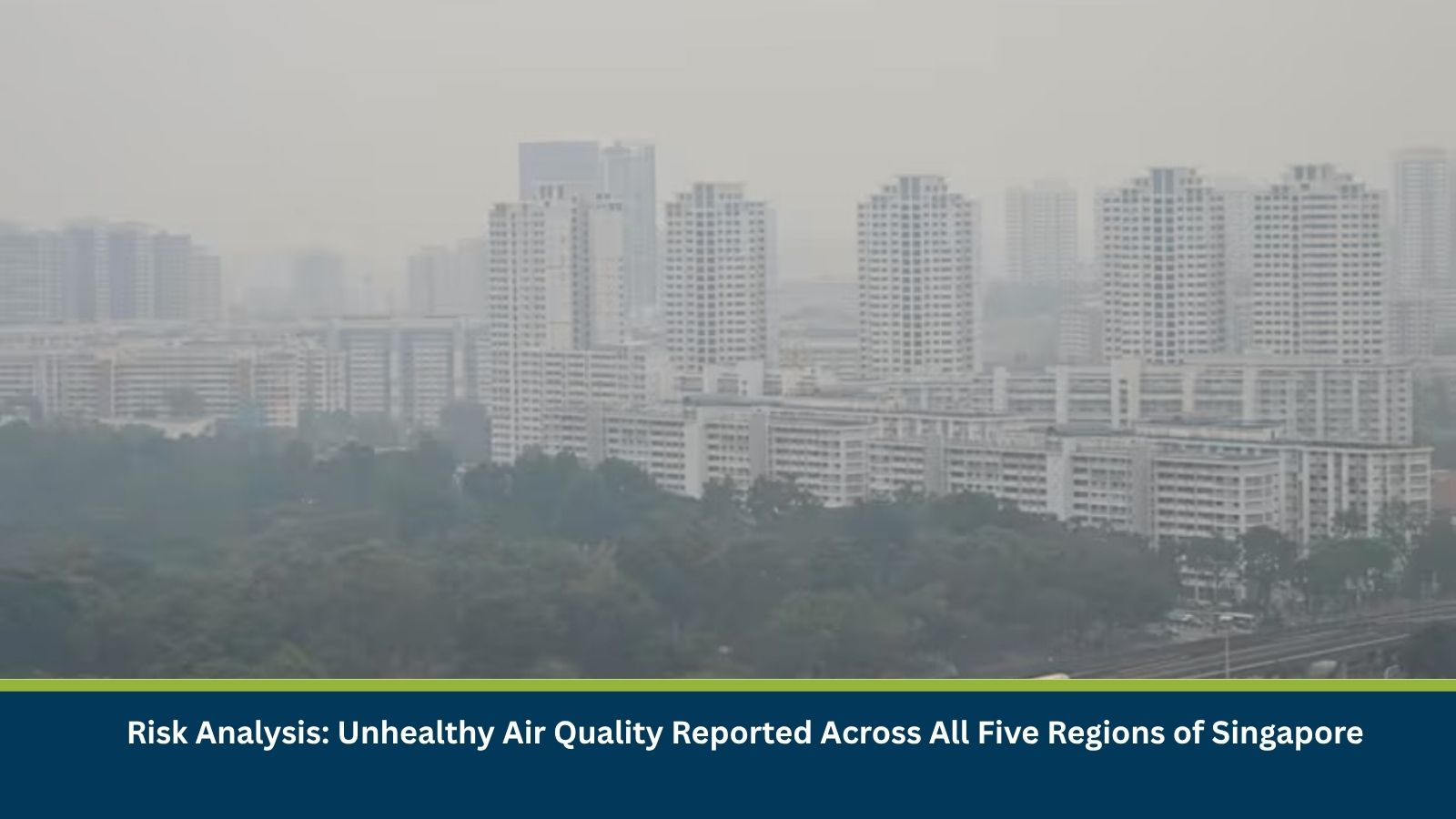
Air quality deteriorated across all five regions of Singapore during the early hours of 15 September 2026, with 24-hour Pollutant Standards Index (PSI) readings entering the unhealthy range. The National Environment Agency (NEA) classifies a 24-hour PSI reading of 101–200 as unhealthy and advises the public to reduce outdoor activities at these levels. The deterioration is linked to transboundary smoke haze, with smoke plumes from fires in Kalimantan and southern Sumatra being carried towards Singapore by prevailing winds.
- Date of Event: 15 September 2026
- Location: Singapore
- Risk Category: Environment
- Severity Score: 3/5
- Confidence Level: 75%
What is Risk Analysis in the Context of Environment Events
Environmental risk analysis assesses how deteriorating air quality can affect public health, outdoor operations, mobility and business continuity. Persistent haze can also reduce the suitability of outdoor work and activities and may create additional operational precautions for businesses.
Known Hotspots and Sensitive Areas
High Impact
- Central Singapore
- Eastern Singapore
- Western Singapore
Medium Impact
- Southern Singapore
- Northern Singapore
Low Impact
- Outdoor locations across Singapore may experience reduced suitability for prolonged activity while unhealthy PSI conditions persist.
Impact on Transportation and Services
The current impact is primarily associated with reduced outdoor activity and potential disruption to outdoor work and activities. NEA has advised the public to reduce outdoor activities while air quality remains in the unhealthy range. Forecasts indicate that dry conditions and prevailing east-southeasterly to southeasterly winds could allow transboundary haze to persist in the coming days.
Recommended Actions
- Monitor PSI and PM2.5 readings before planning outdoor activities.
- Reduce prolonged or strenuous outdoor activity while unhealthy conditions persist.
- Businesses conducting outdoor operations should review work arrangements and exposure controls.
- Travelers should monitor local haze advisories and allow for possible changes to outdoor itineraries.
- Continue monitoring NEA and Meteorological Service Singapore updates for changes in haze conditions.
Emergency Contacts
- Emergency Services: 999 (Police) / 995 (Fire & Ambulance)
Final Thoughts
The deterioration represents a moderate environmental and public-health risk, with all five regions simultaneously recording unhealthy PSI levels. Continued transboundary smoke haze, combined with forecast dry conditions, could sustain elevated air-pollution levels and affect outdoor activities and operations across Singapore. Leveraging MitKat’s Datasurfr enables businesses to receive real-time intelligence, monitor evolving threats and make informed decisions to protect assets and business operations.