





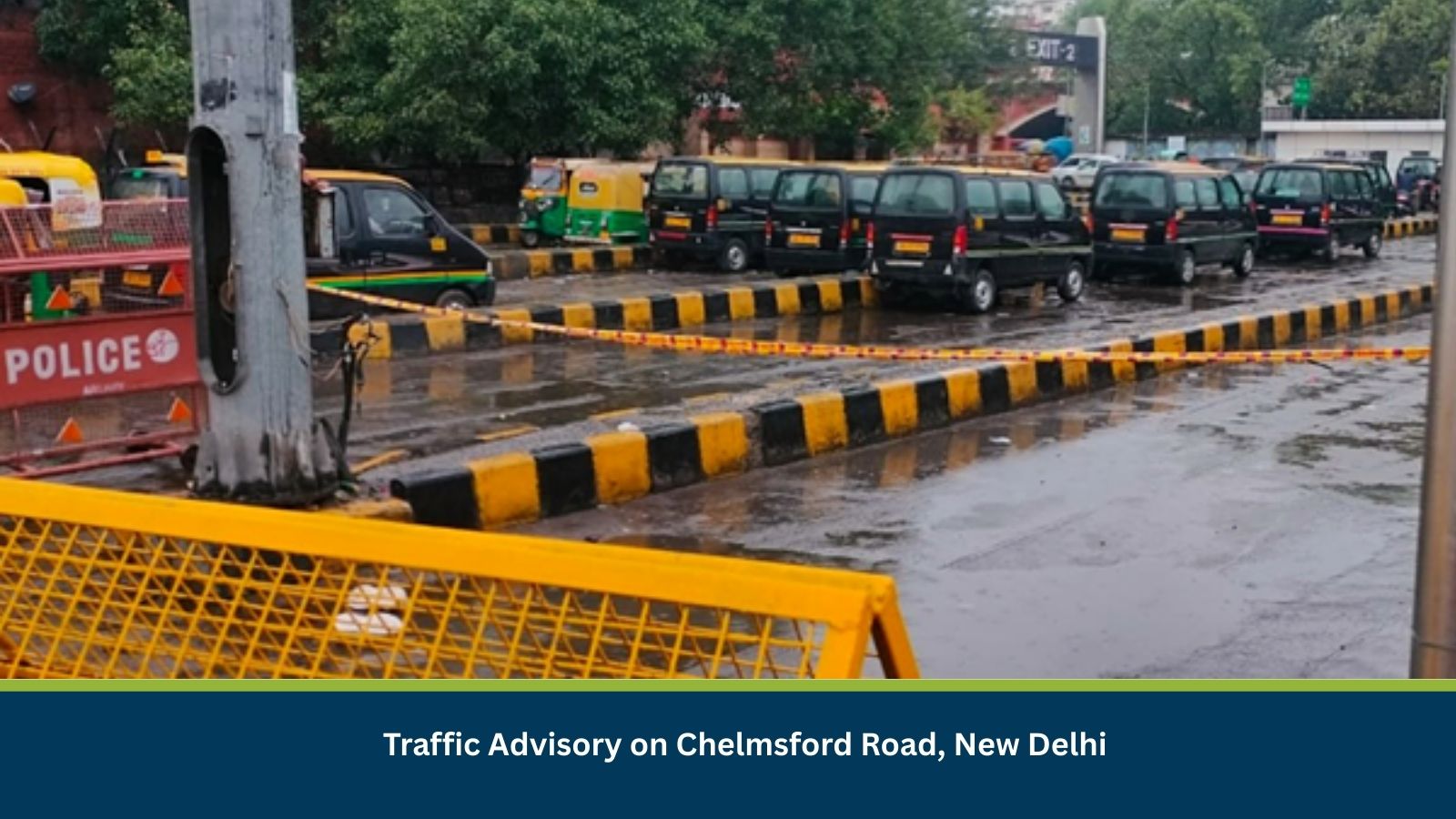
Executive Summary for the Traffic Advisory in New Delhi
Delhi Traffic Police has implemented traffic diversions and lane restrictions on Chelmsford Road effective immediately through 05 March. Peak disruption is anticipated during 0700–1030 hours and 1700–2000 hours. Impact is expected to remain localized to the Paharganj and New Delhi Railway Station corridor, with moderate congestion, increased taxi ETAs and minor logistics delays.
- Date of Event: 27 February
- Location: Chelmsford Road, Delhi, India
- Risk Category: Travel Risks
- Severity Score: 3 / 5
- Confidence Level: 82 %
What is Risk Analysis in the Context of Travel Risks Events
Travel risk analysis examines disruptions to urban mobility networks caused by roadworks, diversions, maintenance or security controls. In dense transport corridors such as central Delhi, even lane-level restrictions can significantly impact traffic flow, public transport access and emergency response times. Chelmsford Road, a critical feeder route to New Delhi Railway Station, has historically experienced short-term congestion during similar advisories. While such events rarely escalate to city-wide gridlock, they consistently generate localized travel disruption and operational delays.
Known Hotspots and Sensitive Areas
High Impact:
- Chelmsford Road (Paharganj stretch)
- New Delhi Railway Station approaches
- Ajmeri Gate and Basant Lane pedestrian corridors
Medium Impact:
- Deshbandhu Gupta Road
- Connaught Place peripheral access roads
Low Impact:
- Outer Delhi districts not directly linked to station traffic
Historical advisories in this corridor typically result in 15–45-minute peak-hour delays with occasional spillover into adjoining central Delhi routes.
Impact on Transportation and Services
Road-based transport, including buses, taxis and ride-hailing services, will face delays and diversions. Rail services at New Delhi Railway Station are expected to operate normally; however, access and egress times may increase. Congestion could disrupt last-mile delivery schedules, affecting retail and hospitality operations in Paharganj. Short-term vehicle idling may elevate localized emissions. Digital infrastructure remains unaffected, though transit applications may experience higher routing queries.
Recommended Actions
Immediate Measures:
- Advise staff to avoid Chelmsford Road during peak hours where feasible.
- Implement staggered reporting times and remote-working arrangements.
- Notify clients and suppliers of potential delivery delays.
- Monitor Delhi Traffic Police advisories every 30 minutes during peak windows.
Strategic Measures:
- Establish alternate routing protocols for central Delhi logistics.
- Pre-position time-sensitive inventory outside the advisory zone.
- Maintain coordination with Delhi Traffic Police and local administration.
- Activate internal incident tracking if delays exceed service thresholds.
Multidimensional Impact
Concurrent protests, demonstrations or breakdown incidents in central Delhi could amplify congestion and extend delays beyond baseline projections. Overlapping events may increase pressure on emergency services and enforcement resources.
Emergency Contacts
- Emergency Number: 112
- Delhi Traffic Police Updates: @dtptraffic (X)
Final Thoughts
The Chelmsford Road advisory represents a moderate, time-bound travel disruption risk concentrated around a critical railway node. While city-wide impact is unlikely, peak-hour congestion may affect commuter mobility and supply chain timelines through 05 March. Businesses should prioritize proactive communication, route diversification and real-time monitoring.
Stay ahead of operational risks with real-time alerts, scenario modeling, and expert advisories with datasurfr’s Predict. Start your 14-day free trial of Datasurfr’s Risk Intelligence Platform today.