





Executive Summary for Strong Winds in Southern South Korea
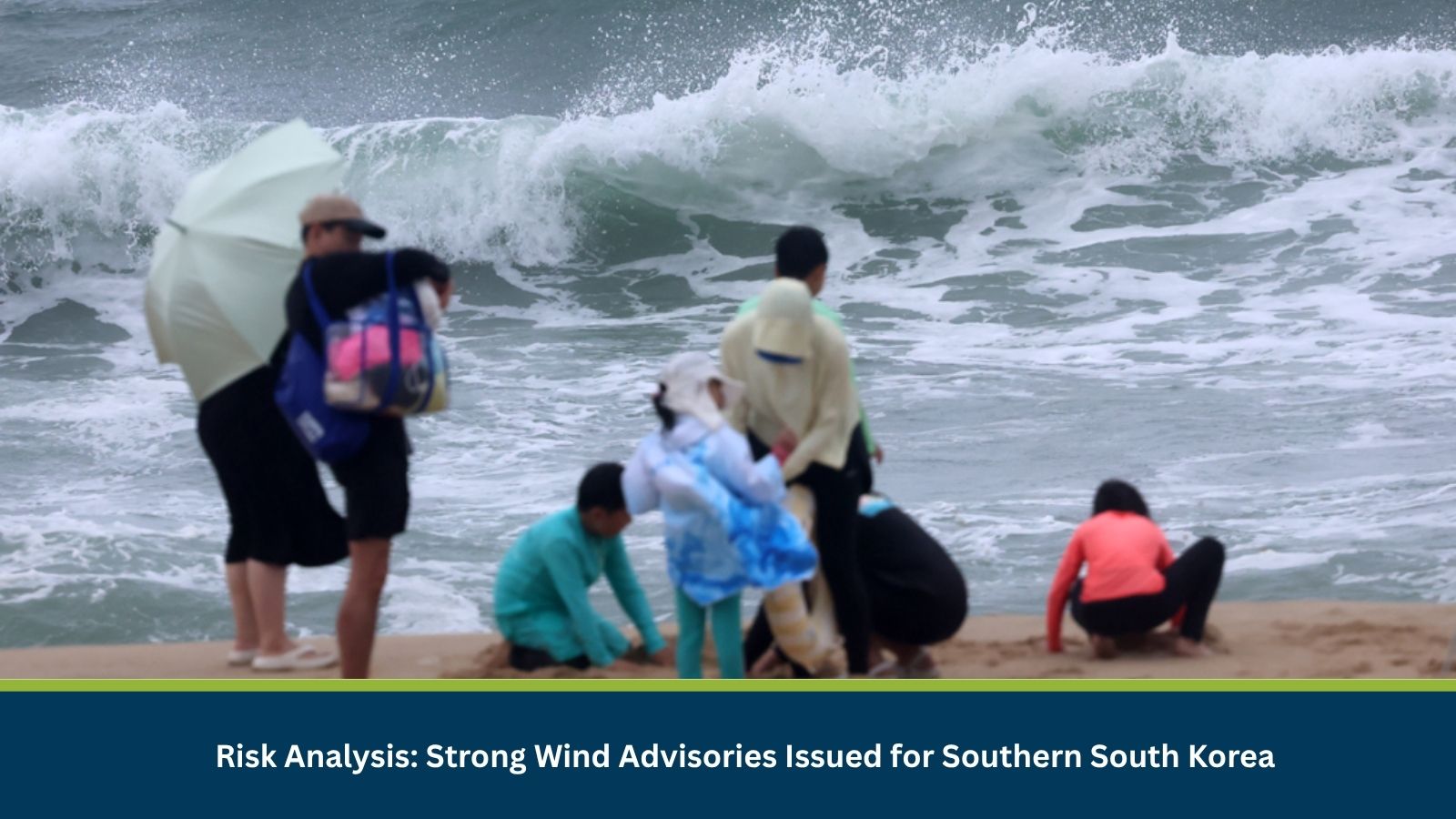
The Korea Meteorological Administration (KMA) issued strong wind advisories affecting parts of southern South Korea on 18 September 2026. The advisories covered areas including Yeosu, Geomundo and Chodo, Gohungnambu, Wando Yeoseodo, Geoje and parts of Jeju, with strong winds also affecting surrounding maritime areas. The weather conditions are accompanied by high-wave and marine-wind advisories across parts of the southern coast and waters around Jeju, creating additional risks for maritime transport and coastal activities.
- Date of Event: 18 September 2026
- Location: Southern South Korea
- Risk Category: Environment
- Severity Score: 3/5
- Confidence Level: 78%
What is Risk Analysis in the Context of Environment Events
Environmental event risk analysis assesses the potential effects of high winds on transportation, maritime activity, infrastructure and outdoor operations. Coastal and island locations can face additional disruption due to strong winds combined with rough seas.
Known Hotspots and Sensitive Areas
High Impact
- Yeosu and southern coastal areas: Strong wind advisory in effect.
- Geomundo and Chodo: Exposed island locations under the advisory.
- Wando Yeoseodo and Gohungnambu: Strong winds may affect coastal activities.
- Geoje: Strong wind advisory affecting the southern coastal area.
- Jeju: Advisories cover parts of the island, including eastern and central/elevated areas.
Medium Impact
- Southern coastal waters: Marine weather advisories are in effect across parts of the South Sea.
- Waters surrounding Jeju: Strong winds and high waves may affect vessels and ferry operations.
Low Impact
- Inland areas outside the active advisory zones are expected to face comparatively lower direct exposure to the strongest winds.
Impact on Transportation and Services
Strong winds and high waves may disrupt ferry and maritime operations, particularly around exposed islands and southern coastal waters. Outdoor operations may also require additional precautions where gusts are strong enough to affect temporary structures, equipment or exposed infrastructure.
Recommended Actions
- Monitor KMA weather and marine advisories before travelling through affected areas.
- Check ferry and coastal transport schedules before departure.
- Avoid unnecessary maritime activity while strong-wind and high-wave advisories remain active.
- Secure temporary structures and outdoor equipment in exposed locations.
- Businesses operating along the southern coast should monitor conditions and prepare for potential weather-related delays.
Emergency Contacts
- Emergency Services: 112 (Police) / 119 (Fire & Ambulance)
Final Thoughts
Strong winds across parts of southern South Korea present a moderate environmental risk, with the greatest exposure concentrated around southern coastal and island areas. The combination of strong winds and marine advisories warrants particular attention from maritime operators and travelers using coastal transport. Leveraging MitKat’s Datasurfr enables businesses to receive real-time intelligence, monitor evolving threats and make informed decisions to protect people, assets and operations.