





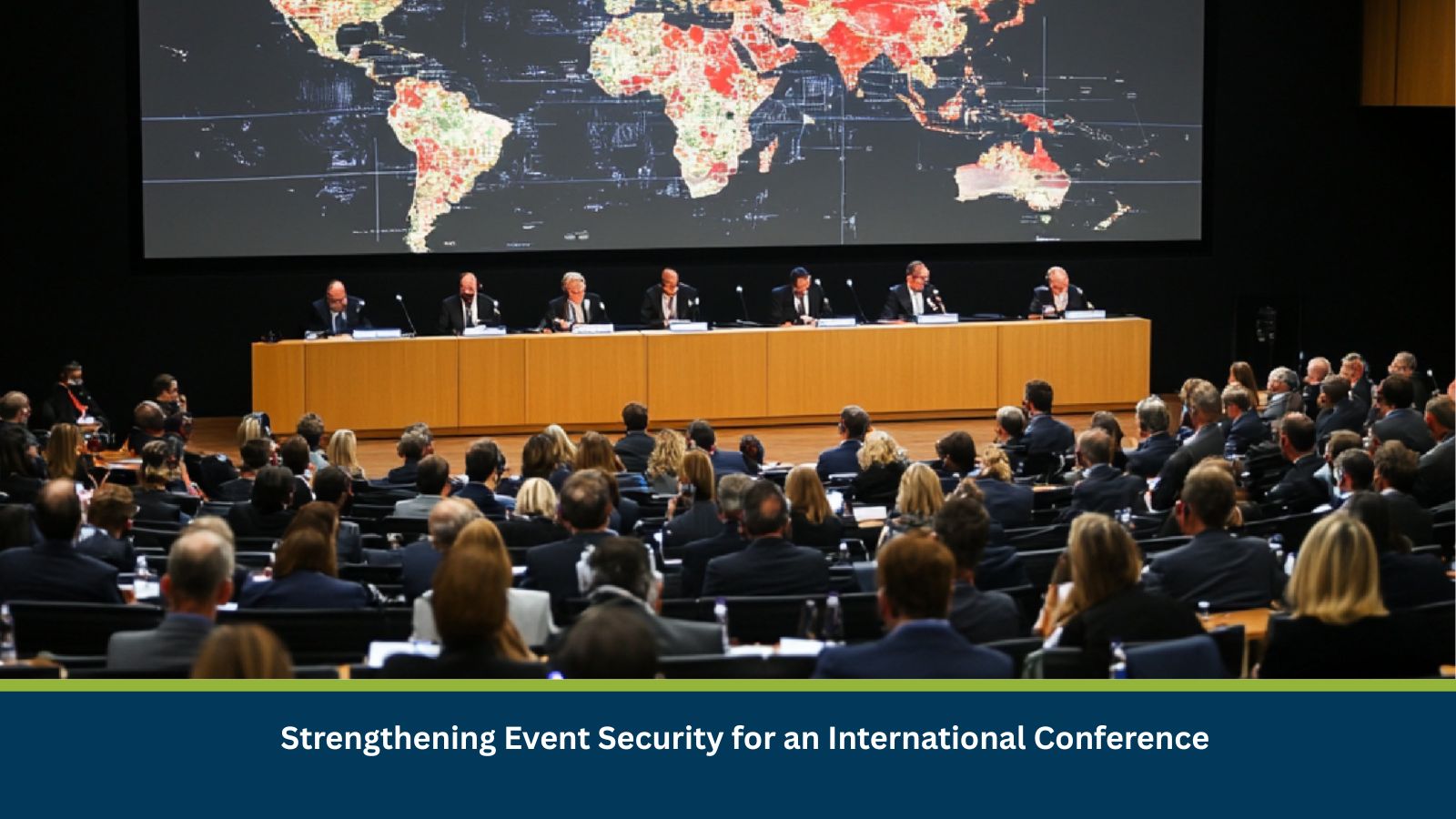
Hosting an international conference brings together global leaders, industry experts, and diverse participants—but it also introduces complex security challenges. From large crowds and high-profile attendees to evolving threats like cyber risks and civil unrest, event security must be proactive, intelligent and technology- driven.
In today’s risk landscape, organizations must go beyond traditional security measures and adopt AI-powered, geo-based (GEO), and real-time monitoring strategies to ensure safe and seamless events.
Why Event Security Is Critical for International Conferences
International conferences are high-visibility events, making them potential targets for various risks.
Key risks include:
- Unauthorized access and crowd control issues
- Protests or civil unrest near the venue
- Terror threats and security incidents
- Cyberattacks targeting event systems
- Health emergencies and medical incidents
Potential impact:
- Safety risks to attendees
- Event disruption or cancellation
- Reputational damage
- Financial losses
The Shift Toward Smart Security Strategies
Traditional security approaches are no longer sufficient. Modern event security relies on:
- Real-time intelligence and monitoring
- AI-driven risk detection
- Geospatial awareness (GEO insights)
- Integrated communication systems
Goal: Prevent incidents before they escalate and respond quickly if they occur.
Key Strategies to Strengthen Event Security
1. Pre-Event Risk Assessment and Planning
Before the event, conduct a detailed risk assessment.
What to evaluate:
- Location-specific threats
- Political and social environment
- Venue vulnerabilities
- Emergency response capabilities
Benefit: Helps identify potential risks and prepare mitigation plans.
2. Real-Time Incident Monitoring
Monitoring global and local events in real time is essential.
Track:
- Protests or unrest near the venue
- Weather and environmental conditions
- Security alerts from authorities
Benefit: Enables early warning and proactive response.
3. Geo-Based Risk Intelligence (GEO)
Geospatial intelligence provides location-specific insights.
How it helps:
- Maps incidents around the venue
- Identifies high-risk zones
- Tracks movement of crowds or disruptions
Benefit: Ensures precise and targeted security measures.
4. AI-Powered Threat Detection
AI enhances the ability to detect risks quickly.
Capabilities:
- Analysing large volumes of data
- Identifying suspicious patterns
- Prioritizing high-risk alerts
Benefit: Reduces false alarms and improves decision-making.
5. Access Control and Crowd Management
Managing entry and movement is critical.
Bestpractices:
- Use digital badges or QR-based entry
- Deploy security checkpoints
- Monitor crowd density
Benefit: Prevents unauthorized access and overcrowding.
6. Integrated Communication Systems
Clear communication ensures coordinated response.
Key elements:
- Multi-channel alerts (SMS, apps, email)
- Central command centre
- Real-time updates to staff and attendees
Benefit: Faster response and reduced confusion.
7. Cybersecurity for Event Infrastructure
Digital systems must be protected.
Focus areas:
- Registration platforms
- Wi-Fi networks
- Payment systems
Benefit: Prevents data breaches and system disruptions.
8. Emergency Response and Evacuation Planning
Preparedness is key to handling crises.
Include:
- Evacuation routes and safe zones
- Medical response teams
- Coordination with local authorities
Benefit: Ensures safety during emergencies.
Role of Technology in Event Security
Technology plays a central role in modern event security.
Key tools include:
- AI-based monitoring systems
- Geospatial mapping platforms
- Real-time alert systems
- Surveillance and analytics
These tools provide visibility, speed, and accuracy in managing risks.
Best Practices for International Event Security
To ensure effective security, organizations should:
- Collaborate with local law enforcement and agencies
- Conduct security drills before the event
- Maintain updated attendee and staff records
- Establish clear escalation protocols
- Continuously monitor risks during the event
Future Trends in Event Security
Predictive Risk Intelligence
AI will forecast threats before they occur.
Smart Surveillance
Advanced analytics will enhance monitoring capabilities.
Automation
Automated alerts and responses will reduce reaction time.
Integrated Security Ecosystems
All systems will work together for seamless protection.
FAQs
1. Why is event security important for international conferences?
Because large gatherings with global participants are high-risk and require strong protection.
2. What are the main risks at such events?
Security threats, protests, cyber risks, and crowd management issues.
Conclusion
Strengthening event security for an international conference requires a comprehensive, technology-driven approach. By combining real-time monitoring, AI insights, and geospatial intelligence, organizations can proactively manage risks and ensure the safety of attendees.
In an increasingly complex world, smart security strategies are essential for delivering successful and secure global events.
Datasurfr can help strengthen event security for international conferences by providing real-time, geo-tagged risk alerts and AI-driven insights, enabling organizers to monitor threats near the venue, ensure quick communication and respond proactively to incidents affecting attendees and operations.