





Executive Summary for the Commute Risk Across Pennsylvania and New England
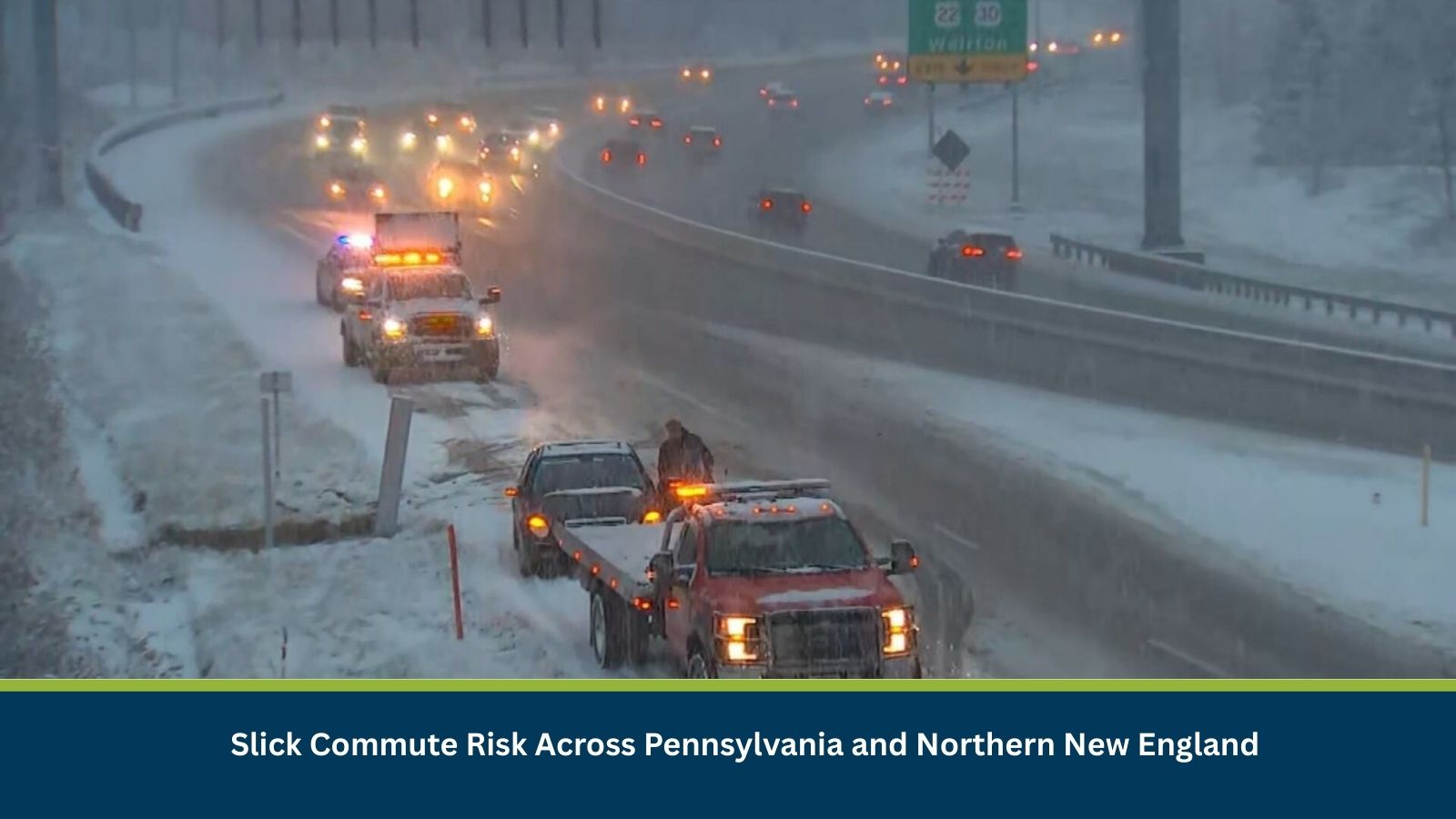
A winter precipitation episode is expected between 0300 and 1100 hours local time on 25 February, producing freezing rain, sleet and light-to-moderate wet snow. Untreated surfaces and bridges are likely to become slick, increasing crash risk and commuter delays. Major interstates are expected to remain operational with reduced speeds, while secondary roads may remain hazardous for longer periods. Overall severity is moderate, with restoration anticipated within six–24 hours on primary corridors.
- Date of Event: 25 February
- Location: Pennsylvania, New Hampshire, Maine, Northern New England, United States
- Risk Category: Travel Risks
- Severity Score: 3 / 5
- Confidence Level: 78 %
What is Risk Analysis in the Context of Travel Risks Events
Travel risk analysis assesses hazards that disrupt mobility, transportation infrastructure and commuter safety. Winter weather events, particularly freezing rain and sleet, create hazardous road conditions, black ice formation and elevated collision risk. In the northeastern United States, similar winter storms have historically triggered interstate vehicle restrictions, commuter rail delays and school closures. Given the density of highway networks and reliance on road freight, even moderate winter precipitation can significantly affect logistics, workforce attendance and public safety.
Known Hotspots and Sensitive Areas
High Impact:
- I-95, I-76 (Pennsylvania Turnpike), I-476 and I-78 corridors in eastern Pennsylvania
- Elevated bridges and overpasses in Bucks and Montgomery counties
- I-89 and I-93 corridors in northern New England
Medium Impact:
- US-202 and Route 611 commuter routes
- Secondary municipal roads in Lehigh Valley and suburban townships
Low Impact:
- Major urban centres with rapid DOT response and high salting coverage
These corridors historically experience black ice, multi-vehicle collisions and temporary lane restrictions during freezing rain events.
Impact on Transportation and Services
Freezing rain accumulation on cold surfaces may lead to widespread slick roads, reduced highway speeds and localized stoppages. Interstate vehicle restrictions are possible during peak hours. Commuter rail and bus services may operate under reduced speeds due to track icing. Aviation impacts are expected to remain limited, though de-icing operations may delay early departures. Freight and last-mile delivery operations could face schedule adjustments, affecting supply chains and time-sensitive shipments. Utility damage is unlikely but isolated outages may occur if wet snow weighs down tree branches.
Recommended Actions
Immediate Actions:
- Activate remote work policies and staggered shift starts for non-essential staff.
- Limit fleet movement to essential travel only and enforce winter safety checks.
- Monitor real-time DOT advisories and implement alternate routing.
- Pre-position de-icing materials at facilities and secure outdoor assets.
Strategic Measures:
- Strengthen winter weather contingency planning across logistics networks.
- Enhance coordination with state DOTs and county emergency management agencies.
- Conduct post-event review to assess response efficiency and workforce resilience.
Multidimensional Impact
The slick commute may slow law enforcement response times and complicate unrelated public health or infrastructure operations. Ongoing municipal activities and scheduled road works could face short-term rescheduling due to hazardous travel conditions.
Emergency Contacts
- Emergency Services: 911
- PennDOT Road Conditions: 511pa.com/list/roadcondition
- New Hampshire and Maine 511 Systems: newengland511.org/
Final Thoughts
The 25 February winter weather event presents a moderate but time-sensitive travel risk, concentrated during early-morning commute hours. While large-scale infrastructure failure is unlikely, road safety hazards and commuter disruption warrant proactive mitigation. Businesses should prioritize workforce flexibility and real-time travel monitoring.
Stay ahead of operational risks with real-time alerts, scenario modelling, and expert advisories with datasurfr’s Predict. Start your 14-day free trial of Datasurfr’s Risk Intelligence Platform today.