





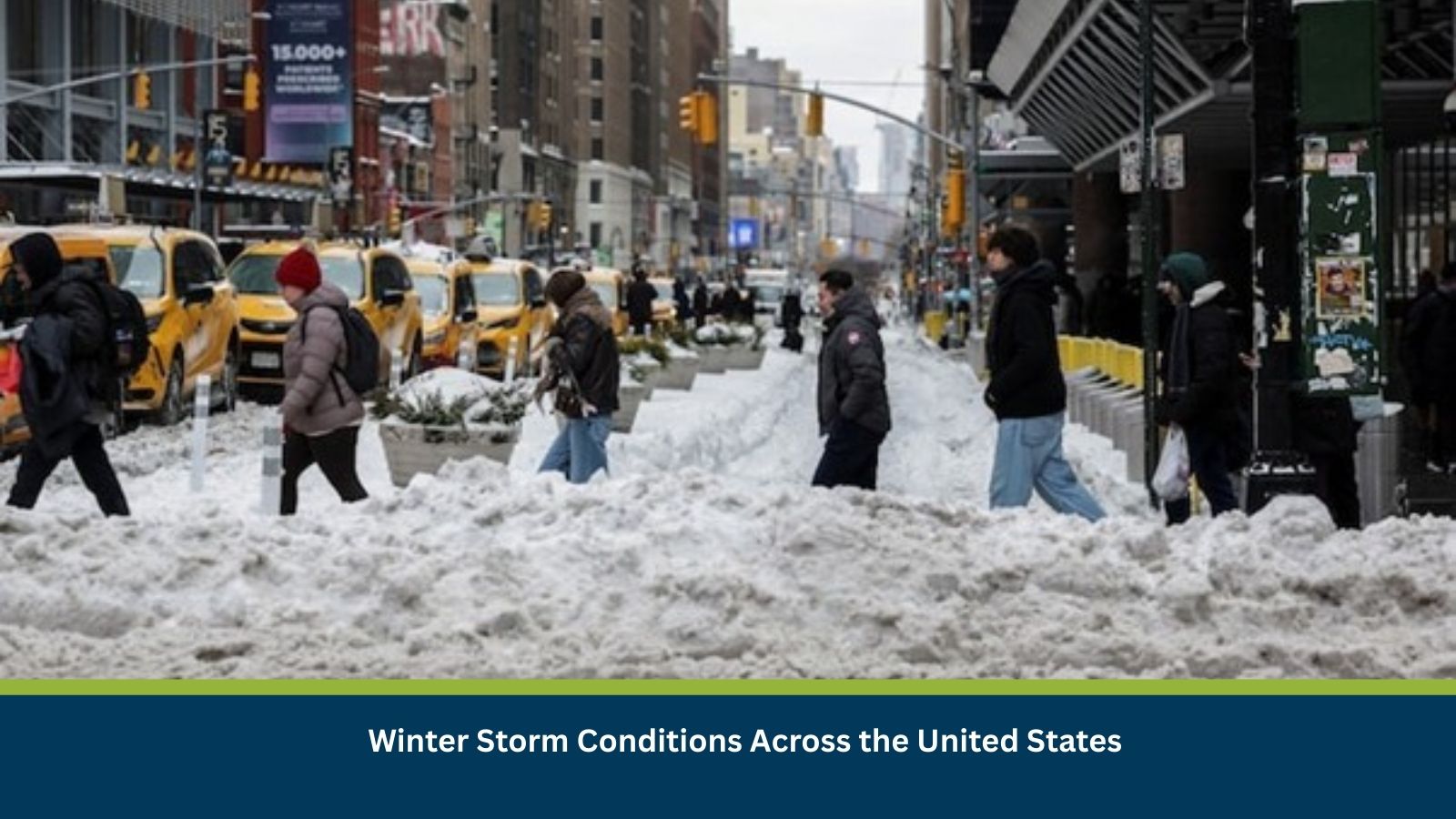
What is Risk Analysis in the Context of Natural Disaster Events
Risk analysis for natural disasters evaluates the likelihood, severity, and cascading impacts of environmental hazards such as winter storms, ice events, and extreme cold. In the United States, winter storms have historically caused widespread transport shutdowns, prolonged power outages, and secondary emergencies. Effective risk analysis supports early decision-making, resource allocation, and continuity planning during high-impact weather events.
Executive Summary
- Date of Event: 27 January
- Location: Tennessee, Texas, Washington, D.C., Pennsylvania, Massachusetts, Mississippi, Louisiana, Kentucky, South Carolina, Georgia, Virginia, New York, United States
- Risk Category: Natural Disaster
- Severity Score: 4 / 5
- Confidence Level: 82 %
A winter storm system accompanied by an arctic blast continues to impact multiple US states, with the most severe effects concentrated across the Southeast and Tennessee Valley. Ice accumulation, subfreezing temperatures, and refreezing conditions are driving hazardous travel, widespread power outages, and delayed emergency response. Based on historical analogs, primary impacts are expected over the next 24–72 hours, with residual disruptions lasting up to seven days. Severity is assessed as high due to transmission-level utility damage and elevated public safety risks.
Current Updates
An arctic cold front has moved south following a damaging ice storm that affected transmission and distribution infrastructure, particularly across Tennessee. Utility providers have reported multiple outage clusters, while state and local authorities continue to issue travel advisories. Emergency services are responding to traffic incidents, structure fires, and weather-related emergencies under constrained conditions.
Known Hotspots and Sensitive Areas
High Impact:
- Middle and East Tennessee, including the Cumberland Plateau and Nashville metropolitan area
- Northern Mississippi, Kentucky, and interior Georgia
- Rural and edge-of-grid communities within TVA service territory
Medium Impact:
- Virginia, South Carolina, and parts of Texas experiencing refreezing and residual ice
- Urban transport corridors in Washington, D.C., Pennsylvania, and New York
Low Impact:
- Areas with cold exposure but limited ice accumulation
These regions have a history of severe disruption during January ice storms, with recurring risks to power and transport networks.
Impact on Transportation and Services
Road networks face significant disruption due to black ice, particularly on interstates, bridges, and elevated routes. Air travel delays and cancellations are likely at major regional airports, while freight and rail operations experience slowdowns. Power outages affect communications, heating systems, and access to essential services, resulting in operational challenges for businesses and public facilities.
Recommended Actions
Immediate Actions:
- Restrict non-essential travel and transition eligible staff to remote work.
- Activate winter storm response and business continuity plans.
- Secure facilities, test generators, and protect freeze-sensitive infrastructure.
Strategic Measures:
- Coordinate with utilities, emergency management agencies, and transport authorities.
- Maintain safety stock and reroute supply chains away from impacted corridors.
- Provide regular internal and external communications on service status and recovery timelines.
Multidimensional Impact
The storm may exacerbate existing power outages, slow emergency response, and strain mutual-aid resources. Cascading effects could extend restoration timelines and amplify localized incidents, particularly in rural and hard-hit counties.
Emergency Contacts
- National Weather Service: weather.gov
- Emergency Services: 911
Final Thoughts
Winter storm conditions across the United States remain a high-impact, multi-day risk with the potential for escalation if refreezing or additional damage occurs. Businesses and policymakers should prioritize safety, continuity planning, and real-time monitoring. Early-warning and risk-intelligence platforms such as MitKat’s Datasurfr can support proactive decision-making and resilience during prolonged winter weather events.
Stay ahead of operational risks with real-time alerts, scenario modeling, and expert advisories with datasurfr’s Predict. Start your 14-day free trial of Datasurfr’s Risk Intelligence Platform today.