





Executive Summary for the Weather Alert in the UAE
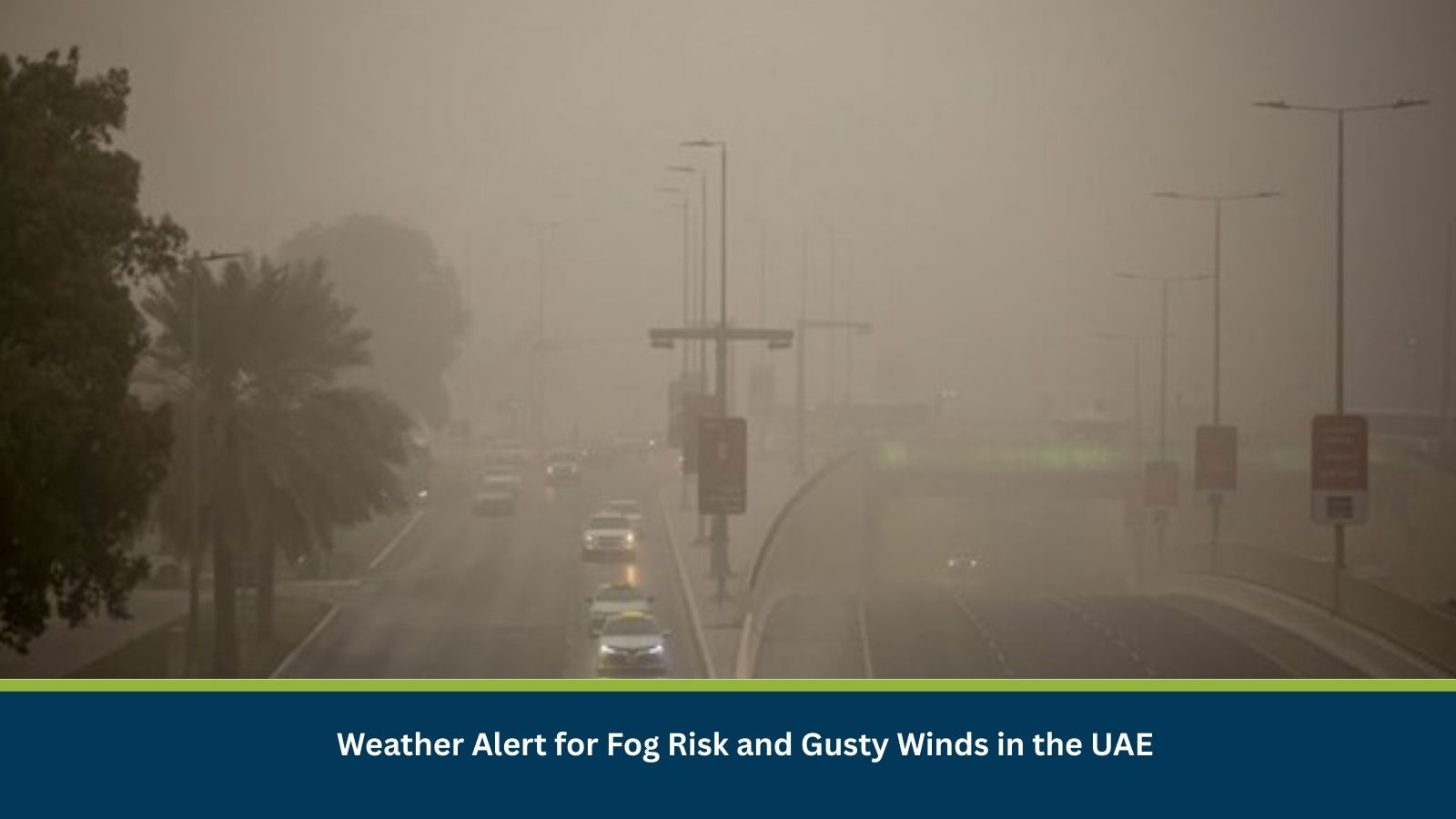
National weather authorities have issued an advisory for fog risk and gusty winds across the UAE through Friday, 13 February. The highest likelihood of reduced visibility is overnight to mid-morning, with dense fog patches potentially lowering visibility below 200–500 metres in coastal and low-lying areas. Gusty winds of up to 40–55 km/h may persist intermittently during daytime hours. Impacts are expected to be localized and moderate, primarily affecting road travel, ferry services and time-sensitive logistics.
- Date of Event: 10-13 February
- Location: United Arab Emirates
- Risk Category: Environment
- Severity Score: 3 / 5
- Confidence Level: 78 %
What is Risk Analysis in the Context of Environment Events
Environmental risk analysis evaluates threats arising from weather and climate conditions that may affect public safety, infrastructure reliability and economic activity. In the UAE, fog events combined with gusty winds represent a recurring late-winter environmental risk, particularly along coastal corridors and low-lying transport routes. Historical patterns show that such conditions frequently result in traffic disruptions, increased accident rates and short-term operational delays, making proactive monitoring and preparedness essential.
Current Updates
Local media and national meteorological guidance indicate fair conditions overall, with recurring fog pockets during early mornings across Abu Dhabi, Dubai, Sharjah and Ras Al Khaimah. Coastal humidity buildup and intermittent gusts remain the primary drivers. No widespread rainfall or storm systems are expected during the advisory period.
Known Hotspots and Sensitive Areas
High Impact:
- Coastal corridors including Abu Dhabi Corniche and Dubai Marina
- Sheikh Zayed Road (E11) and Abu Dhabi–Dubai Highway (E11)
- Ferry terminals and coastal port approaches
Medium Impact:
- Al Ain–Dubai Road (E20)
- Airport surface access roads to Dubai International and Abu Dhabi International
Low Impact:
- Inland urban cores with limited exposure to fog accumulation
These zones have shown repeated sensitivity during previous fog advisories, particularly during morning peak hours.
Impact on Transportation and Services
Fog-related low visibility may lead to temporary lane restrictions, reduced speed limits and short-term road closures on major highways. Ferry schedules along coastal routes may experience delays or cancellations. Airport runway operations are generally unaffected; however, surface access delays may impact passenger and staff movement. Business operations dependent on early-morning road transit may face minor disruptions.
Recommended Actions
Immediate Actions:
- Restrict non-essential travel during overnight and early-morning hours.
- Advise fleet operators to delay departures until visibility improves.
- Secure light external assets and signage in gust-prone areas.
Strategic Measures:
- Activate weather response SOPs and assign operational leads.
- Enable remote work where feasible for affected shifts.
- Maintain situational awareness through official meteorological alerts and internal monitoring tools.
Multidimensional Impact
The event may cause short-term commuter frustration, minor logistical delays and increased demand on traffic management services. Long-term environmental or infrastructure impacts are unlikely.
Emergency Contacts
- Weather Alerts: mobile.ncm.gov.ae
- Emergency Services: 999
Final Thoughts
The fog and gusty wind advisory represent a moderate, short-duration environmental risk with predictable patterns and localized impacts. Organizations should focus on mobility management, staff safety and real-time monitoring. Early-warning and preparedness platforms such as MitKat’s Datasurfr can support informed decision-making and operational resilience during recurrent weather-related disruptions.
Stay ahead of operational risks with real-time alerts, scenario modeling, and expert advisories with datasurfr’s Predict. Start your 14-day free trial of Datasurfr’s Risk Intelligence Platform today.