





What is Risk Analysis in the Context of Civil Disturbance Events
Civil disturbance risk analysis evaluates the likelihood, scale, and impact of protests, marches, and collective actions on public order, infrastructure access, and economic activity. In India, long-distance protest marches have historically disrupted highways and administrative districts, particularly when converging on state capitals. Such analysis is critical to anticipate travel disruption, safeguard people and assets, and support continuity planning during prolonged demonstrations.
Executive Summary
- Date of Event: 28 January
- Location: Thane, Nashik, Mumbai, Maharashtra, India
- Risk Category: Civil Disturbance
- Severity Score: 3 / 5
- Confidence Level: 70 %
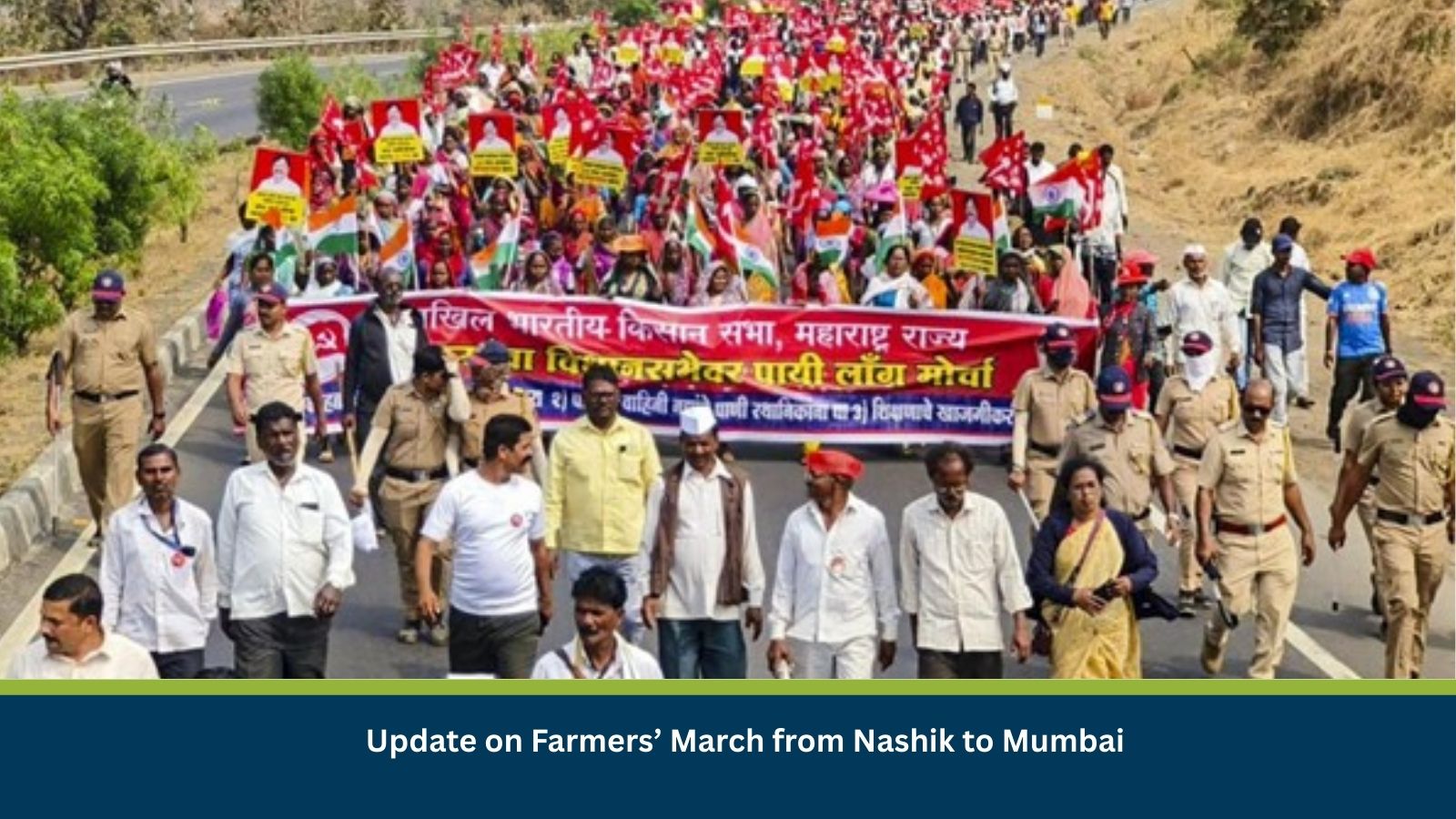
A sustained farmers’ and tribal march originating in Nashik and advancing toward Mumbai remains active, with negotiations initiated by state authorities. Based on historical precedents, the most likely duration is three to seven days, with a lower probability of extension up to two weeks if talks stall. Severity is assessed as moderate due to large participant numbers, concentration along strategic highways, and recurring traffic disruption, but with limited indicators of organized violent intent. Impacts are expected to remain localized to movement corridors and administrative focal points.
Current Updates
As of 28 January, protest groups continue progressing toward Mumbai along established routes. State authorities have invited delegations for discussions, signalling a potential de-escalation pathway. Traffic congestion has been reported near district collectorates and highway junctions in Nashik and the Thane corridor. No confirmed large-scale violence has been reported at this stage.
Known Hotspots and Sensitive Areas
High Impact:
- Mumbai–Nashik highway corridors, including Sinnar, Bhiwandi, and Thane
- Entry points to Mumbai and South Mumbai administrative areas, including Mantralaya
- Nashik Collectorate and surrounding market zones
Medium Impact:
- Thane–Bhiwandi industrial belt
- Peripheral urban areas used for staging or overnight halts
Low Impact:
- Areas away from primary march routes and administrative centres
Large-scale marches along this corridor have recurred periodically, often culminating near state administrative building.
Impact on Transportation and Services
Road transport is the most affected sector, with intermittent blockages, diversions, and long tailbacks on national and state highways. Freight and last-mile deliveries face delays, while commuter services in Thane and Mumbai experience schedule disruptions. Business operations near protest routes may face temporary closures, staff absenteeism, and constrained access to facilities. Communications networks generally remain functional, though localized restrictions have occurred in past protests near sensitive sites.
Recommended Actions
Immediate Actions:
- Reroute logistics and restrict non-essential travel along affected corridors.
- Enable remote work or staggered shifts for staff in Nashik, Thane, and Mumbai.
- Increase security monitoring at facilities near protest routes.
Strategic Measures:
- Maintain liaison with local police, traffic control rooms, and district authorities.
- Build buffer inventory and contingency transport arrangements.
- Review crowd-risk protocols and employee safety communications.
Multidimensional Impact
Protest-related congestion may delay emergency response to unrelated incidents in Thane and Bhiwandi. Prolonged mobilisation could heighten community tensions and compound seasonal agricultural stress factors, potentially extending the duration of the march.
Emergency Contacts
- Maharashtra Police: 022 22822631
- Emergency Number: 112, 100 (Police), 101 (Fire), 108 (Ambulance)
Final Thoughts
The farmers’ march represents a moderate civil disturbance risk with predictable mobility and operational impacts along the Nashik–Mumbai axis. The trajectory will depend heavily on negotiation outcomes over the coming days. Businesses and authorities should prioritise monitoring, flexible operations, and early-warning intelligence through preparedness tools such as MitKat’s Datasurfr to mitigate disruption and protect people and assets.
Stay ahead of operational risks with real-time alerts, scenario modeling, and expert advisories with datasurfr’s Predict. Start your 14-day free trial of Datasurfr’s Risk Intelligence Platform today.