





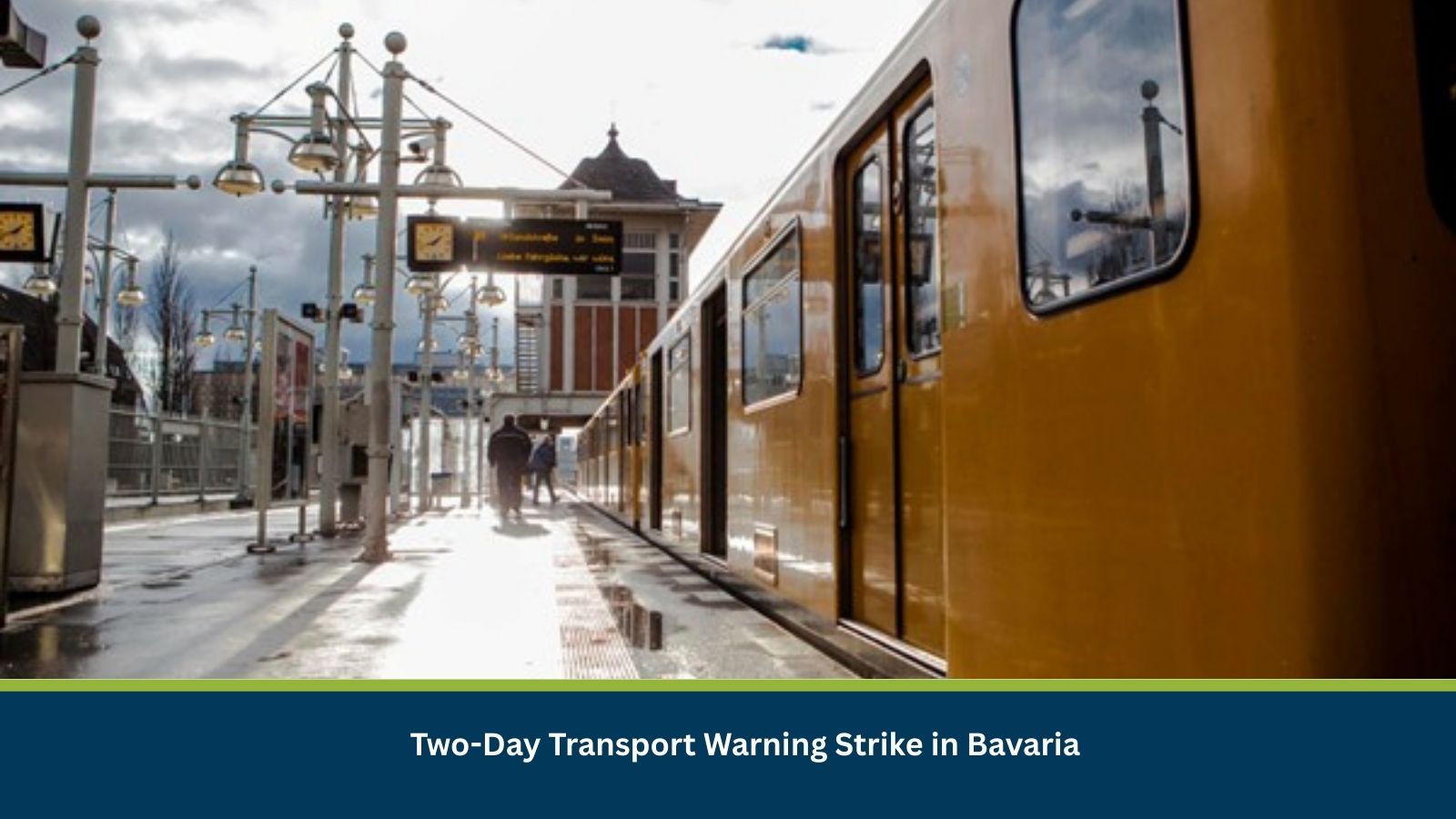
Executive Summary for the Transport Strike Across Bavaria
A Verdi-led warning strike will impact public transport networks across Bavaria, with severe disruption anticipated on 27 February and residual delays into 28 February. Major cities including Munich, Nuremberg, Augsburg, Regensburg, Passau and Landshut are likely to experience near-total suspension of bus, tram and selected U-/S-Bahn services. Severity is elevated due to predictable commuter paralysis and cascading congestion effects.
- Date of Event: 27-28 February
- Location: Bavaria, Germany
- Risk Category: Travel Risks
- Severity Score: 4 / 5
- Confidence Level: 78 %
What is Risk Analysis in the Context of Travel Risks Events
Travel risk analysis evaluates disruptions to transportation systems that affect workforce mobility, logistics flows and access to critical infrastructure. Warning strikes in public transport fall under industrial action risk, often resulting in widespread service suspension, traffic congestion and operational delays. Bavaria has experienced repeated transport strikes in February 2026, producing near-total paralysis of bus, tram and several U-/S-Bahn services. Such recurring industrial action increases predictability of disruption but amplifies cumulative impact on commuting patterns, supply chain reliability and client-facing operations.
Known Hotspots and Sensitive Areas
High Impact:
- Munich Hauptbahnhof, Marienplatz and Karlsplatz (Stachus)
- Nuremberg Hauptbahnhof
- Augsburg Hauptbahnhof
- Regensburg and Passau central stations
- Airport S-Bahn routes (S1/S8) serving Munich Airport
Medium Impact:
- Major arterial roads including B2 and A9 approaches to Munich
- Urban tram and bus depots
Low Impact:
- Rural districts with limited reliance on urban transit networks
Recent strike patterns indicate concentrated paralysis in metropolitan centres with spillover congestion on highways and park-and-ride corridors.
Impact on Transportation and Services
Widespread suspension of bus, tram and many U-/S-Bahn services is expected, significantly affecting commuter mobility. Long-distance rail is likely to remain operational but may face access delays due to overcrowded stations. Increased reliance on private vehicles will intensify traffic congestion, raising accident and environmental risks. Businesses should anticipate workforce absenteeism, delayed deliveries and reduced retail footfall. Digital systems are expected to remain stable, though customer service channels may experience elevated demand.
Recommended Actions
Immediate Actions:
- Activate remote-working protocols and staggered shift schedules.
- Pre-book private shuttle or taxi services for critical staff.
- Prioritize time-sensitive logistics and consolidate deliveries.
- Communicate revised ETAs to suppliers and customers 24 hours prior.
Strategic Measures:
- Develop a Bavaria-specific industrial action contingency plan.
- Diversify warehouse and dispatch points to reduce urban dependency.
- Strengthen VPN capacity and remote IT infrastructure for continuity.
- Maintain liaison with local authorities and transport operators for updates.
Multidimensional Impact
Transport disruption may affect attendance at unrelated events and increase congestion around major gathering sites. Repeated strikes could heighten public dissatisfaction and pressure political mediation efforts.
Emergency Contacts
- Emergency Services: 112
- Deutsche Bahn Customer Service: +49 30 2970
Final Thoughts
The 27–28 February warning strike presents a high-impact but time-bound travel disruption risk across Bavaria. The primary watchpoint remains full-day paralysis on 27 February with residual congestion extending into 28 February. Businesses should prioritize workforce mobility, supply chain resilience and proactive communication.
Stay ahead of operational risks with real-time alerts, scenario modelling, and expert advisories with datasurfr’s Predict. Start your 14-day free trial of Datasurfr’s Risk Intelligence Platform today.