





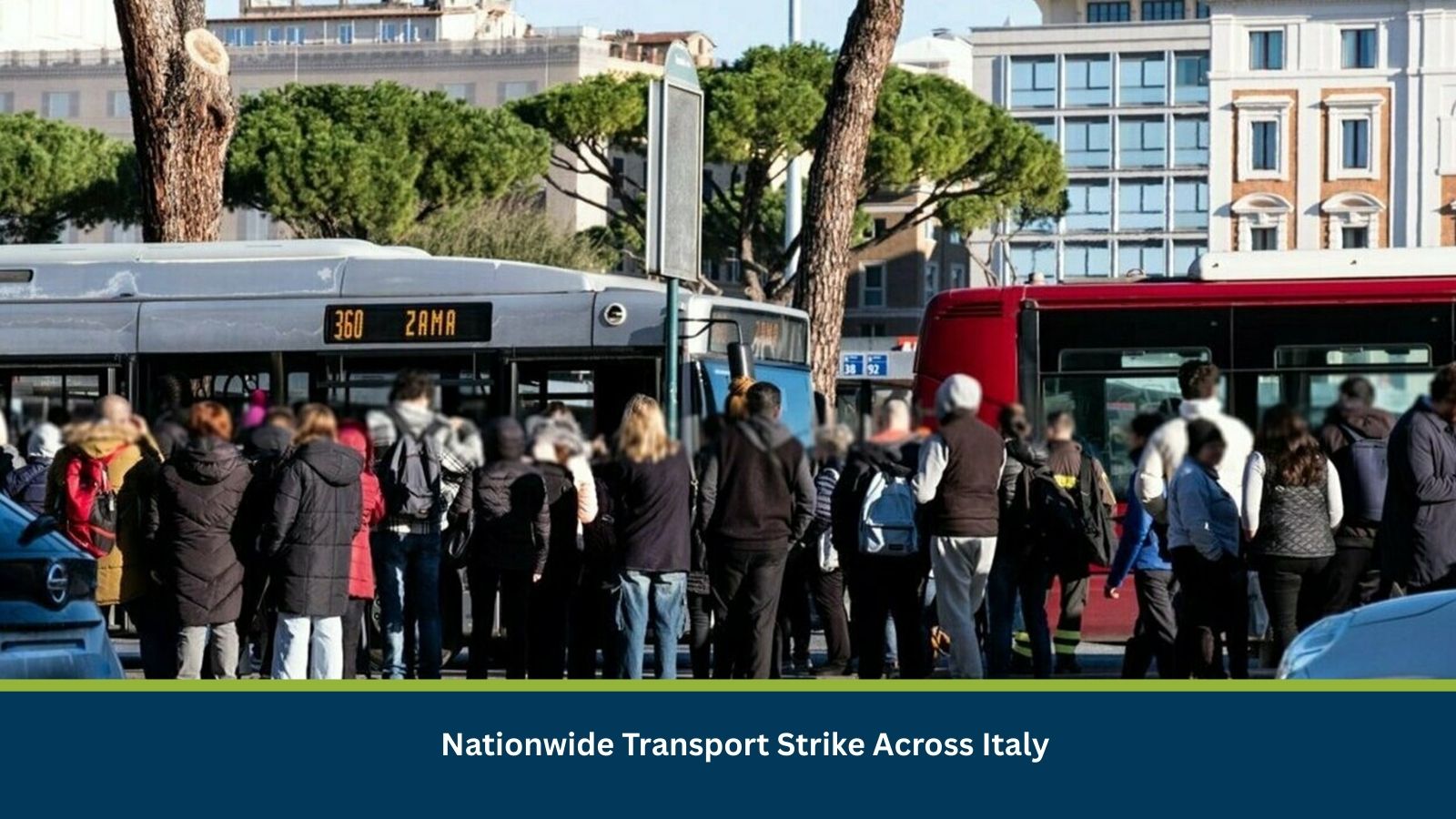
Executive Summary for the Nationwide Transport Strike in Italy
Italian transport unions have announced a nationwide strike from 26–28 February impacting aviation, rail and local public transport. Highest disruption is anticipated on 26–27 February, with residual delays extending into 28 February. Major airport hubs and intercity rail corridors face concentrated cancellations. Severity is assessed as moderate due to expected service guarantees and government mitigation measures, though business operations and supply chains will experience short-term strain.
- Date of Event: 26-28 February
- Location: Italy
- Risk Category: Travel Risks
- Severity Score: 3 / 5
- Confidence Level: 80 %
What is Risk Analysis in the Context of Travel Risks Events
Travel risk analysis assesses disruptions affecting passenger mobility, freight transport and critical transit infrastructure. Nationwide transport strikes represent a high-impact travel risk due to their ability to simultaneously affect air travel, rail networks and local public transport. In Italy, recurring industrial action historically causes concentrated disruption within the first 24–72 hours, including mass cancellations, rail stoppages and urban congestion. While systemic safety failures are uncommon, operational continuity and workforce mobility are significantly affected, requiring structured contingency planning.
Known Hotspots and Sensitive Areas
High Impact:
- Major airport hubs: Rome, Milan and Naples
- Primary rail termini in Rome and Milan
- Urban transport networks in Rome, Milan and Naples
Medium Impact:
- Intercity rail corridors such as Milano–Roma and Napoli–Bari
- Motorway junctions including A1 and A4 corridors near metropolitan nodes
Low Impact:
- Rural areas with limited reliance on public transport
Italy experiences periodic nationwide transport strikes, particularly in late winter and early spring, with recurring patterns of concentrated first-day disruption.
Impact on Transportation and Services
Air travel faces flight cancellations, rebooking backlogs and airport congestion. Rail services, particularly regional and commuter lines, may operate at reduced frequency or face rolling stoppages. Urban bus and metro networks risk partial suspension, increasing road congestion. Freight logistics and last-mile delivery may experience 24–72-hour delays, affecting time-sensitive goods. Customer-service systems may encounter high call volumes, and business meetings, tourism flows and cross-border travel are likely to be disrupted.
Recommended Actions
Immediate Actions:
- Activate strike contingency plans 48 hours prior to 26 February.
- Prioritize essential staff and enable remote work for non-critical roles.
- Rebook critical travel through alternate routing or private carriers.
- Communicate revised delivery schedules to customers and suppliers.
Strategic Measures:
- Diversify logistics partnerships to reduce dependency on public-transport-linked hubs.
- Increase inventory buffers for perishable or time-sensitive goods.
- Enhance site security and monitoring during peak disruption periods.
- Coordinate with civil protection authorities and local police for situational updates.
Multidimensional Impact
Overlapping demonstrations in Rome and adverse weather warnings may compound congestion and strain emergency services. Reduced mobility could delay emergency redeployment and increase urban crowding risks.
Emergency Contacts
- Emergency Services: 112
- Italian Civil Protection Department: protezionecivile.gov.it/en/
Final Thoughts
The 26–28 February transport strike presents a moderate but concentrated travel disruption risk across Italy. Highest impact is expected during the first 48 hours, particularly in aviation and regional rail. Businesses should prioritise mobility planning, supply chain resilience and proactive communication.
Stay ahead of operational risks with real-time alerts, scenario modelling, and expert advisories with datasurfr’s Predict. Start your 14-day free trial of Datasurfr’s Risk Intelligence Platform today.