





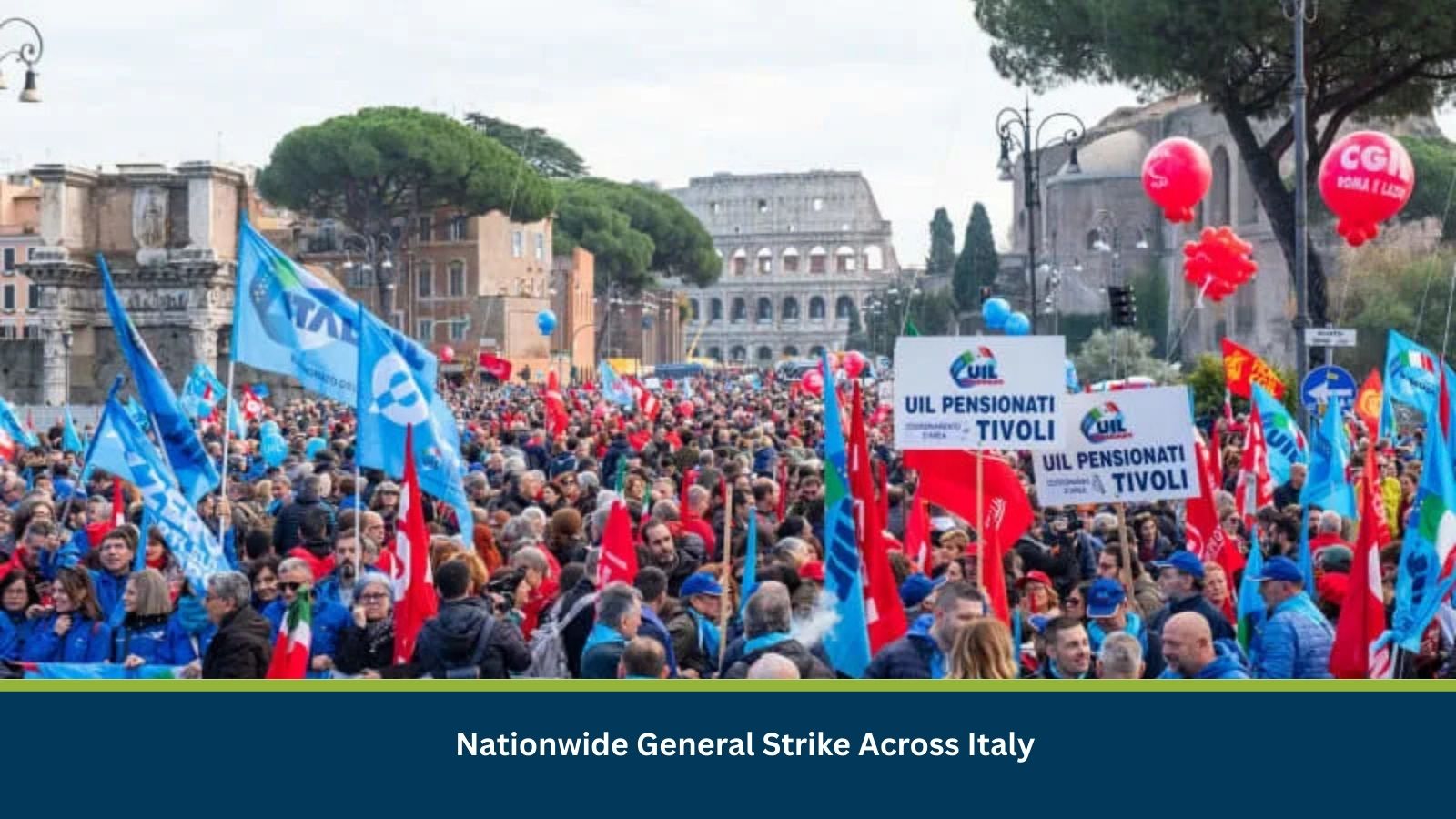
Executive Summary for the Nationwide Strike in Italy
A nationwide general strike is scheduled across Italy on 09 March, affecting multiple sectors including transport, healthcare, education, and public administration. The primary disruption window is expected to last approximately 24 hours, with potential secondary effects such as transport backlogs and delayed services extending up to 48–72 hours. Major urban centers and transportation corridors are likely to experience the most significant impact. While widespread infrastructure damage or violence is unlikely, past national strikes have resulted in cancelled train services, flight delays, reduced hospital staffing, and localized demonstrations. Authorities are expected to maintain policing presence around major transit hubs and protest locations.
- Date of Event: 09 March
- Location: Italy
- Risk Category: Civil Disturbance
- Severity Score: 3 / 5
- Confidence Level: 70 %
What is Risk Analysis in the Context of Civil Disturbance Events
Civil disturbance risk analysis evaluates disruptions caused by organized protests, labour strikes, or public demonstrations that may affect public order, mobility, and economic activity. Such events can lead to interruptions in transportation systems, workforce availability, and access to essential services. In Italy, nationwide strikes organized by labour unions are a recurring feature of the socio-political landscape. Over recent years, general strikes have frequently targeted sectors such as transportation, healthcare, education, and public administration. These events often lead to public transport cancellations, demonstrations in city centres, and temporary service reductions. Conducting risk analysis during such strikes is important for ensuring business continuity, protecting workforce safety, and minimizing disruptions to supply chains and mobility networks.
Known Hotspots and Sensitive Areas
High Impact:
- Rome, Milan, and Naples city centres
- Major transport hubs including Roma Termini and Milano Centrale stations
- Airports such as Fiumicino, Malpensa, and Linate
Medium Impact:
- Major rail corridors including Roma–Milano and Milano–Napoli routes
- Port access routes and logistics corridors across northern and central Italy
Low Impact:
- Smaller regional towns and rural areas where strike participation may be limited
Historically, nationwide strikes in Italy generate the most significant disruptions in large metropolitan areas and major transportation nodes where commuter flows and public sector employment are concentrated.
Impact on Transportation and Services
Transport disruption is expected to be the most immediate consequence of the general strike. Regional and long-distance rail services may face cancellations or timetable reductions, particularly along key national corridors. Urban metro, tram, and bus systems in major cities may operate with limited schedules. Air travel may also experience delays or selective flight cancellations due to reduced airport ground operations. Freight logistics could face delays along key highway corridors and port access routes, creating short-term supply chain disruptions. Public services such as healthcare and education may operate with reduced staffing levels. Hospitals are likely to prioritize emergency treatment while postponing routine procedures and appointments.
Recommended Actions
Immediate Measures:
- Postpone non-essential travel across affected cities on 09 March.
- Enable remote work arrangements for employees where possible.
- Confirm transport schedules with rail and airline operators before travel.
- Increase monitoring of supply chain movements and adjust delivery schedules.
Strategic Measures:
- Establish business continuity protocols for labor strike scenarios.
- Maintain contingency staffing plans and alternate logistics routes.
- Coordinate with local authorities and law enforcement for situational updates.
Multidimensional Impact
A scheduled road closure along Via Ardeatina in Rome during March may further limit diversion routes for motorists. Combined with strike-related demonstrations and transport disruptions, congestion and longer travel times may occur in southern parts of the capital.
Emergency Contacts
- Emergency Number: 112
Final Thoughts
The nationwide general strike across Italy on 09 March represents a moderate civil disturbance risk with short-term but widespread impacts on transportation, public services, and supply chains. Although the disruption window is expected to remain limited to 24 hours, secondary effects may persist for several days as services normalize. Businesses and organizations should monitor developments closely, adjust operational schedules, and prioritize critical logistics movements.
Stay ahead of operational risks with real-time alerts, scenario modeling, and expert advisories with datasurfr’s Predict. Start your 14-day free trial of Datasurfr’s Risk Intelligence Platform today.