





What is Risk Analysis in the Context of Environmental Events
Risk analysis in environmental events focuses on assessing hazards arising from severe weather phenomena such as heavy snowfall, cold waves, floods, or storms. These events can disrupt mobility, strain infrastructure, and pose safety risks to populations. In South Korea, winter snowfall events, particularly in southwestern regions, have historically resulted in transport shutdowns, utility strain, and short-term economic disruption, making structured risk assessment critical for preparedness and response.
Executive Summary
- Date of Event: 22 January
- Location: South Korea
- Risk Category: Environment
- Severity Score: 4 / 5
- Confidence Level: 80 %
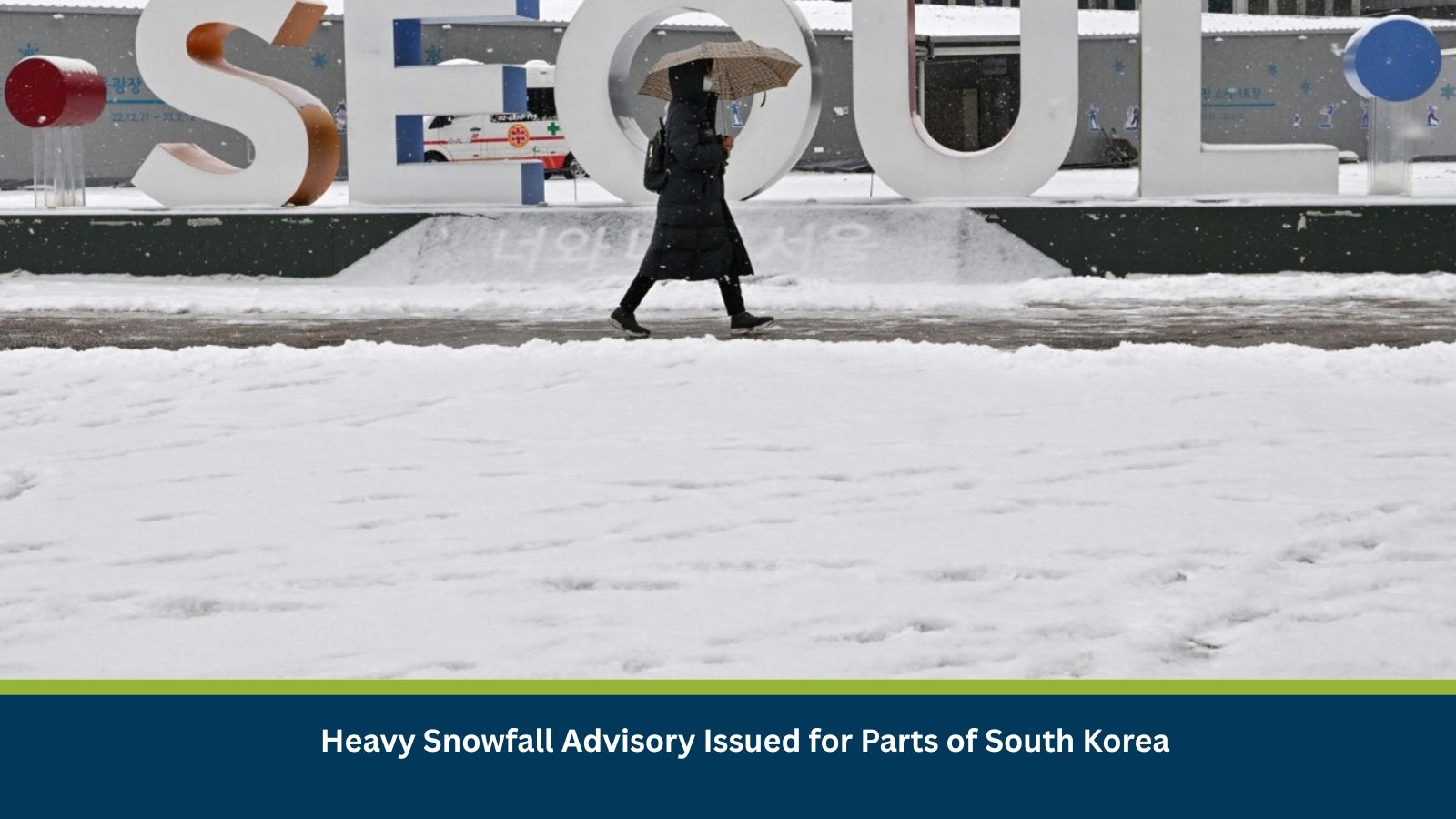
The Korea Meteorological Administration has issued a heavy snowfall advisory for parts of South Korea, with the highest impact expected across Gwangju, Jeollanam-do, and parts of Jeollabuk-do. Snowfall is forecast to persist for 24–48 hours, with peak accumulation during the next 12–36 hours. Historical patterns indicate localized accumulations of five–20 cm, near-coastal drifting, and rapid disruption to roads and ferry services. Severity is assessed as moderate-to-severe due to transport interruptions, increased accident risk, and localized utility strain. Confidence in the forecast is high given consistent modelling and recurring late-January snowfall events.
Current Updates
Meteorological authorities report snow bands moving inland from the Yellow Sea, bringing moderate to heavy snowfall to southwestern provinces. Local governments have activated snow-clearing measures, while ferry operators in affected coastal areas have placed services on standby. No nationwide emergency declarations have been issued at this stage.
Known Hotspots and Sensitive Areas
High Impact:
- Gwangju metropolitan area
- Jeollanam-do coastal districts, including Muan and Mokpo
- Key segments of the Honam Expressway
Medium Impact:
- Parts of Jeollabuk-do connected to the Honam transport corridor
- Regional logistics hubs and industrial zones
Low Impact:
- Inland regions outside the advisory zone
Heavy snowfall events in these areas are seasonal, with repeated advisories issued during late January in recent years.
Impact on Transportation and Services
Road transportation is expected to be the most affected, with potential closures or restrictions on expressways and local roads due to snow accumulation and reduced visibility. Ferry services connecting coastal areas, particularly around Muan and Mokpo, may be suspended temporarily. Public transport schedules in urban centers could be reduced, affecting workforce mobility. These disruptions may lead to short-term business interruptions, delayed deliveries, and limited access to assets and facilities.
Recommended Actions
Immediate Measures:
- Activate storm response and incident coordination teams.
- Advise employees to avoid non-essential travel and enable remote work where possible.
- Secure facilities, clear snow and ice from access points, and protect critical equipment.
Strategic Measures:
- Coordinate closely with local governments, transport operators, and utility providers.
- Adjust supply-chain plans, reroute shipments, and communicate revised timelines to stakeholders.
- Maintain continuous monitoring of weather advisories and operational status through centralized dashboards.
Multidimensional Impact
No concurrent non-related events have been identified. However, extended snowfall could compound strain on emergency services and local infrastructure if conditions deteriorate beyond forecast levels.
Emergency Contacts
- Local emergency services: 119
- Korea Meteorological Administration: kma.go.kr/eng/
Final Thoughts
The heavy snowfall advisory represents a time-bound but significant environmental risk for southwestern South Korea. While impacts are expected to be localized, disruptions to transportation and logistics could escalate if snowfall intensifies or persists. Proactive preparedness, clear communication, and real-time monitoring are essential. Early-warning and risk-intelligence platforms such as MitKat’s Datasurfr can support informed decision-making and enhance resilience during severe winter weather events.
Stay ahead of operational risks with real-time alerts, scenario modeling, and expert advisories with datasurfr’s Predict. Start your 14-day free trial of Datasurfr’s Risk Intelligence Platform today.