





Executive Summary for the Elevated Air Pollution in Bangladesh
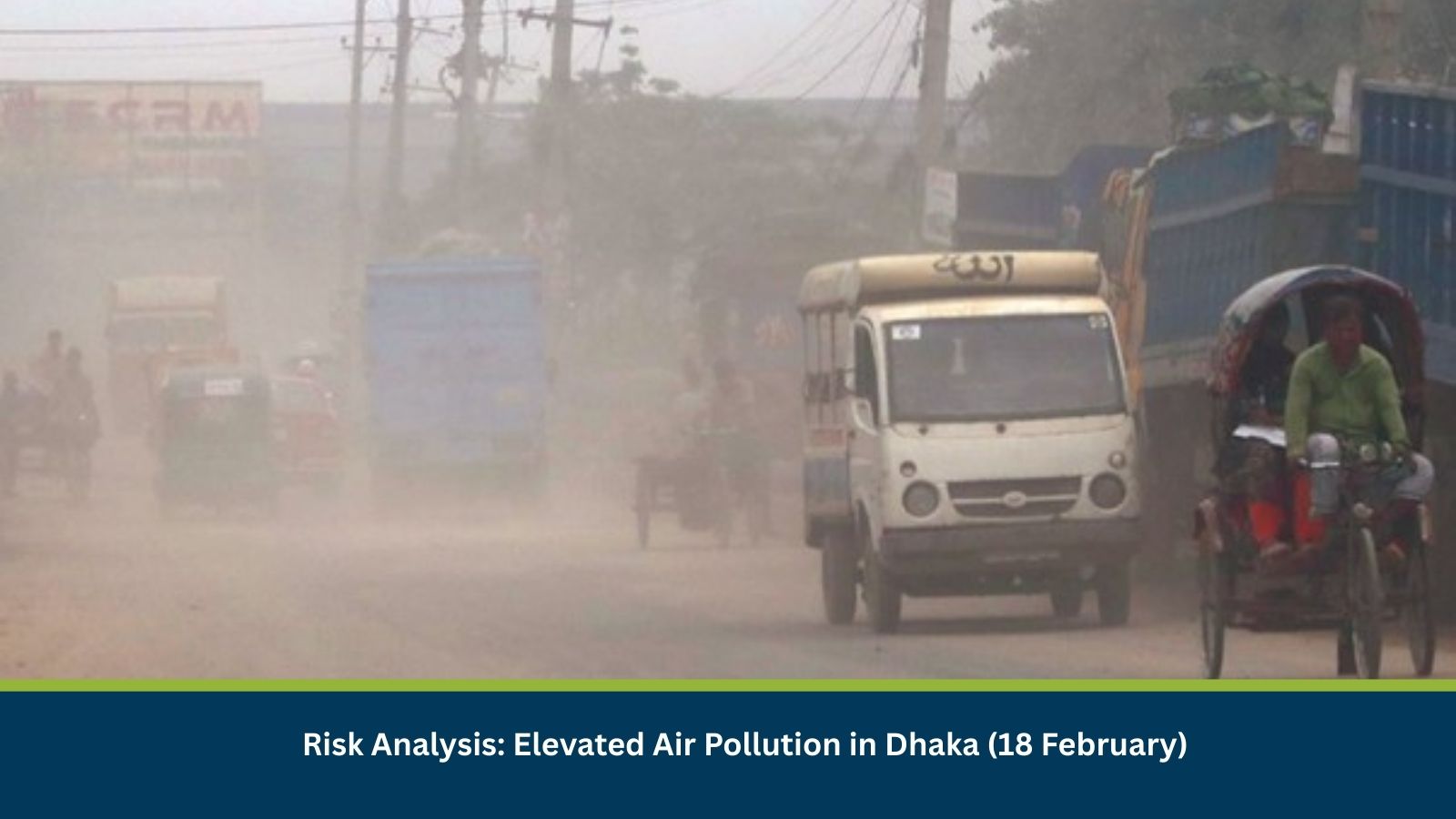
On 18 February, Dhaka experienced elevated air pollution levels consistent with prior February–March episodes. PM2.5 and PM10 concentrations are expected to remain in the ‘unhealthy’ to ‘very unhealthy’ range for 48–96 hours unless meteorological changes occur. The primary risk concerns public health, especially for children, elderly individuals and those with respiratory or cardiac conditions. Short-term operational disruption to outdoor activities and logistics is anticipated.
- Date of Event: 18 February
- Location: Dhaka, Bangladesh
- Risk Category: Environment
- Severity Score: 4 / 5
- Confidence Level: 80 %
What is Risk Analysis in the Context of Environmental Events
Environmental risk analysis assesses the operational, health and infrastructure implications of natural or anthropogenic environmental hazards. In this case, elevated air pollution driven by stagnant atmospheric conditions and persistent urban emissions presents a recurring seasonal risk. Dhaka historically experiences multi-day pollution episodes during winter to early spring, often linked to vehicular emissions, brick kilns, industrial output and construction dust. Such events have regional relevance across South Asia and require structured air quality monitoring, occupational health planning and supply chain resilience.
Known Hotspots and Sensitive Areas
High Impact:
- Motijheel commercial district
- Gulistan and Farmgate intersections
- Mirpur Ring Road corridor
- Bijoy Sarani and Airport Road
Medium Impact:
- Savar and Gazipur industrial peripheries
- Major construction zones
Low Impact:
- Peripheral suburban districts with lower traffic density
These areas historically record sustained high particulate matter concentrations during seasonal air pollution spikes, particularly in late winter.
Impact on Transportation and Services
Reduced visibility may slow traffic on major arteries including Mirpur Road and Kazi Nazrul Islam Avenue. Public transport ridership may decline, while delivery schedules and last-mile logistics could face minor delays. Ferry services and highway corridors have previously experienced congestion during dense haze conditions. Increased indoor HVAC demand may elevate operational costs for commercial facilities. Digital infrastructure remains unaffected, though expanded remote work could increase network load.
Recommended Actions
Immediate Actions:
- Activate an Air Quality Incident SOP and designate incident leads.
- Distribute N95/KN95 respirators to on-site staff.
- Suspend non-essential outdoor work and enable remote or staggered shifts.
- Upgrade HVAC filtration to MERV13-equivalent filters and deploy portable HEPA units.
Strategic Measures:
- Integrate real-time AQI tracking into corporate risk dashboards.
- Develop continuity plans for prolonged pollution episodes.
- Coordinate with the Department of Environment and Dhaka City Corporation for regulatory compliance and advisories.
- Conduct employee awareness sessions on air pollution health mitigation.
Multidimensional Impact
Elevated pollution may reduce attendance at public gatherings and strain healthcare facilities through increased respiratory admissions. Combined mobility slowdowns and health-related absenteeism could amplify short-term productivity losses.
Emergency Contacts
- Emergency Services: 999
- Department of Environment (DoE) Bangladesh: doe.gov.bd/
Final Thoughts
The current air pollution episode is consistent with Dhaka’s seasonal pattern and is likely to persist for several days. The principal risks relate to public health, workforce availability and limited transport disruption. Businesses should prioritise occupational safety, real-time monitoring and adaptive continuity planning.
Stay ahead of operational risks with real-time alerts, scenario modelling, and expert advisories with datasurfr’s Predict. Start your 14-day free trial of Datasurfr’s Risk Intelligence Platform today.