





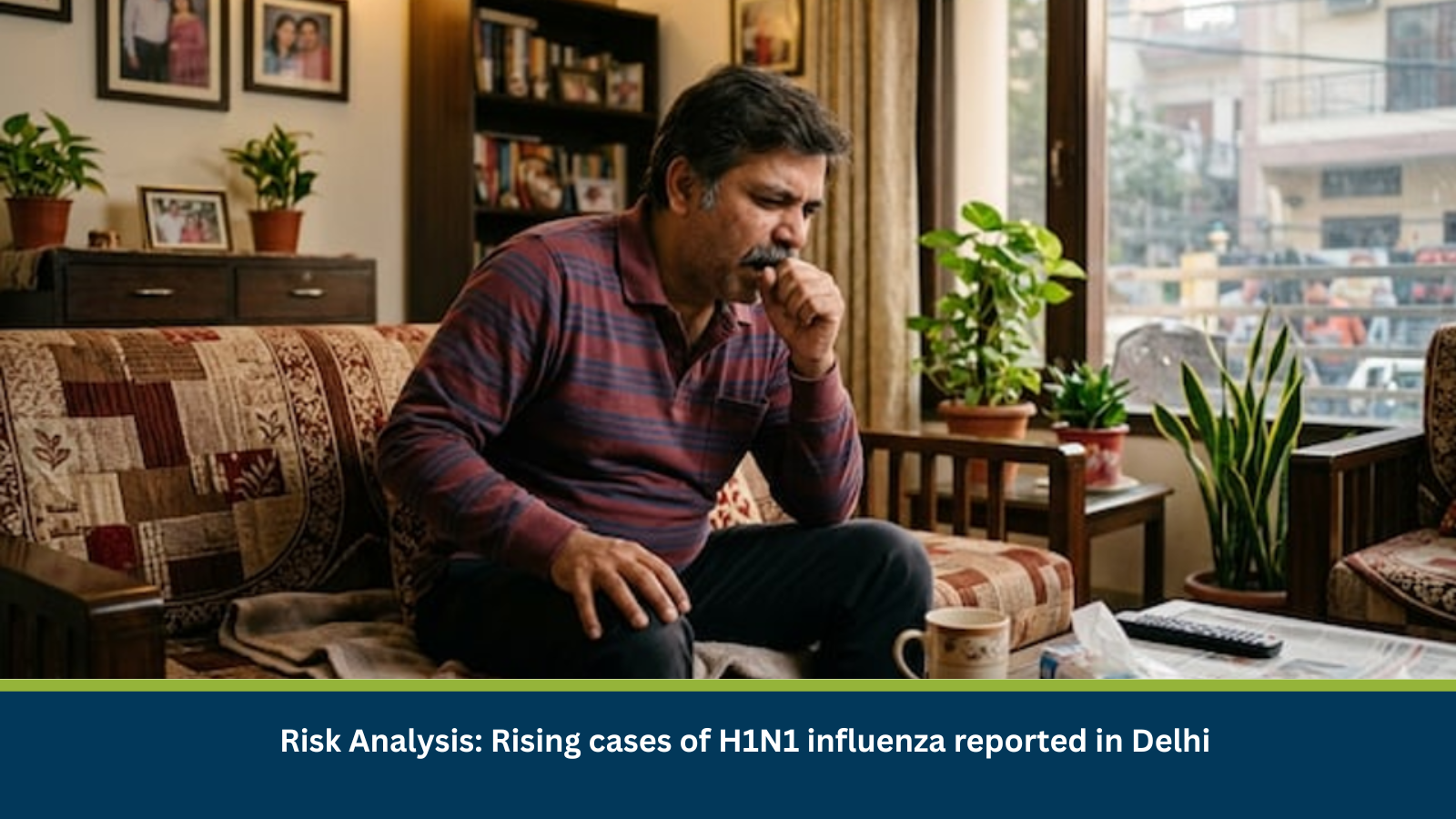
Executive Summary for H1N1 Cases Surge in Delhi
Delhi has reported around 1,449 confirmed H1N1 (swine flu) cases so far in 2026, a sharp rise compared to roughly 229 cases recorded during the same period last year, according to Delhi Health Minister Pankaj Singh. Officials say no deaths have been officially confirmed due to the disease, though hospitals across the city have reported a steady increase in patients arriving with fever, cough and cold symptoms. Government hospitals have set up dedicated wards and isolation rooms to manage the rising caseload, and health authorities maintain that treatment capacity remains adequate. The surge coincides with the monsoon season, when influenza activity typically increases across northern India.
- Date of Event: 14August 2026
- Location: Delhi, India
- Risk Category: Health
- Severity Score: 3/5
- Confidence Level: 75%
What is Risk Analysis in the Context of Health Events
Health risk analysis evaluates the potential impact of a disease outbreak or public health development on hospital capacity, community wellbeing and essential medical services. It considers the rate of case growth, the profile of at-risk populations, and the healthcare system’s ability to absorb increased patient volumes without compromising the quality of care.
Known Hotspots and Sensitive Areas
High Impact
- Government hospitals with designated H1N1 wards and isolation rooms
- Outpatient departments reporting high daily pace of flu-like cases
- Densely populated areas of Delhi seeing the sharpest case increases
Medium Impact
- Private hospitals and clinics managing overflow patients
- Residential neighbourhoods with higher population density
- Schools, offices and other settings with close indoor contact
Low Impact
- Areas with higher seasonal flu vaccination coverage
- Localities outside major hospital catchment zones
Impact on Transportation and Services
Hospitals across Delhi have reported increased patient inflow, with some facilities seeing several H1N1 patients daily in outpatient departments. Government hospitals have created separate wards and private rooms for affected patients, and testing and diagnostic services have been scaled up to keep pace with demand. While officials say hospitals remain equipped to manage the current caseload, the sustained rise in infections is placing additional pressure on outpatient services and staff during the monsoon period.
Recommended Actions
- Get the annual flu vaccination, particularly if in a high-risk group.
- Practise frequent handwashing and cover coughs and sneezes.
- Avoid crowded places when experiencing flu-like symptoms.
- Seek medical attention early if symptoms worsen, rather than self-medicating.
- Avoid antibiotics for viral infections and consult a doctor about antiviral treatment where appropriate.
Emergency Contacts
- Emergency Services: 112
- Ambulance: 102
Final Thoughts
The rise in H1N1 cases represents a moderate public health concern for Delhi, with the greatest pressure falling on hospital outpatient departments and dedicated flu wards. Continued monitoring through the remainder of the monsoon season, combined with vaccination and early treatment-seeking behaviour, will be important in limiting further strain on the healthcare system. Leveraging MitKat’s Datasurfr enables businesses to receive real-time intelligence, monitor evolving threats and make informed decisions to protect people, assets and operations.