





What is Risk Analysis in the Context of Civil Disturbance Events
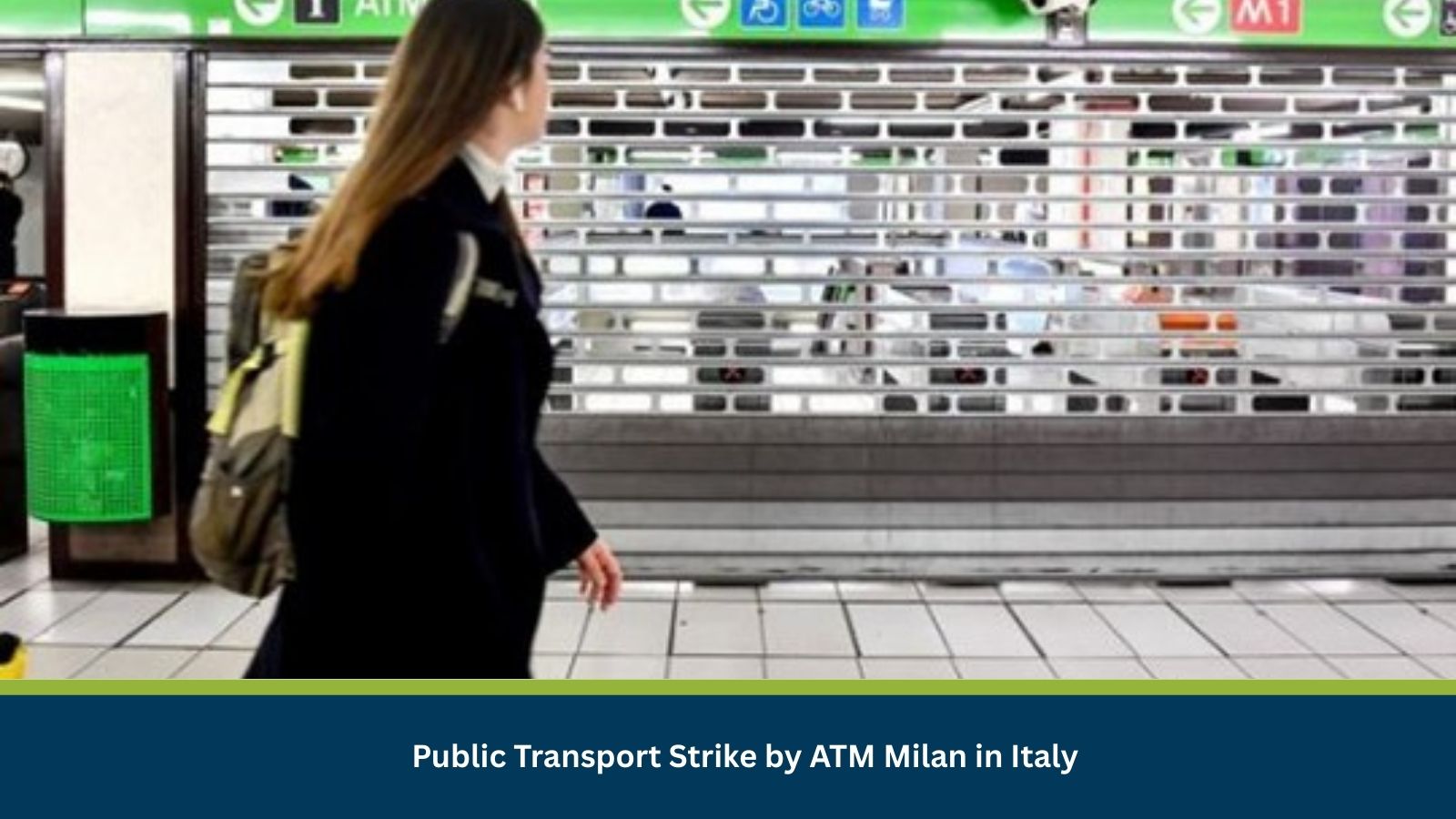
Civil disturbance risk analysis evaluates disruptions arising from strikes, protests and collective labour actions that affect public order and essential services. In the context of transport strikes, risks primarily relate to mobility breakdowns, crowd safety, economic losses and cascading congestion. Milan has a long history of short-duration ATM strikes, making such events predictable but operationally significant for businesses and public services across the Lombardy region.
Executive Summary
- Date of Event: 15 January
- Location: Milan, Lombardy Region, Italy
- Risk Category: Civil Disturbance
- Severity Score: 3/ 5
- Confidence Level: 78 %
ATM Milan has scheduled a public transport strike on 15 January, with an expected disruption window of four to 24 hours. The most likely scenario is a four–eight hour daytime stoppage affecting peak commuter periods. While violence or asset damage is unlikely, significant mobility disruption, congestion and localized safety risks are anticipated, particularly at central transport hubs.
Current Updates
Local reporting confirms the strike scheduled for Thursday 15 January. No concurrent large-scale demonstrations have been announced, though nearby transport-sector actions are increasing pressure on alternative mobility options. ATM is expected to publish guaranteed service windows closer to the strike date, consistent with prior actions.
Known Hotspots and Sensitive Areas
High Impact: Milano Centrale, Duomo, Cadorna FN, Porta Garibaldi and Corso Buenos Aires, where crowding and service suspensions historically concentrate.
Medium Impact: Porta Nuova, Brera, Viale Monza and major interchange corridors linking suburban rail and metro services.
Low Impact: Peripheral residential districts with limited reliance on ATM metro lines.
These locations show recurring disruption during previous ATM strikes, particularly during winter commuter peaks.
Impact on Transportation and Services
Metro lines M1, M2, M3 and M5, along with tram and bus routes, are likely to face partial or full suspension during strike hours. Road congestion is expected on major arteries including Corso Buenos Aires and the Tangenziale Est as commuters shift to private vehicles and taxis. Business operations may experience staff absenteeism, reduced retail footfall, delayed meetings and last-mile logistics disruptions. Digital services may see increased demand for real-time updates, straining customer support channels.
Recommended Actions
- Organisations should activate strike-day staffing and access plans on 15 January, prioritising essential roles and authorising flexible work arrangements.
- Remote work should be enabled where feasible, with pre-approved taxi or mileage reimbursements for critical staff.
- Logistics teams should coordinate alternative delivery windows and routes.
- Continuous monitoring of ATM and regional transport advisories, in coordination with local authorities, is advised to support timely decision-making.
Multidimensional Impact
The strike may indirectly affect emergency response times, scheduled events and unrelated infrastructure works due to congestion and rerouted traffic. Overlapping road works and regional disruptions could amplify delays beyond Milan’s city centre.
Emergency Contacts
- Emergency Services: 112
- Transport Updates (ATM Milan official alerts): atm.it/en
Final Thoughts
The ATM Milan strike represents a recurring, moderate civil disturbance risk with predictable but high-impact mobility effects. Businesses should focus on short-term preparedness, flexible operations and staff communication. Ongoing monitoring and early-warning intelligence platforms such as MitKat’s Datasurfr can enhance resilience during recurrent urban transport disruptions.Stay ahead of operational risks with real-time alerts, scenario modeling, and expert advisories with datasurfr’s Predict. Start your 14-day free trial of Datasurfr’s Risk Intelligence Platform today.