





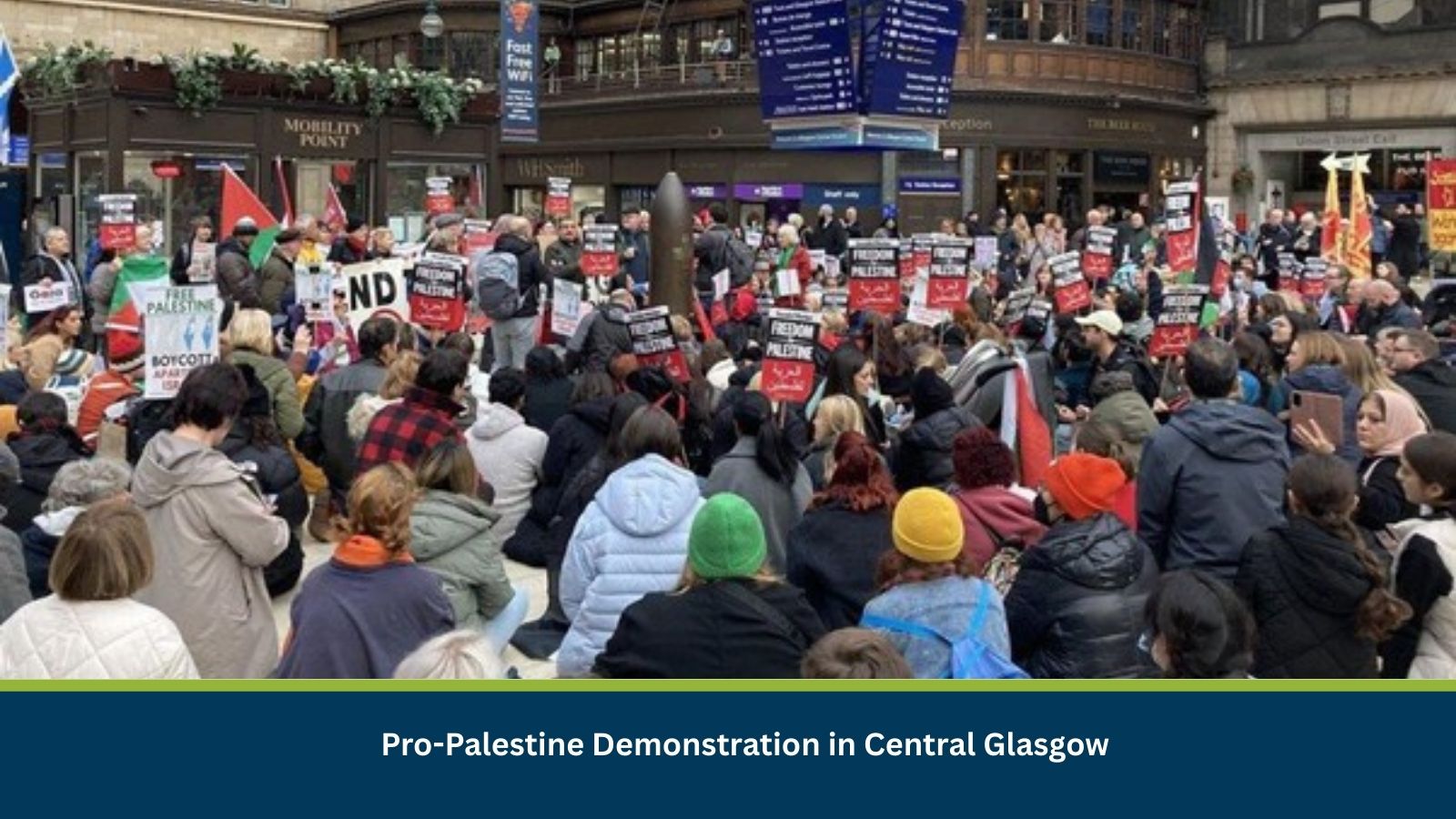
Executive Summary for the Protest in Glasgow
A pro-Palestine demonstration is expected to take place in Glasgow city centre on 14 February. Based on prior events, disruption is likely to last three to eight hours, involving static rallies, short marches and possible temporary blockades. The risk of major violence remains low; however, travel disruption and short-term operational impact for businesses are probable.
- Date of Event: 14 February
- Location: Central Glasgow, Argyle Street, Glasgow, Scotland, United Kingdom
- Risk Category: Civil Disturbance
- Severity Score: 3 / 5
- Confidence Level: 78 %
What is Risk Analysis in the Context of Civil Disturbance Events
Civil disturbance risk analysis evaluates the operational, security and reputational impact of protests, demonstrations and public assemblies. Such events can disrupt urban mobility, business continuity and asset security, particularly in dense commercial districts. In Glasgow, pro-Palestine demonstrations since 2023 have regularly centred on George Square, Buchanan Street and transport hubs, occasionally resulting in arrests, short-term occupations and targeted corporate actions. The current event aligns with established protest patterns, suggesting moderate, time-bound disruption rather than sustained instability.
Known Hotspots and Sensitive Areas
High Impact:
- Buchanan Street and George Square rally zones
- Argyle Street commercial corrido
- Glasgow Central Station access points
- Barclays branches in central Glasgow
Medium Impact:
- St Vincent Street junctions
- Transport connectors toward Govan and corporate-linked sites
Low Impact:
- Peripheral districts outside the city-centre core
Recurring patterns show that demonstrations in Glasgow frequently affect the pedestrian spine and major transit nodes, particularly during weekend peak hours.
Impact on Transportation and Services
Temporary road closures and police-managed diversions are likely around Buchanan Street, Argyle Street and George Square. Rail services through Glasgow Central may face delays if forecourt access is restricted. Bus routes operating through the city centre are expected to be diverted. Businesses may experience reduced footfall, restricted site access and delayed last-mile logistics. Telecommunications and utilities are not expected to face systemic disruption, though localized congestion may occur due to crowd density.
Recommended Actions
Immediate Actions:
- Activate an incident-day plan for Glasgow premises within two kilometres of the protest route.
- Enable remote working for non-essential staff and stagger on-site shifts.
- Secure entrances, restrict access to sensitive areas and safeguard high-value assets.
- Notify customers of potential service adjustments and publish alternate contact channels.
Strategic Measures:
- Coordinate with Police Scotland for real-time road closure updates.
- Review business continuity and crowd-management protocols for recurring protests.
- Maintain documented records for insurance or regulatory review if disruptions occur.
Multidimensional Impact
Existing roadworks and separate transport service interruptions may compound congestion, increasing exposure for commuters and delivery networks. Concentrated disruption in central Glasgow could have secondary effects on regional mobility and supply chains.
Emergency Contacts
- Emergency Services: 999
- Transport Scotland updates: transport.gov.scot/
- Glasgow City Council Alerts: glasgow.gov.uk/
Final Thoughts
The 14 February demonstration presents a moderate civil disturbance risk confined primarily to Glasgow city centre. The most critical window spans the daytime hours, with potential spillover into early evening if blockades occur. Businesses should prioritise staff safety, transport contingency planning and proactive communications.
Stay ahead of operational risks with real-time alerts, scenario modelling, and expert advisories with datasurfr’s Predict. Start your 14-day free trial of Datasurfr’s Risk Intelligence Platform today.