





What is Risk Analysis in the Context of Travel Risk Events
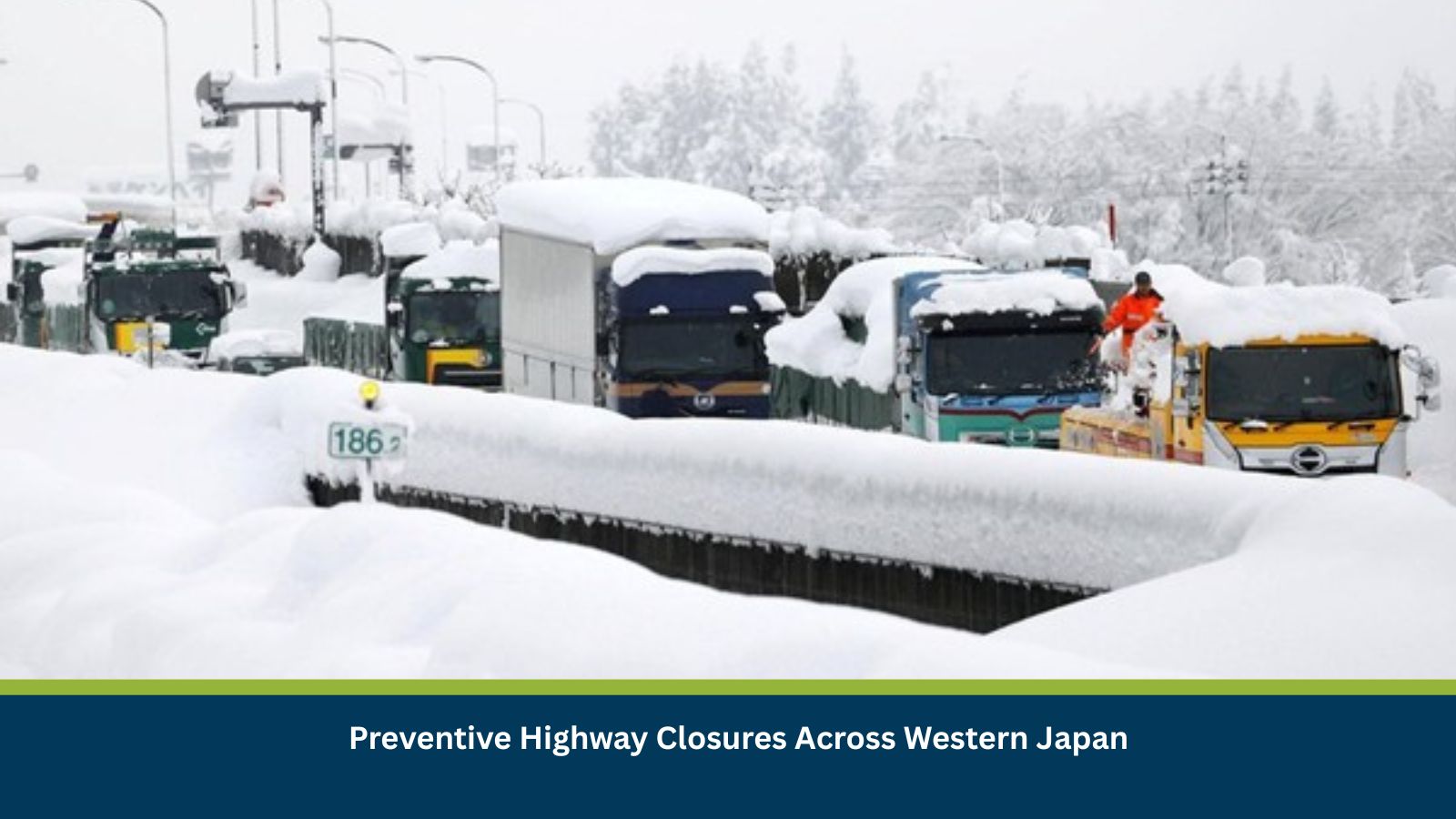
Travel risk analysis assesses threats that disrupt mobility, logistics and access to critical locations due to external factors such as weather, labor action or security incidents. In Japan, winter weather frequently triggers preventive road closures to reduce accident risk. These measures, while protective, can cause cascading impacts on supply chains, commuting and regional connectivity, particularly in snow-prone western prefectures.
Executive Summary
- Date of Event: 10 January
- Location: Western Japan, including Osaka Prefecture and surrounding regions
- Risk Category: Travel Risks
- Severity Score: 3 / 5
- Confidence Level: 75 %
Authorities are likely to implement preventive highway and expressway closures across western Japan between 10–12 January in response to forecast snowfall, freezing conditions and strong winds. Disruptions are expected to be localized but repeated, with rolling closures lasting from several hours to up to two days per route. While safety outcomes are generally improved through early closures, impacts on logistics, commuting and business operations are expected to be moderate.
Known Hotspots and Sensitive Areas
High Impact: Hokuriku Expressway segments in Fukui Prefecture, Maizuru–Wakasa Expressway links, and coastal sections of National Route Eight, which historically experience closures during heavy snow and icing..
Medium Impact: Elevated bridges, tunnel approaches and coastal access roads around Wakasa Bay, Tsuruga and Obama ports, where wind and freezing spray increase hazard exposure.
Low Impact: Inland urban road networks with established snow-clearing capacity, where disruption is usually limited to delays rather than full closures.
Winter-related closures are recurrent in January, aligning with peak seasonal snowfall.
Impact on Transportation and Services
Road transport will face the highest disruption, with expressway closures forcing diversions onto secondary roads and increasing congestion. Freight movement may be delayed by 12–72 hours, affecting time-sensitive and perishable goods. Ferry services along the Sea of Japan coast may be suspended during high winds, while rail services are generally more resilient but could face localized delays. Business operations may experience staffing shortfalls and delayed access to facilities.
Recommended Actions
- Organizations should activate winter travel continuity plans, restrict non-essential road travel and enable remote work where possible.
- Logistics teams should pre-arrange alternative transport modes such as rail and temporary warehousing.
- Physical assets near highways and ports should be secured, and proactive communication with employees, suppliers and customers should outline expected delays.
- Continuous monitoring of expressway operator bulletins and meteorological advisories is essential.
Multidimensional Impact
Highway closures may compound disruptions to coastal activities, including ferry operations and fishing, and could constrain emergency response access in affected prefectures during peak weather conditions.
Emergency Contacts
- Japan Emergency Services: 119
- Japan Meteorological Agency: jma.go.jp/jma/indexe.html
Final Thoughts
The risk trajectory suggests moderate but recurring disruption driven by seasonal winter weather. Organizations operating in western Japan should anticipate rolling closures and short-term logistics delays. Early-warning systems and preparedness platforms such as MitKat’s Datasurfr can support real-time decision-making, workforce safety and continuity of operations during winter travel disruptions.
Stay ahead of operational risks with real-time alerts, scenario modeling, and expert advisories with datasurfr’s Predict. Start your 14-day free trial of Datasurfr’s Risk Intelligence Platform today.