





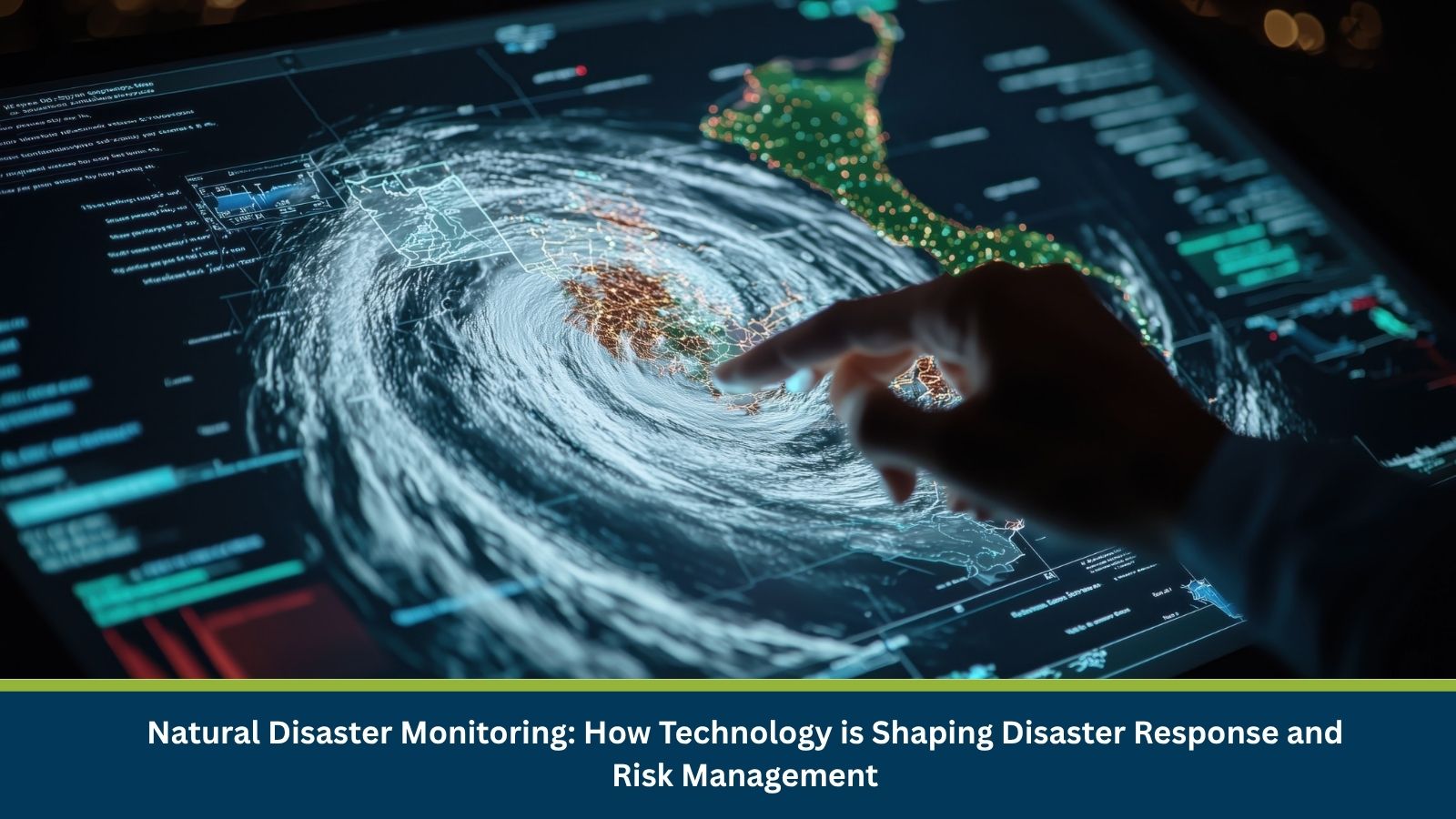
Natural disasters are unpredictable and often devastating. Whether it’s hurricanes, earthquakes, floods, or wildfires, the consequences of such events can be catastrophic. For businesses, governments, and humanitarian organizations, natural disaster monitoring plays a vital role in minimizing damage and safeguarding lives.
Through advanced technologies such as geospatial intelligence, AI, and real-time data tracking, monitoring and responding to natural disasters has become more efficient, enabling organizations to make informed decisions quickly and act proactively to protect people and assets.
In this blog, we’ll explore the role of technology in natural disaster monitoring, how businesses can stay prepared, and how AI and geospatial data can revolutionize the way we respond to these crises.
Why Natural Disaster Monitoring is Essential
1. Early Warning and Prevention
The earlier a disaster is detected, the more time people and organizations have to prepare, evacuate, and implement mitigation strategies. Through real-time monitoring systems and predictive analytics, organizations can get early warnings about the disaster’s scale and trajectory.
For example:
- Earthquake prediction tools can estimate the magnitude and potential impact before they occur.
- Flood sensors placed along rivers can provide early warnings of rising water levels, while hurricane tracking systems can predict landfall.
2. Operational Continuity
Natural disasters can severely impact business operations. Factories, distribution centres, offices, and other business-critical locations may be damaged or disrupted. Monitoring helps companies anticipate disruptions, adjust their operations, and develop continuity plans.
Businesses can:
- Reroute supply chains
- Adjust staff schedules and relocation strategies
- Make real-time decisions to minimize damage to their infrastructure
3. Risk Mitigation and Safety Compliance
Understanding the risks of natural disasters and the impact they can have on employees, assets, and infrastructure is crucial. Companies can stay compliant with safety regulations by ensuring proper disaster preparedness protocols are in place. This includes:
- Implementing safety measures for staff during the disaster
- Complying with legal regulations for disaster planning and response
- Ensuring timely communication with employees and stakeholders
How Technology Enhances Natural Disaster Monitoring
1. Geospatial Intelligence (GIS)
Geospatial Intelligence (GIS) is at the forefront of natural disaster monitoring. By analysing satellite imagery and aerial data, GIS tools provide insights into:
- Affected areas
- Damage assessments
- Evacuation routes
AI-powered GIS systems can offer real-time updates on flood zones, wildfire spread, and seismic activity, enabling faster decision-making during critical situations.
2. AI and Machine Learning for Disaster Prediction
Artificial Intelligence (AI) and Machine Learning help organizations predict natural disasters by analysing historical data and detecting patterns.
AI uses various algorithms to:
- Forecast hurricanes, tornadoes, and severe storms
- Analyse climate patterns to predict wildfires
- Estimate damage from earthquakes and tsunamis
AI can also process large data sets quickly, providing predictive models that show where disasters might occur next, giving evacuation teams and relief organizations a head start.
3. Internet of Things (IoT) and Sensor Networks
IoT-enabled sensors installed in key locations (such as rivers, buildings, or near fault lines) provide real-time data about environmental conditions that could signal a disaster is near.
For example:
- Flood monitoring systems use water level sensors to detect rising water and send alerts in real time.
- Seismic sensors can detect tremors and provide early warnings for potential earthquakes.
- Weather stations track wind speeds and atmospheric conditions to predict storms.
These sensors, connected through IoT networks, create an integrated monitoring system that provides crucial insights for emergency response teams and businesses.
Benefits of Natural Disaster Monitoring
1. Proactive Decision Making
Monitoring technologies allow organizations to act before the disaster hits. The early identification of risks means better-planned evacuations, resource distribution, and impact reduction measures.
2. Increased Safety for Employees and Communities
With real-time disaster monitoring, organizations can keep their employees safe by:
- Alerting them of evacuation routes and safe zones
- Ensuring on-site emergency response teams are ready to act
Additionally, businesses that help monitor disasters can provide valuable information to local communities and authorities, aiding overall public safety efforts.
3. Reduced Economic Impact
By mitigating risks early and minimizing damage, companies can prevent significant financial losses. For example, by protecting assets or rerouting critical infrastructure, businesses can maintain business continuity and recover more quickly from the disaster.
Best Practices for Natural Disaster Monitoring
1. Implement Integrated Monitoring Systems
Use a combination of AI-based predictive tools, geospatial intelligence, and IoT devices to create an integrated monitoring system. This gives you a holistic view of risks in real time.
2. Collaborate with Local Authorities and Relief Agencies
Coordinate with local governments, emergency services, and humanitarian organizations to ensure efficient disaster response. Sharing information during crises helps reduce response time and increases effectiveness.
3. Maintain a Disaster Response Plan
Having a disaster response plan is critical. It should include:
- Evacuation plans for employees
- Communication strategies for stakeholders
- Resource allocation for recovery efforts
Regularly update this plan based on new technologies and real-time disaster data.
The Future of Natural Disaster Monitoring
As technology continues to advance, the future of natural disaster monitoring will be increasingly shaped by:
- AI-driven predictions
- Advanced satellite imaging for real-time updates
- Robust IoT sensor networks for more accurate data collection
With these innovations, organizations will be able to anticipate and mitigate the impact of natural disasters more effectively, ensuring the safety of employees and the resilience of business operations.
Conclusion
Natural disaster monitoring is an essential practice for businesses aiming to safeguard employees, reduce operational disruptions, and ensure long-term sustainability. By leveraging advanced technologies such as AI, GIS, IoT, and machine learning, organizations can gain invaluable insights into potential risks and prepare more effectively.
MitKat’s Datasurfr can help organizations enhance natural disaster monitoring by providing real-time risk intelligence, geospatial data analysis, and predictive insights.