





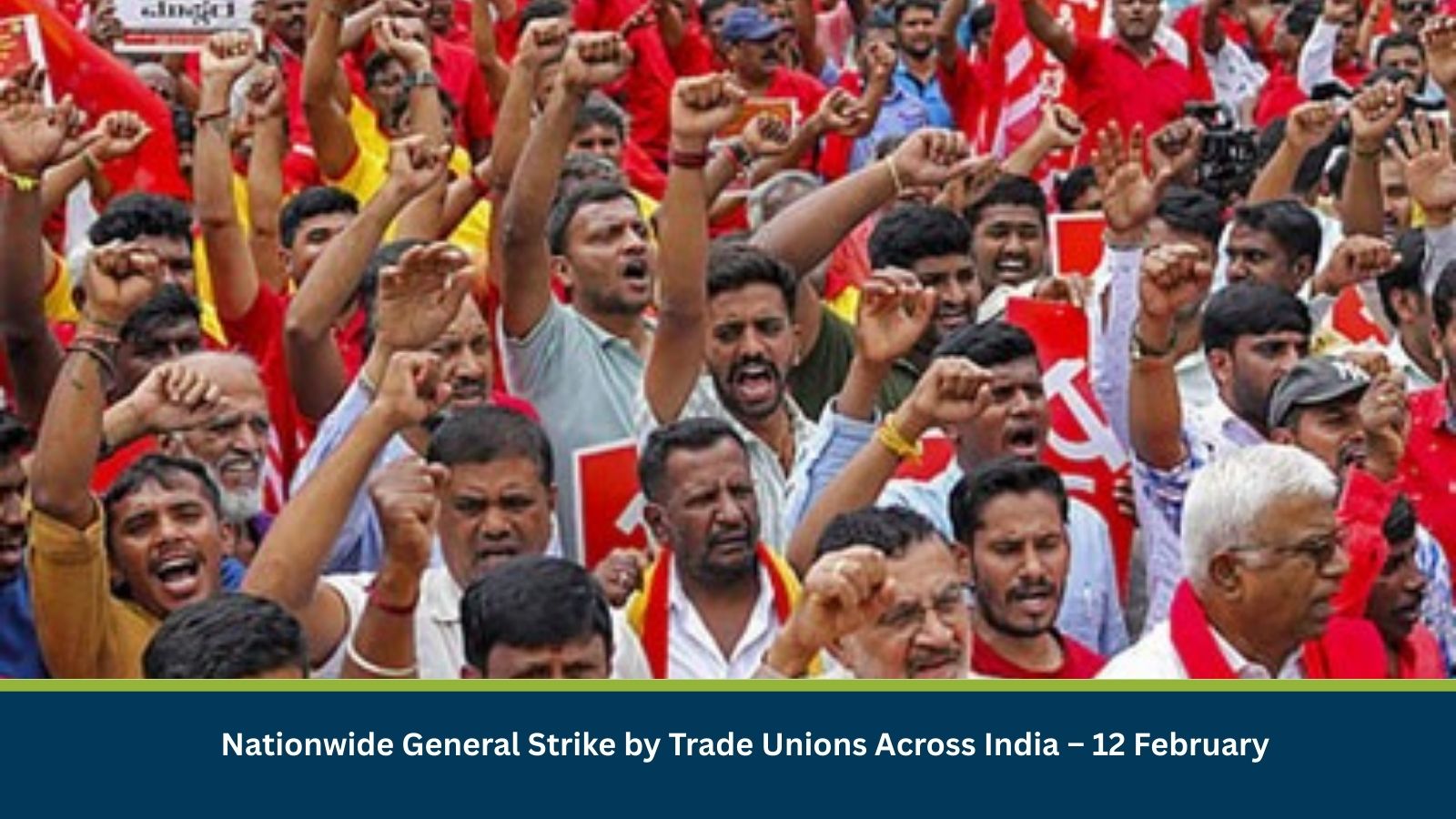
Executive Summary for the General Strike by Trade Unions in India
Trade unions have confirmed a nationwide strike scheduled for 12 February, with banking unions participating under a “no work, no pay” framework. Primary disruption is expected in branch-level banking services, select public-sector offices and urban commuter systems. The most significant impact window is 24–72 hours, with potential administrative backlogs extending up to seven days.
- Date of Event: 12 February
- Location: Nationwide – Major urban centres including Delhi, Mumbai, Bengaluru, Kolkata, Chennai, Hyderabad and state capitals
- Risk Category: Civil Disturbance
- Severity Score: 3 / 5
- Confidence Level: 70 %
What is Risk Analysis in the Context of Civil Disturbance Events
Civil disturbance risk analysis assesses disruptions arising from protests, strikes or mass mobilizations that affect public order, transport networks and commercial operations. In India, nationwide general strikes historically result in concentrated economic disruption rather than sustained violence. Impacts typically include banking shutdowns, commuter delays and localized demonstrations. The current strike aligns with precedent patterns observed between 2019 and 2024, where high symbolic participation caused operational delays but limited large-scale unrest.
Current Updates
Banking unions have publicly declared participation, indicating possible branch closures or skeletal staffing. Law enforcement agencies across multiple states have issued routine advisories to monitor picket lines and maintain essential services. No verified reports of widespread violence or mass arrests have emerged prior to the strike. Urban centres are preparing for potential ATM queues and delays in government office functions.
Known Hotspots and Sensitive Areas
High Impact:
- Central administrative zones in New Delhi
- Major bank branch clusters in district headquarters
- Protest-prone districts in parts of Rajasthan, Haryana, West Bengal and Kerala
Medium Impact:
- NH-48 (Delhi–Jaipur corridor) and NH-11 (Rajasthan)
- Commercial hubs in Mumbai, Bengaluru and Chennai
Low Impact:
- Rural districts without significant union mobilization
Historically, nationwide strikes concentrate in urban administrative centres and banking hubs rather than rural regions.
Impact on Transportation and Services
Banking services, cheque clearances and government transactions may face delays of one to two business days. Public transport in select states could operate at reduced capacity, leading to commuter disruption. Rail services are likely to continue with minor suburban slowdowns. Localized road blockades near protest sites may temporarily affect arterial routes. Digital services and telecommunications are not expected to face systemic disruption.
Recommended Actions
Immediate Actions:
- Activate strike-day business continuity plans and appoint a central incident lead.
- Enable remote work where feasible and adjust shift scheduling for essential staff.
- Notify customers and suppliers of potential service delays within six hours of impact.
Strategic Measures:
- Pre-process critical banking transactions and settlements ahead of strike day.
- Strengthen security around branch offices and high-value assets.
- Maintain coordination with local police and district authorities for route advisories.
Multidimensional Impact
If concurrent local grievances emerge, law enforcement resources may be stretched, increasing response times. However, major infrastructure, utilities and environmental systems are expected to remain unaffected under baseline conditions.
Emergency Contacts
- Emergency Services (National Helpline/Police/Ambulance): 112/100/108
Final Thoughts
The 12 February nationwide strike presents a moderate civil disturbance risk primarily affecting banking services and urban mobility. While large-scale violence is unlikely, localized disruptions and administrative backlogs should be anticipated. Businesses should prioritize operational resilience, stakeholder communication and real-time monitoring.
Stay ahead of operational risks with real-time alerts, scenario modeling, and expert advisories with datasurfr’s Predict. Start your 14-day free trial of Datasurfr’s Risk Intelligence Platform today.