





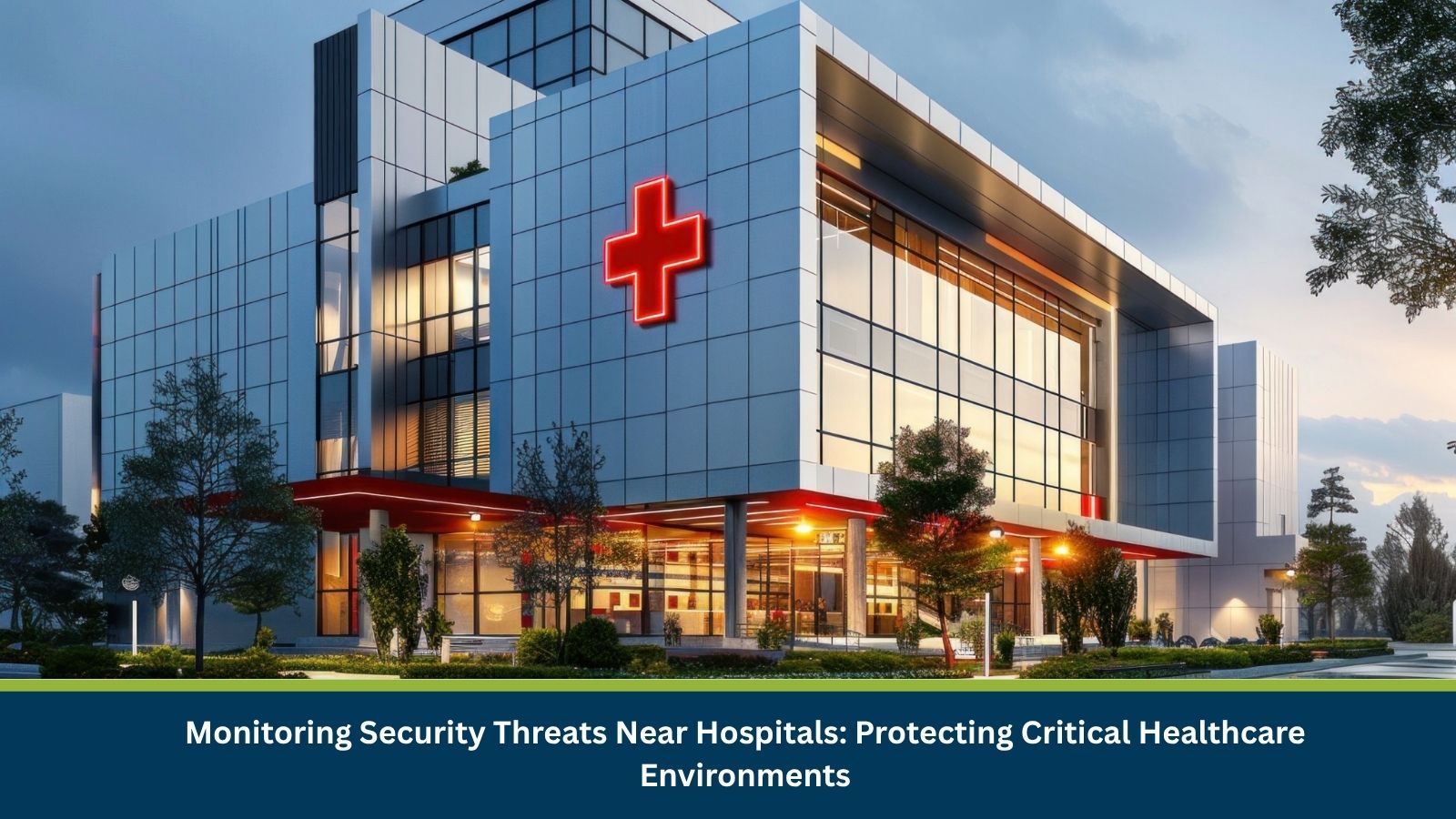
Hospitals are among the most critical pieces of infrastructure in any society—operating 24/7, handling emergencies, and serving vulnerable populations. But their open-access nature also makes them highly exposed to security threats, both inside and in surrounding areas.
This is why monitoring security threats near hospitals has become essential—not just for safety, but for ensuring uninterrupted healthcare delivery.
Why Hospital Security Monitoring Matters
Unlike other facilities, hospitals cannot simply restrict access. They must remain:
- Open to patients and visitors
- Accessible during emergencies
- Operational under all circumstances
This creates unique vulnerabilities such as:
- Unauthorized access or suspicious activity
- Violence or unrest in nearby areas
- Theft, vandalism, or intrusion
- Disruptions due to protests, accidents, or disasters
Any security lapse can directly impact patient care and staff safety.
What is Hospital Security Threat Monitoring?
Hospital security monitoring involves the use of technology, intelligence, and real-time alerts to detect and respond to risks in and around healthcare facilities.
It includes:
- Monitoring nearby incidents
- Tracking potential threats
- Enabling rapid response
- Ensuring continuous situational awareness
The goal is to prevent disruptions and protect lives.
Key Security Threats Around Hospitals
Physical Security Risks
- Unauthorized entry
- Theft of equipment or medicines
- Violence against staff
Public Safety & Crowd Risks
- Overcrowding in emergency areas
- Panic situations
- Uncontrolled visitor movement
External Threats
- Protests or civil unrest nearby
- Road accidents affecting access routes
- Natural disasters impacting operations
Cybersecurity Threats
- Attacks on hospital systems
- Data breaches involving patient records
- Disruption of digital infrastructure
Operational Disruptions
- Power outages
- Ambulance delays
- Supply chain interruptions
How Modern Threat Monitoring Systems Work
1. Real-Time Surveillance
- CCTV cameras with smart analytics
- Monitoring of entry/exit points
- Behaviour detection
2. Geo-Based Risk Alerts
- Alerts for incidents near hospital premises
- Location-specific notifications
- Early warning for external threats
3. Command & Control Centres
- Centralized monitoring of all activities
- Coordination with security teams
- Faster incident response
4. Incident Reporting Systems
- Staff can report issues instantly
- Alerts are escalated in real time
- Quick action protocols
5. AI & Predictive Analytics
- Identify patterns and potential risks
- Reduce false alarms
- Improve decision-making
Emerging Trends in Hospital Security Monitoring
Predictive Risk Intelligence
Hospitals are moving toward anticipating risks before they occur, rather than reacting after incidents.
Hyper-Local Monitoring
Tracking threats at a street or neighbourhood level for precise response.
Mobile-First Security
Security teams can:
- Receive alerts instantly
- Respond on the go
- Stay connected during emergencies
Integrated Security Systems
Combining:
- Physical security
- Cybersecurity
- Operational monitoring
into one unified platform.
Challenges in Hospital Security Monitoring
Hospitals must balance safety with accessibility, leading to challenges such as:
- Managing open access environments
- Integrating legacy systems
- Ensuring patient privacy
- Handling high volumes of visitors
- Coordinating with external agencies
Best Practices for Strengthening Hospital Security
Implement Real-Time Monitoring Systems
Ensure continuous visibility of risks inside and outside the hospital.
Train Staff for Emergency Response
Prepared staff can significantly reduce impact during incidents.
Strengthen Access Control
Use smart systems without compromising accessibility.
Collaborate with Local Authorities
Coordinate with police, emergency services, and local administration.
Leverage AI & Data Analytics
Use technology to improve accuracy and response speed.
The Future of Hospital Security
As healthcare systems become more complex, security monitoring will evolve into a fully integrated, intelligence-driven function.
Future-ready hospitals will rely on:
- Real-time alerts
- Predictive analytics
- Centralized command systems
- Seamless coordination
The ultimate goal is simple: protect patients, staff, and operations—without disrupting care delivery.
FAQs:
1. Why is security monitoring important for hospitals?
It ensures patient and staff safety, prevents disruptions, and enables quick response to threats.
2. What types of threats do hospitals face?
Physical security risks, crowd issues, cyber threats, operational disruptions, and external incidents.
Datasurfr helps hospitals enhance security by providing real-time, location-based alerts on nearby threats, enabling faster response and uninterrupted patient care.