




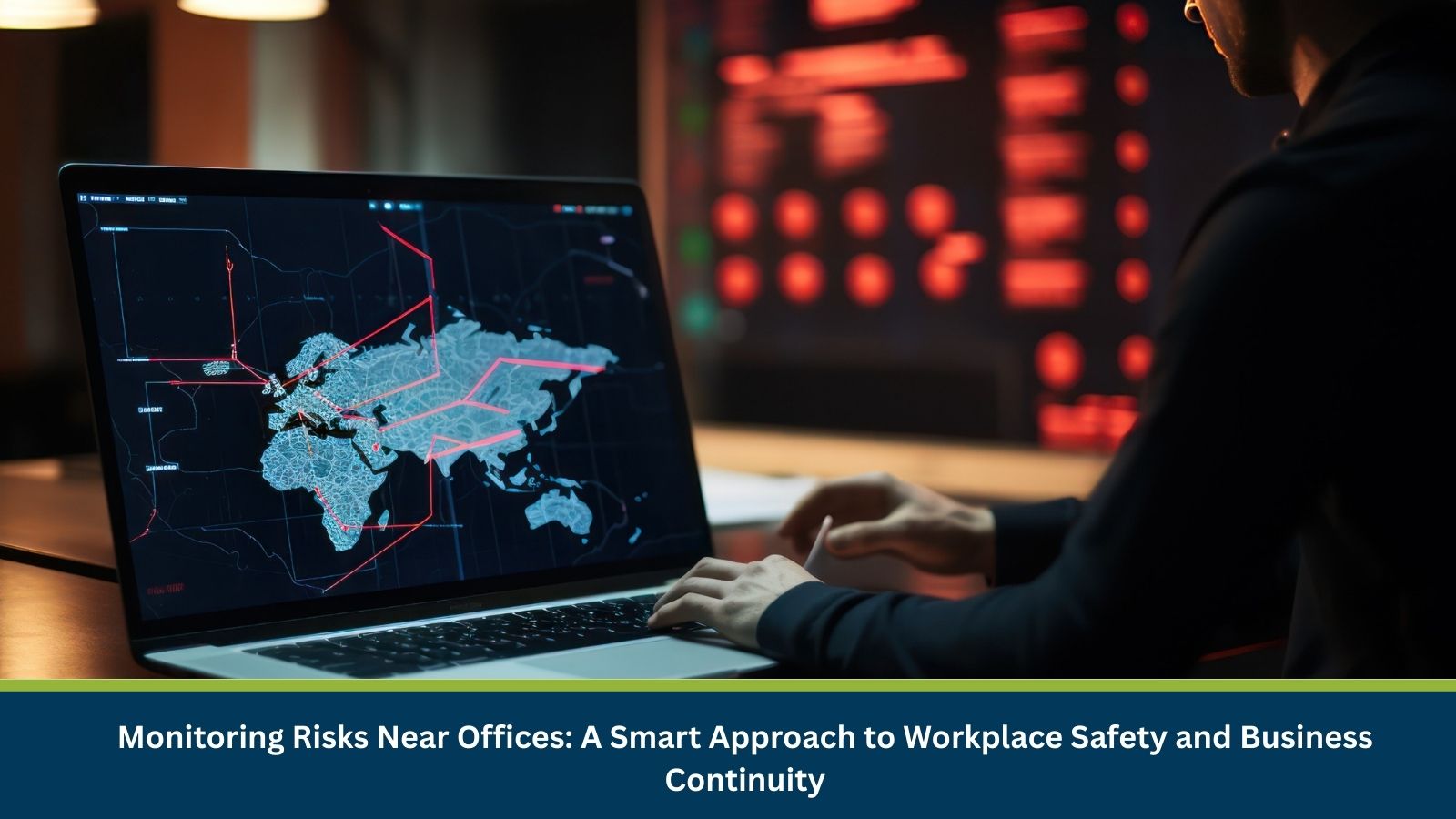
In today’s rapidly evolving world, organizations face a wide range of risks that can occur near their office locations. From protests and crime incidents to natural disasters and severe weather, external events can disrupt business operations and threaten employee safety.
For companies operating in multiple cities or countries, monitoring risks near offices has become an essential part of modern security and risk management strategies.
By using real-time intelligence and proactive monitoring tools, organizations can stay informed about potential threats and respond quickly to protect their employees and operations.
Why Monitoring Risks Near Offices Is Important
Many organizations focus heavily on cybersecurity or internal safety policies, but external risks around office locations are equally important.
Events occurring close to an office can have immediate consequences such as:
- Disruptions to employee commuting
- Office closures due to safety concerns
- Threats from protests or civil unrest
- Severe weather affecting operations
- Infrastructure failures or transportation disruptions
Without proper visibility, organizations may only learn about these incidents after they escalate.
Monitoring nearby risks allows security teams to anticipate disruptions and act proactively rather than reactively.
Common Risks That Can Affect Office Locations
Civil Unrest and Protests
Political demonstrations or protests near office areas can quickly escalate and impact employee safety. Monitoring these developments allows companies to issue advisories or enable remote work when necessary.
Crime and Security Incidents
Certain locations may experience spikes in crime such as theft, assaults, or public safety incidents. Businesses must stay informed to ensure employees remain safe when entering or leaving office premises.
Natural Disasters
Floods, earthquakes, storms, and other natural disasters can cause sudden disruptions to workplaces. Early alerts help organizations take precautionary actions and minimize risks.
Infrastructure and Transportation Disruptions
Road closures, metro shutdowns, or power outages near office locations can affect employee accessibility and daily operations. By monitoring such incidents in real time, organizations can maintain smoother operations.
The Role of Real-Time Risk Intelligence
Traditional risk management methods relied on manual monitoring of news reports or employee updates. However, these approaches are often slow and incomplete.
Modern risk intelligence platforms enable organizations to monitor events globally and locally in real time.
These systems provide:
- Automated risk alerts
- Incident tracking near office locations
- Real-time updates on emerging threats
- Centralized dashboards for security teams
This allows companies to identify risks faster and respond more effectively.
How Monitoring Risks Improves Workplace Safety
Faster Decision Making
When organizations receive alerts about incidents near offices, they can immediately evaluate the situation and decide on appropriate actions.
Examples include:
- Advising employees to avoid certain areas
- Temporarily closing offices
- Enabling remote work during disruptions
Improved Employee Safety
Employees feel safer when their organization actively monitors risks and communicates important updates. This builds trust and improves overall workplace confidence.
Stronger Business Continuity
Monitoring risks ensures that companies can maintain operations even during unexpected disruptions.
Prepared organizations are better able to adapt to changing conditions without major operational losses.
Technology-Driven Risk Monitoring
Technology plays a major role in enabling organizations to monitor risks effectively.
Modern risk intelligence platforms allow businesses to:
- Track incidents near office locations
- Monitor global and regional events
- Receive real-time alerts
- Visualize risks on interactive dashboards
- Coordinate responses across security teams
By combining location intelligence with real-time incident monitoring, companies can stay ahead of potential disruptions.
Best Practices for Monitoring Risks Near Offices
Organizations can strengthen their office safety strategy by implementing the following best practices:
Establish a Risk Monitoring System
Use reliable intelligence platforms that provide continuous monitoring of incidents.
Set Up Location-Based Alerts
Enable alerts for events occurring within a specific radius of office locations.
Maintain Clear Communication Channels
Ensure employees receive accurate updates during incidents.
Conduct Regular Risk Assessments
Evaluate potential risks around office locations periodically.
Prepare Emergency Response Plans
Develop response strategies for different types of disruptions.
These practices help organizations create a comprehensive workplace safety framework.
The Future of Workplace Risk Monitoring
As urban environments become more dynamic and interconnected, organizations will increasingly rely on data-driven risk intelligence to monitor threats near offices.
Future developments will include:
- AI-powered risk prediction
- Automated incident detection
- Integrated security dashboards
- Predictive analytics for crisis prevention
Companies that adopt these technologies will be better positioned to protect their workforce and maintain operational stability.
Conclusion
Monitoring risks near offices is no longer optional for modern organizations. It is a vital component of workplace safety, employee wellbeing, and business continuity.
By leveraging real-time intelligence and proactive monitoring tools, companies can stay informed about emerging threats and respond effectively before disruptions escalate.
A strong risk monitoring strategy ensures that organizations remain resilient, prepared, and capable of protecting their employees and operations in an ever-changing world.
Frequently Asked Questions (FAQ)
What does monitoring risks near offices mean?
Monitoring risks near offices refers to tracking incidents such as protests, crime, natural disasters, or infrastructure disruptions occurring close to office locations.
Why is it important for companies to monitor risks near offices?
Monitoring risks helps organizations protect employees, prevent operational disruptions, and respond quickly to emergencies affecting workplace locations.
With Datasurfr, organizations gain real-time visibility into risks around their offices. This enables proactive decisions that protect employees and ensure business continuity.