





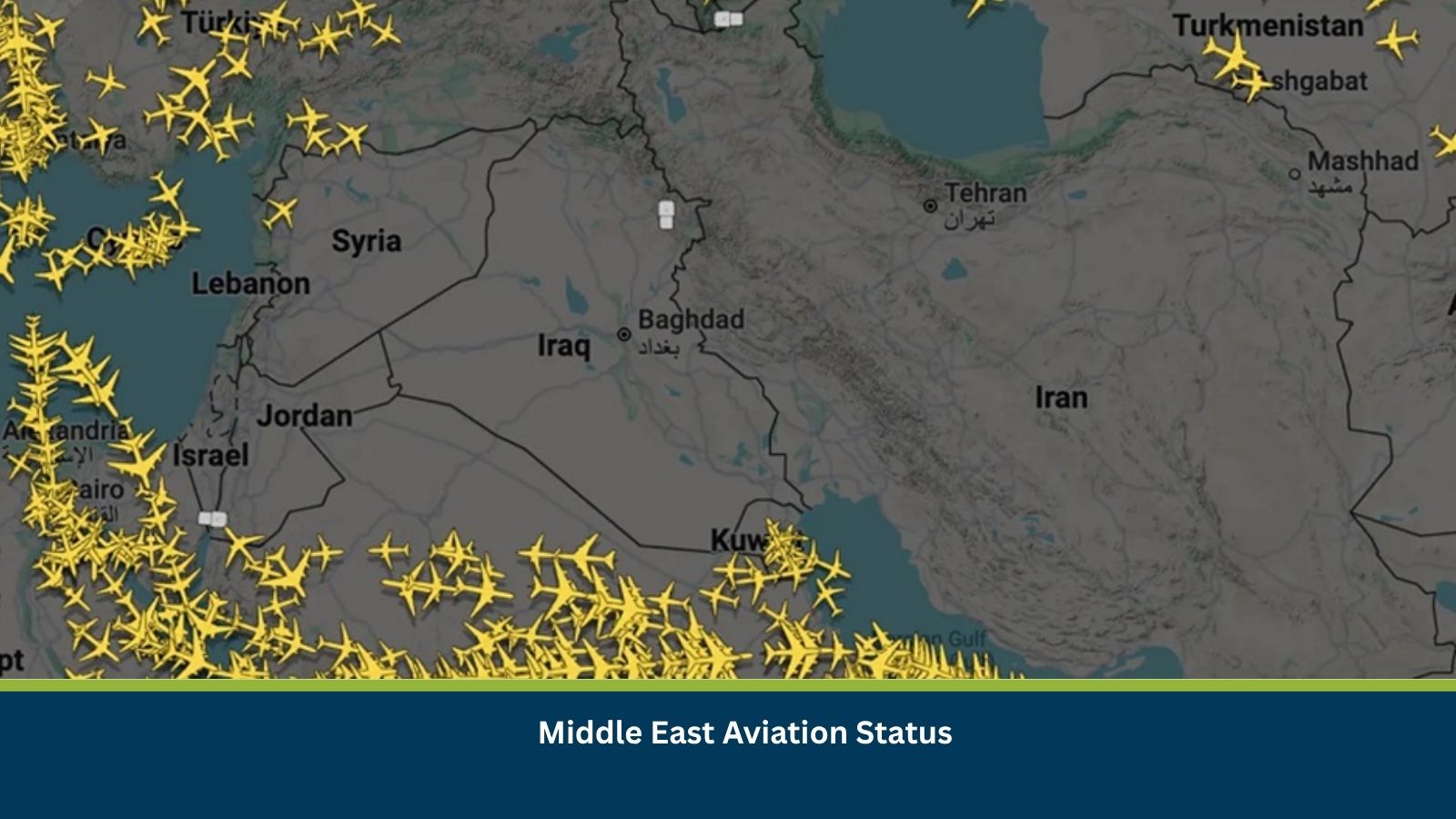
An escalating military conflict in the Middle East has resulted in an aviation crisis, including closure of airspaces and cancellation of flights. This report provides an assessment of the current operational status and associated risks for travellers.
Key Area of Focus: Airport Operational Status
| Airport (IATA) | Country | Operational Status | Recent Incidents & Context | Assessed Risk to Travellers | Impact on Travellers |
| Bahrain Int’l (BAH) | Bahrain | Severely Disrupted | The airport was subject to a drone intrusion (12 March) that reportedly damaged infrastructure and caused a fire at a fuel facility, prompting temporary suspensions. The country has been subject to other missile and drone attacks. | Very High | Operations are unreliable and subject to immediate suspension. High risk for travellers due to direct threats against the country’s infrastructure. |
| Tehran (IKA & THR) | Iran | Closed to International Civilian Traffic | Iranian airports have been primary targets. Strikes on 07 March reportedly caused significant damage at Tehran’s Mehrabad (THR) airport, including the destruction of aircraft on the ground. Imam Khomeini Int’l (IKA) has also been impacted. The country’s airspace is central to the conflict. | Very High | No reliable international commercial flights are operating. The country is an active conflict zone, and airports are primary military targets. All travel is advised against. |
| Baghdad Int’l (BGW) | Iraq | Closed to Civilian Traffic | The airport and its surrounding military and diplomatic facilities are under near-constant threat. Incidents have caused casualties, fires, and damage to infrastructure. Iraq has extended a full airspace closure. | Very High | Airport is non-operational for civil aviation. Extreme physical danger in and around the airport perimeter. All travel should be avoided. |
| Erbil Int’l (EBL) | Iraq | Closed to Civilian Traffic | The airport has been recently targeted by drone and missile strikes on 18 March aimed at adjacent military facilities, causing explosions and fires. Airspace remains closed. | Very High | Non-operational for commercial flights. High risk of collateral damage from military strikes. Travel to the region is strongly advised against. |
| Ben Gurion (TLV) | Israel | Closed to Most Civilian Traffic | The airport has been a direct target of missile and drone attacks, with major strikes on 21-22 March. Debris from interceptions during earlier attacks also caused damage to several aircraft on the ground. Israeli airspace is frequently closed. Operations are limited to state-authorized and evacuation flights. | Very High | Commercial travel is restricted. The airport and its vicinity are active targets. Travellers should not attempt to use the airport for departure unless under direct government instruction. |
| Queen Alia Int’l (AMM) | Jordan | Operational with Heightened Alert | Jordanian air defences have been actively intercepting missiles and drones transiting its airspace. The airport has remained open but is operating under high alert. | Medium | Flights are operational, but the risk of airspace contamination from regional conflict could cause sudden closures or diversions. Increased security presence. |
| Kuwait Int’l (KWI) | Kuwait | Closed | The airport was directly targeted by drones, with attacks reportedly damaging fuel tanks and a radar system. Kuwait has implemented temporary airspace closures. | Very High | The airport is closed after a recent drone strike. Regional carries have also cancelled flights to the airport. |
| Beirut-Rafic Hariri (BEY) | Lebanon | Operational with Severe Restrictions | Beirut has been subject to airstrikes particularly in the southern suburbs near the airport, as part of the wider regional conflict. Many international airlines have suspended services. | High | High probability of flight cancellations. Ground access to the airport can be compromised. Risk of sudden airport closure due to escalating cross-border hostilities. |
| Muscat Int’l (MCT) | Oman | Restricted | Airport has been used as a contingency and repatriation hub during the regional disruption. | Medium | Functioning as a key transit/repatriation hub for stranded passengers. Some schedule reductions due to regional network effects. |
| Hamad Int’l (DOH) | Qatar | Severely Disrupted | Qatar’s airspace has faced repeated closures. The capital has been targeted by ballistic missiles and drones. | Very High | Mass cancellations and suspensions are ongoing. The airport is not a reliable transit hub. Risk of being stranded is high as airspace can close without notice. |
| King Khalid Int’l (RUH) | Saudi Arabia | Operational with Disruptions | Riyadh and its vicinity (including Al-Kharj) have been targeted by ballistic missiles and drones, with air defences actively intercepting threats over the capital. Some flight diversions and cancellations have occurred. | High | While the airport remains operational, there is a tangible risk of missile/drone attacks on the city. Travellers may experience sudden diversions or delays during active threats. |
| Dubai Int’l (DXB) | UAE | Severely Disrupted | Subject to repeated drone/missile attacks. A drone strike on a fuel facility on 16 March caused a major fire and a temporary halt to all operations. Airspace has been intermittently closed. | Very High | Extreme likelihood of sudden cancellations, diversions, and prolonged airport closures. Significant risk of being stranded. Physical safety is a concern due to direct targeting of the city and airport infrastructure. |
| Zayed Int’l (AUH) | UAE | Severely Disrupted | Targeted by drone attacks since late February, resulting in casualties and fires. Operations are heavily curtailed, with most international carriers suspending flights. | Very High | Similar to DXB. Travellers should not proceed to the airport unless departure is explicitly confirmed by their airline. High potential for being caught in a rapidly deteriorating security situation. |
Forecast & Scenario Analysis
Scenario 1: Protracted Conflict & Enduring Disruption (Most Likely)
The current high-intensity phase transitions to a sustained period of lower-level but persistent hostilities. Sporadic missile, drone, and air attacks continue against strategic targets, including transport infrastructure. Airspace across the core conflict zone (Iran, Iraq, Israel, Lebanon) and key GCC states remains contested and subject to snap closures.
Scenario 2: Major Escalation to Full-Scale Regional War (Less Likely, High Impact)
The conflict expands, drawing in more direct and sustained military involvement from regional and global powers. This leads to the complete and prolonged shutdown of all civilian air traffic in the Gulf, Levant, and Iran.
Scenario 3: De-escalation and Phased Reopening (Least Likely)
A diplomatic breakthrough or mutual stalemate leads to a fragile ceasefire. Troops pull back from offensive postures, allowing for a gradual, phased reopening of key air corridors and airports.
Recommendations
For Businesses and Organizations:
- Cease All Travel: Immediately suspend all business travel to and within the Middle East region.
- Activate Crisis Management: Convene crisis management teams to focus on personnel safety, asset security, and business continuity.
- Account for and Support Personnel: Locate all personnel currently in the region. Confirm their safety and provide immediate support, including security, accommodation, and financial resources. Advise them to shelter in a secure location and await further instruction.
- Activate Evacuation Plans: Initiate plans to evacuate personnel. Given the unreliability of air travel, prioritize and assess the viability of alternative routes, including vetted ground transport to safer neighbouring countries or maritime options where feasible.
- Monitor Official Guidance: Continuously monitor advisories from home country foreign ministries (e.g., U.S. Department of State, UK FCDO). Instruct personnel on the ground to register with their respective embassies or consulates immediately.
For Individuals and Travellers:
- Do Not Travel: Under no circumstances should you attempt to travel to the region for any reason.
- If in the Region – Depart Immediately: Heed all official government advisories to leave. If commercial options are available and confirmed to be operating, use them. Do not go to an airport unless you have a confirmed, ticketed departure and the airline has explicitly instructed you to do so.
- Register and Communicate: Register with your country’s embassy or consulate. Maintain regular communication with your family and/or employer to confirm your status and location.
- Shelter in Place: If unable to depart, find a secure location away from military, government, or key infrastructure sites. Maintain a supply of food, water, and any necessary medications.
- Stay Informed: Monitor reliable international news sources and official embassy alerts for information. Avoid crowds and public demonstrations, which can be targets for violence.