





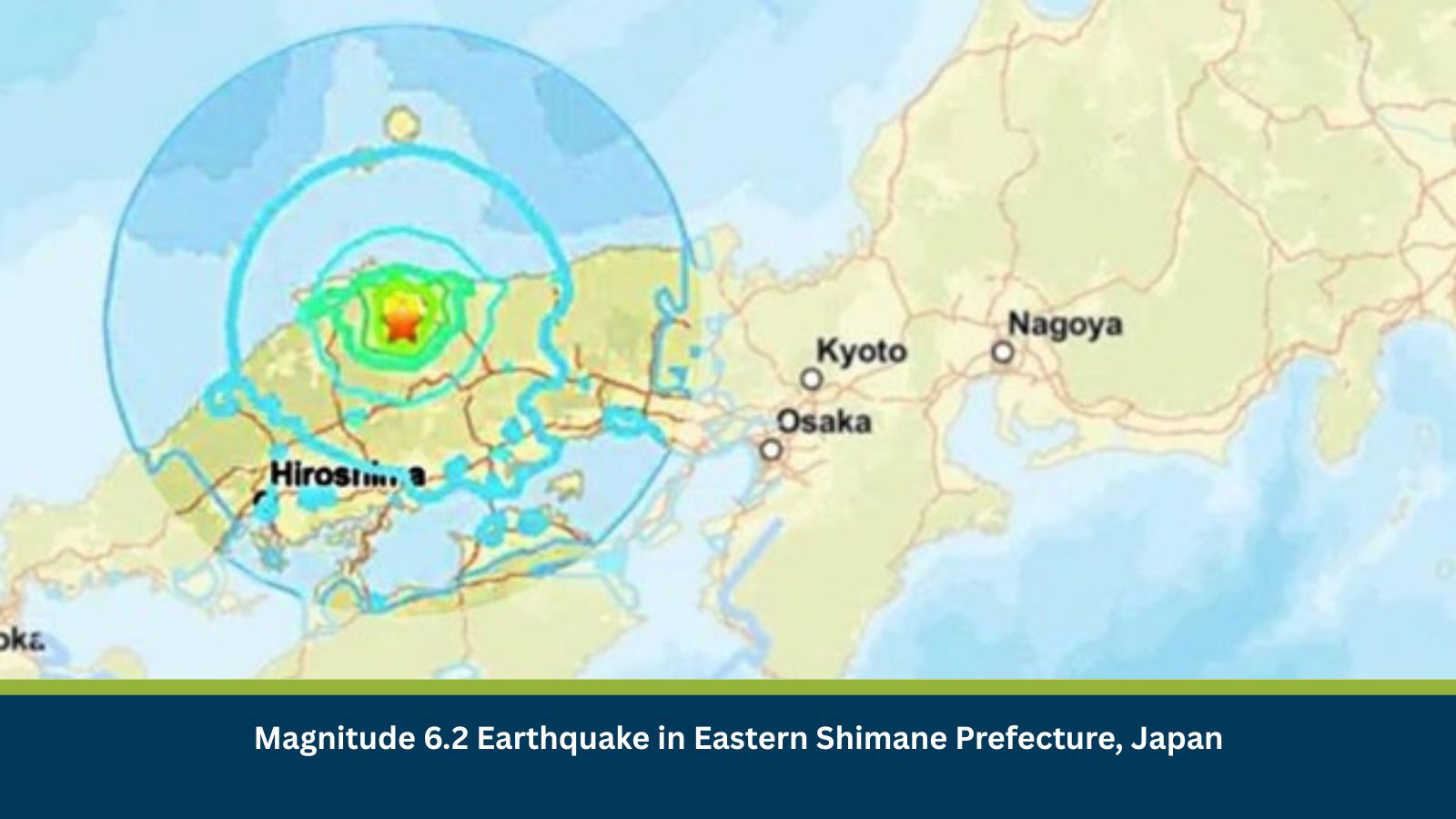
What is Risk Analysis in the Context of Natural Disaster Events
Risk analysis in the context of natural disasters assesses the likelihood and impact of events such as earthquakes, floods or storms on people, infrastructure and economic activity. In seismically active regions like Japan’s San-in corridor, moderate earthquakes occur regularly and require rapid assessment to manage aftershock risk, infrastructure integrity and operational continuity. Historical seismic activity recorded by the Japan Meteorological Agency (JMA) underscores the importance of preparedness for recurring, moderate-intensity earthquakes in this region.
Executive Summary
- Date of Event: 06 January
- Location: Eastern Shimane Prefecture, Japan
- Risk Category: Natural Disasters
- Severity Score: 3 / 5
- Confidence Level: 70 %
A magnitude 6.2 earthquake was reported in Eastern Shimane Prefecture, producing strong localised shaking. Impacts are expected to be moderate, with potential damage concentrated in older structures and coastal communities. Aftershocks are likely within the next 24–72 hours, with heightened monitoring required for up to fourteen days.
Current Updates
The Japan Meteorological Agency confirmed the earthquake and continues to monitor aftershock activity. Local authorities have initiated safety inspections of roads, railways, ports and public facilities. At the time of reporting, no major casualties or catastrophic infrastructure failures have been confirmed, though assessments are ongoing across affected municipalities.
Known Hotspots and Sensitive Areas
High Impact: Coastal towns of Hamada, Gōtsu and Masuda, including fishing ports and older residential clusters vulnerable to shaking.
Medium Impact: Transport infrastructure along the San-in Expressway, National Route 9 and JR San’in Main Line, where inspections may cause temporary suspensions.
Low Impact: Inland areas with modern, earthquake-resistant construction and lower population density.
The region experiences recurring low-to-moderate seismic activity, with clusters of aftershocks historically following similar events.
Impact on Transportation and Services
Temporary suspension or speed restrictions are likely on the JR San’in Main Line and sections of the San-in Expressway while structural inspections are completed. Road transport on National Route 9 may face intermittent closures. These disruptions can delay commuting, logistics and coastal freight operations. Utilities such as electricity, water and gas may experience short-duration, localised outages during safety checks.
Recommended Actions
- Organizations should activate earthquake response and business continuity plans immediately. Priorities include employee safety verification, rapid building inspections and controlled suspension of non-essential operations.
- Businesses should reroute logistics, enable remote work where possible and maintain clear communication with stakeholders.
- Coordination with local authorities, emergency services and JMA advisories is essential.
- Coordination with local authorities, emergency services and JMA advisories is essential.
Multidimensional Impact
While no concurrent hazards are reported, any subsequent heavy rainfall could elevate landslide risk on coastal slopes, compounding transport and access challenges.
Emergency Contacts
- Emergency Hotline: 199
- Seismic Alerts: jma.go.jp/jma/indexe.html
Final Thoughts
The Eastern Shimane earthquake represents a moderate natural disaster risk with manageable but non-negligible impacts. The primary watchpoints are aftershock activity, transport restoration timelines and infrastructure inspection outcomes. Businesses and policymakers should reinforce early-warning integration and preparedness platforms such as MitKat’s Datasurfr to strengthen resilience against recurring seismic events. Stay ahead of operational risks with real-time alerts, scenario modeling, and expert advisories with datasurfr’s Predict. Start your 14-day free trial of Datasurfr’s Risk Intelligence Platform today.