





What is Risk Analysis in the Context of Natural Disasters Events
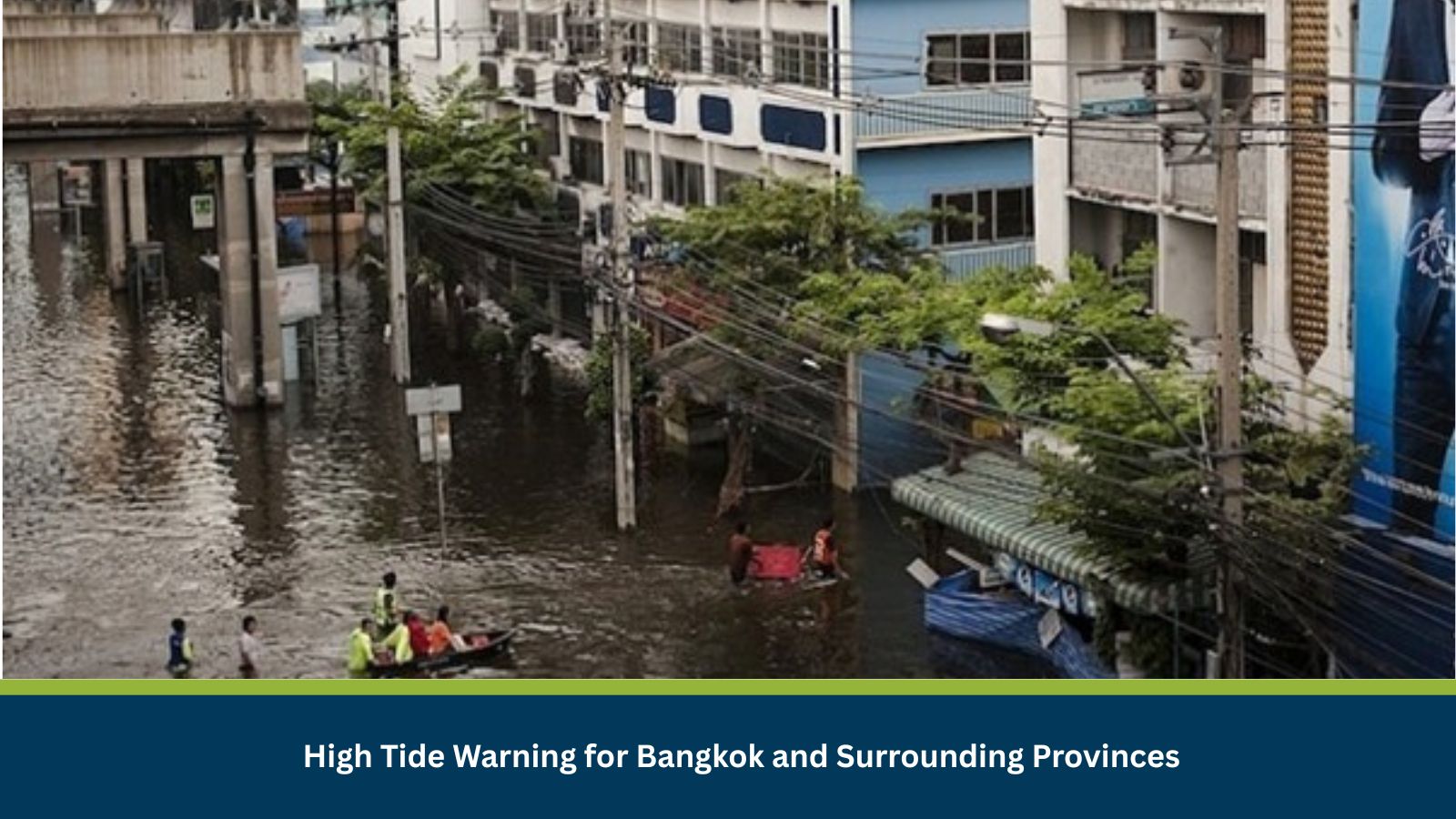
Risk analysis for natural disasters focuses on assessing hazards arising from environmental and climatic drivers such as flooding, storms, or seismic activity. In this case, the risk stems from tidal flooding amplified by riverine pressure in Bangkok’s low-lying geography. Historically, Bangkok has faced recurrent tidal inundation during peak tide seasons, notably between July–October and January, making proactive monitoring critical for urban resilience and business continuity.
Executive Summary
- Date of Event: 18 January
- Location: Bangkok and surrounding central provinces, Thailand
- Risk Category: Natural Disasters
- Severity Score: 3/ 5
- Confidence Level: 85 %
High tide warnings issued for 18–22 January indicate a five-day window of elevated flood risk in Bangkok and adjacent areas. The combination of high astronomical tides, northerly wind set-up, and elevated Chao Phraya River levels may cause localized street flooding, commuter disruption, and temporary business interruptions. Impacts are expected to be moderate and localized, with residual ponding persisting up to 72 hours in poorly drained zones.
Known Hotspots and Sensitive Areas
High Impact: Bang Kho Laem, Khlong San, and Thonburi riverside communities, Phra Nakhon low-lying historic district.
Medium Impact: Riverside sections of Rama III Road and Charoen Krung Road, Samut Prakan coastal and industrial fringe.
Low Impact: Elevated commercial and residential districts protected by flood walls.
Seasonal recurrence is common during January and late monsoon periods, particularly when high tides coincide with river discharge.
Impact on Transportation and Services
Tidal flooding may lead to temporary road closures on riverside arterials and low-lying intersections, causing commuter delays. River ferries may operate on reduced schedules, while access to BTS and MRT stations in flood-prone catchments could be constrained. Business operations, particularly ground-floor retail, logistics hubs, and last-mile delivery services, are likely to face short-term disruption.
Recommended Actions
Immediate Actions:
- Deploy sandbags and temporary flood barriers at critical sites.
- Elevate or relocate sensitive equipment and inventory from ground floors.
- Issue staff advisories, enable remote work, and adjust shift schedules.
Strategic Measures:
- Review flood response plans and drainage maintenance programs.
- Coordinate with BMA, ONWR, and local emergency services for real-time updates.
- Integrate early warning and risk intelligence platforms for preparedness.
Multidimensional Impact
Flooding may compound existing infrastructure disruptions, delay road repairs, and strain emergency services already responding to unrelated incidents. Combined environmental stressors may increase public health and operational pressures.
Emergency Contacts
- National Emergency Hotline: 191
- Office of the National Water Resources (ONWR): onwr.go.th/en/
- Thai Meteorological Department: tmd.go.th/en/
Final Thoughts
The risk trajectory points to moderate, short-duration flooding with localized impacts through 22 January. Businesses and policymakers should prioritize preparedness, continuous monitoring, and rapid response. Leveraging early warning systems and intelligence tools such as MitKat’s Datasurfr can significantly enhance situational awareness and resilience during recurring high tide events. Stay ahead of operational risks with real-time alerts, scenario modeling, and expert advisories with datasurfr’s Predict. Start your 14-day free trial of Datasurfr’s Risk Intelligence Platform today.