





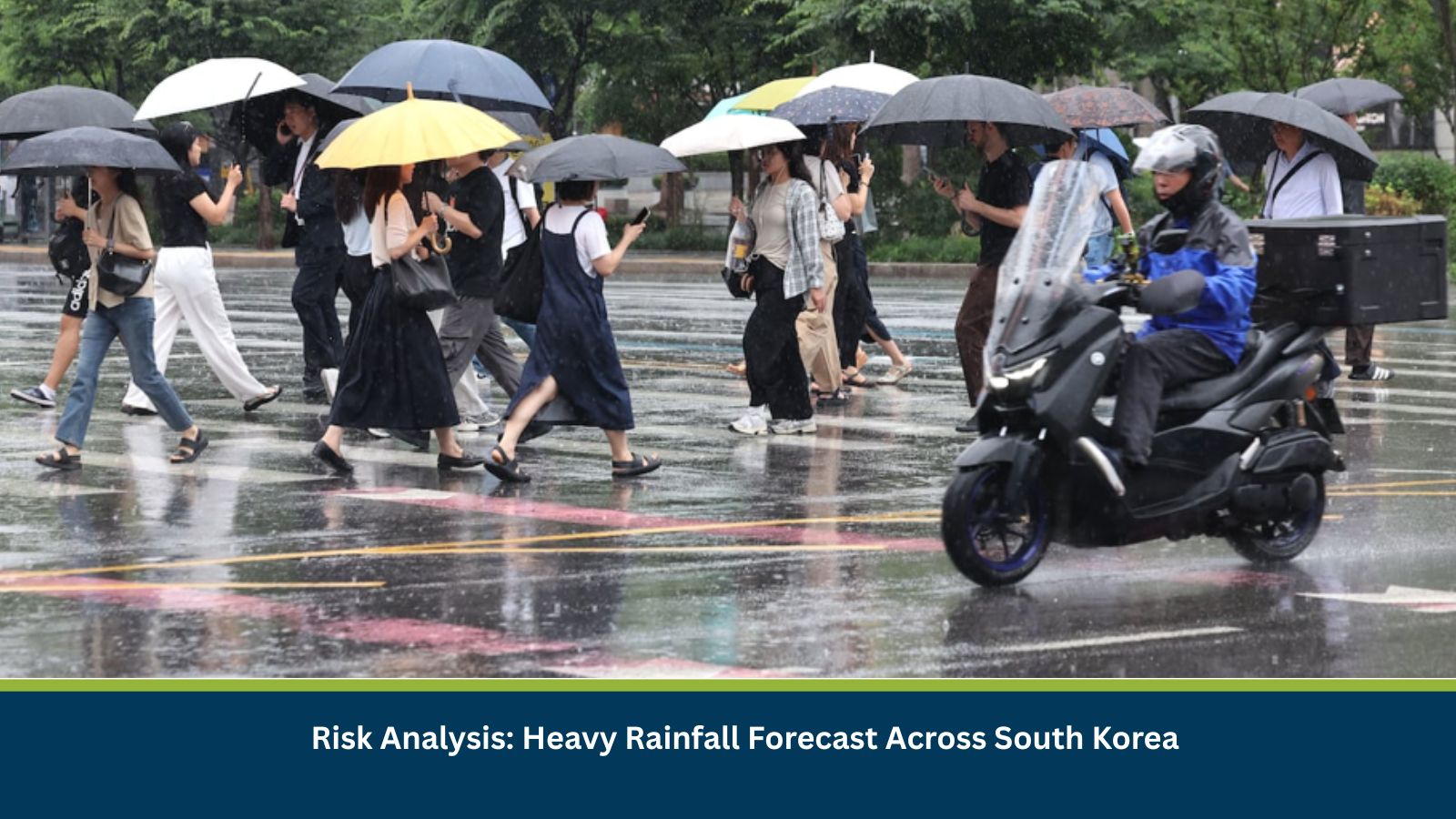
Executive Summary for Heavy Rainfall Forecast Across South Korea
The Korea Meteorological Administration (KMA) has issued heavy rainfall advisories across parts of South Korea, with intense precipitation forecast to affect several central and southern regions. Authorities have warned of localized flooding, landslides, river overflow and transport disruptions, particularly in low-lying and mountainous areas. Businesses are advised to monitor official weather updates and activate contingency measures to minimize operational and travel-related disruptions.
- Date of Event: 07 July 2026
- Location: South Korea (Central and Southern Regions)
- Risk Category: Environment
- Severity Score: 4 / 5
- Confidence Level: 75%
What is Risk Analysis in the Context of Environment Risk Events
Environment event risk analysis evaluates the potential impact of severe weather on transportation networks, critical infrastructure, workforce safety and business continuity. Periods of intense rainfall can trigger flash floods, landslides, road closures and service disruptions, affecting both urban and rural areas.
According to the Korea Meteorological Administration, the approaching weather system is expected to bring heavy rainfall across several regions, increasing the risk of flooding in low-lying areas and landslides in mountainous terrain. Local authorities have urged residents and businesses to remain vigilant as rainfall intensity may increase over a short period, creating rapidly changing conditions.
Known Hotspots and Sensitive Areas
High Impact
- Seoul Metropolitan Area
- Gyeonggi Province
- Chungcheong Region
- Gangwon Province (mountainous areas)
- Southern provinces expected to receive intense rainfall
Medium Impact
- National highways and expressways
- Rail networks
- Urban drainage systems
- River basins prone to overflow
Low Impact
- Areas outside the forecast rainfall zone
Impact on Transportation and Services
Heavy rainfall may result in localized flooding, reduced visibility, traffic congestion and temporary road closures. Rail and public transport services could experience delays, while landslides may disrupt transportation through mountainous regions. Utility providers may also face localized power interruptions where severe weather affects the electrical infrastructure. Businesses should anticipate potential disruptions to employee mobility, logistics operations and customer access.
Recommended Actions
- Monitor advisories issued by the Korea Meteorological Administration (KMA) and local emergency authorities.
- Review business continuity and emergency response procedures.
- Avoid non-essential travel during periods of intense rainfall.
- Secure critical assets in flood-prone locations.
- Communicate contingency plans with employees, suppliers, and logistics partners.
Emergency Contacts
- Emergency Services: 112
- Fire & Rescue: 119
Final Thoughts
The forecast of heavy rainfall represents a moderate operational and weather-related risk across parts of South Korea. Organizations should closely monitor official weather updates, prioritize employee safety and implement contingency measures to reduce the impact of flooding and transport disruptions. Leveraging MitKat’s Datasurfr enables businesses to receive real-time severe weather alerts, monitor evolving conditions and make informed decisions to safeguard their people, assets and operations.